✨ Introduction
A Men’s Bifold Leather Wallet is far more than a simple accessory—it is an essential everyday companion that reflects both functionality and personal style. It securely stores your cash, organizes your cards, and often carries important identification, making it one of the most frequently used items in your daily routine.
However, choosing the right wallet is not as straightforward as it seems. The marketplace is saturated with misleading terminology such as “genuine leather,” “real leather,” and “premium leather,” which often confuse buyers rather than help them. Many consumers mistakenly assume these labels indicate superior quality, when in reality, they can represent lower-grade materials that deteriorate quickly—cracking, peeling, or losing structure within a short period.
This comprehensive guide has been carefully crafted to eliminate that confusion.
In this ultimate 2026 buying guide, you will gain a complete understanding of wallet construction, leather classifications, durability factors, craftsmanship standards, and pricing tiers. Each section is explained in simple, easy-to-understand language, ensuring that even beginners can confidently make informed decisions.
Whether you are purchasing your first wallet, upgrading to a luxury option, or searching for a long-lasting everyday essential, this guide will equip you with the knowledge needed to invest wisely.
🧾 What is a Mens Bifold Leather Wallet?
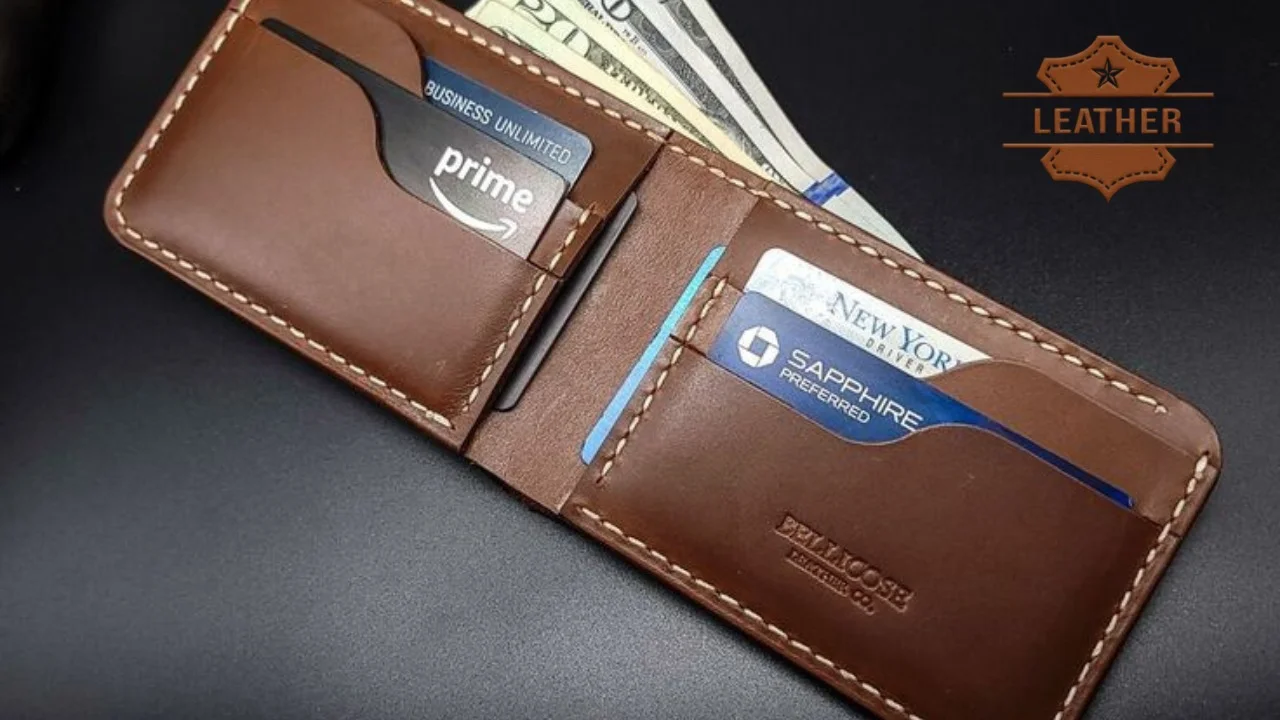
A bifold wallet is a classic wallet design that folds once along the center, creating two equal sections. This design is widely recognized as the most popular and practical wallet style globally.
📌 Standard Features
- One or two compartments for paper currency
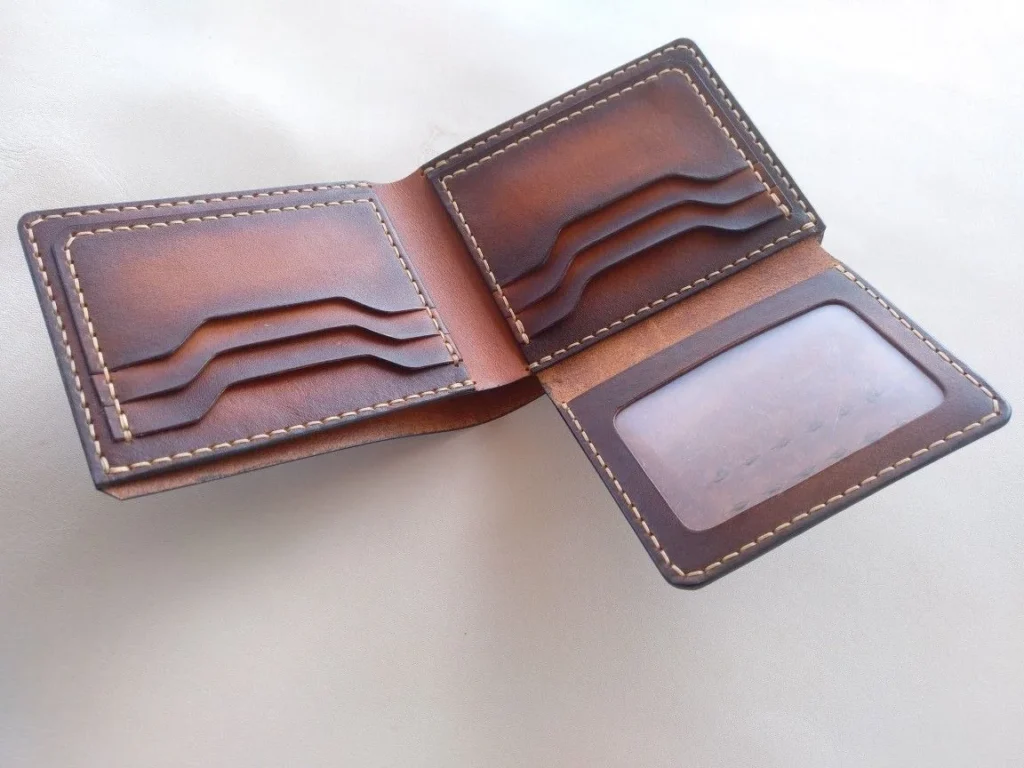
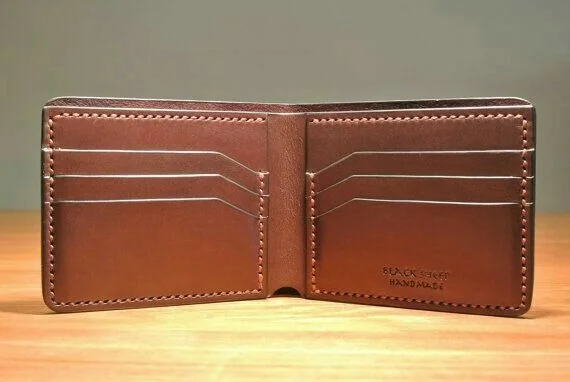
- Multiple card slots (typically 4–12)
- Optional transparent ID window
- Compact, slim, and pocket-friendly profile
💡 Why It Remains Popular
- Balanced dimensions—not overly bulky or excessively minimal
- Efficient organization for daily essentials
- Suitable for both formal and casual settings
- Comfortable to carry in front or back pockets
👉 In simple terms, a bifold wallet offers the ideal balance between storage capacity and portability, making it a versatile choice for most individuals.
🕰️ History of the Bifold Leather Wallet
The evolution of the men’s bifold leather wallet reflects broader changes in financial systems and lifestyle habits.
🧭 Key Historical Developments
Pre-1900s
People primarily used leather pouches or coin purses to carry metallic currency.
1920s–1950s
With the widespread adoption of paper currency, the bifold design emerged as a practical solution for folding and storing bills.
1980s–2000s
The rise of credit and debit cards led to the integration of dedicated card slots, transforming wallet functionality.
Modern Era
Innovations include RFID-blocking technology, ultra-slim constructions, and premium handcrafted leather designs.
Today, bifold wallets are used worldwide—from North America and Europe to Asia and the Middle East—remaining a timeless and reliable accessory.
🧩 Types / Variations of Bifold Wallets
Although the bifold structure is consistent, there are Several Variations designed to meet different needs and preferences.
Classic Bifold Wallet
- Traditional dimensions
- Multiple compartments and card slots
- Versatile for everyday usage
👉 Ideal for the majority of users seeking reliability and practicality.
Slim Bifold Wallet
- Minimalist construction
- Reduced storage capacity
- Lightweight and sleek
👉 Perfect for individuals who prefer carrying fewer items.
RFID Bifold Wallet
- Embedded RFID-blocking lining
- Prevents unauthorized digital scanning
👉 Suitable for frequent travelers and tech-conscious users.
Travel Bifold Wallet
- Larger size with additional compartments
- Can accommodate passports and documents
👉 Best suited for international travelers.
Money Clip Bifold Wallet
- Integrated metal clip for holding cash
- Reduces bulk while maintaining style
👉 A modern option for those seeking a refined, minimalist look.
🧠 Leather Types Used
Understanding leather quality is the most crucial factor when selecting a wallet. Not all leather is created equal, and knowing the differences can save you from making costly mistakes.
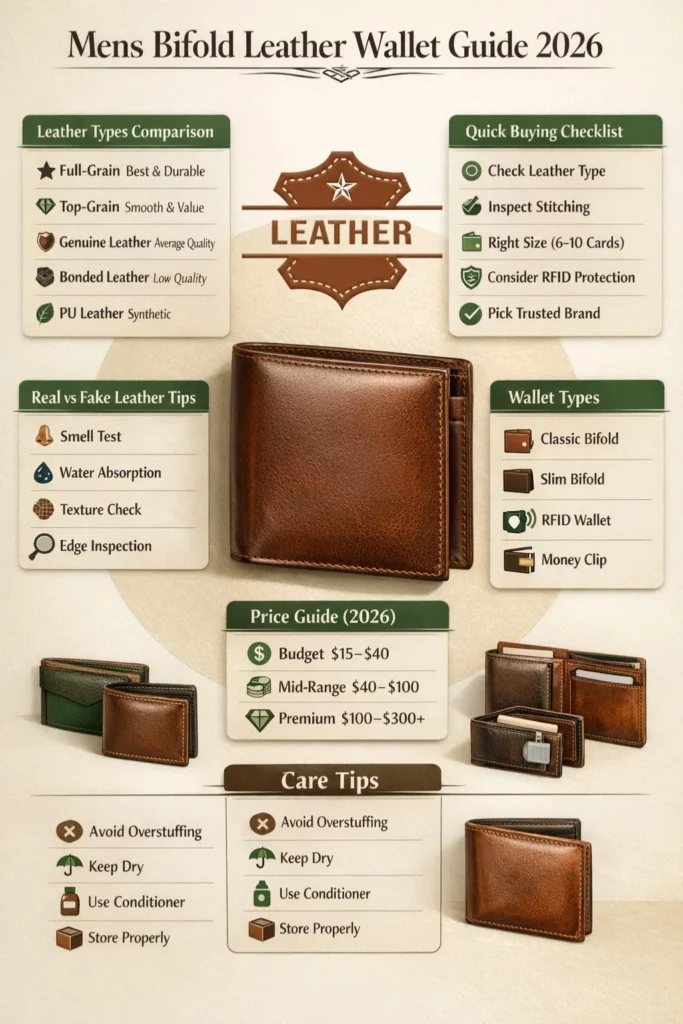
🥇 Full-Grain Leather
- Derived from the top layer of the hide
- Retains natural grain and imperfections
- Develops a rich patina over time
- Extremely durable and long-lasting
👉 Lifespan: 10–15 years or more
This is the finest leather available and is commonly used in luxury wallets.
🥈 Top-Grain Leather
- Slightly sanded to remove imperfections
- Smooth, refined appearance
- Good balance between durability and affordability
👉 Lifespan: 5–10 years
An excellent choice for those seeking value without compromising too much on quality.
⚠️ Genuine Leather
- Made from lower layers of the hide
- Heavily processed and corrected
- Less durable than higher grades
👉 Often marketed misleadingly
While it is technically real leather, it does not offer premium performance.
❌ Bonded Leather
- Manufactured from leather scraps and fibers
- Mixed with adhesives and synthetic materials
- Prone to peeling and cracking
👉 Avoid whenever possible
🧪 PU Leather
- Artificial material designed to mimic leather
- Affordable and lightweight
- Limited durability
👉 Suitable only for budget-conscious buyers
📊 Leather Comparison Table
| Leather Type | Durability | Price | Quality | Lifespan |
| Full-Grain | ⭐⭐⭐⭐⭐ | High | Premium | 10–15 yrs |
| Top-Grain | ⭐⭐⭐⭐ | Medium | High | 5–10 yrs |
| Genuine | ⭐⭐⭐ | Low-Med | متوسط | 2–5 yrs |
| Bonded | ⭐ | Low | Poor | <2 yrs |
| PU Leather | ⭐⭐ | Low | Synthetic | 1–3 yrs |
🏭 Manufacturing Process
A high-quality wallet undergoes a detailed and precise manufacturing process.
Raw Hide Selection
- Typically, cowhide is used
- Quality depends on animal condition and treatment
Tanning Process
Vegetable Tanning
- Eco-friendly method
- Produces premium leather
- Takes longer but yields superior results
Chrome Tanning
- Faster production
- More Affordable
- Less environmentally friendly
Cutting
- Leather is precisely cut into components
Skiving
- Edges are thinned to ensure smooth folding
Stitching
- Hand-stitched or machine-stitched
- Strong stitching increases longevity
Edge Finishing
- Burnishing or edge painting
- Enhances aesthetics and durability
Final Assembly
- Components are assembled
- Thorough quality inspection is conducted
👉 Premium wallets often involve skilled craftsmanship and manual finishing techniques.
🔍 How to Identify Original vs Fake Leather
Distinguishing authentic leather from synthetic alternatives is essential.
Thumbnail Test
Press the surface:
- Real leather → slight temporary indentation
- Fake leather → no visible change
Smell Test
- Real leather → natural, earthy aroma
- Fake leather → chemical or plastic odor
Water Absorption Test
- Genuine leather absorbs small amounts of moisture
Edge Inspection
- Rough, layered edges → low-quality
- Smooth, sealed edges → premium finish
🛒 Buying Guide
Before purchasing a wallet, evaluate these critical factors:
Leather Quality
👉 Always prioritize full-grain or top-grain leather
Stitching Quality
- Uniform and consistent stitching
- No loose threads or uneven lines
Size & Storage Capacity
- Ideal capacity: 6–10 cards
- Avoid excessive bulk
RFID Protection
- Optional but beneficial for security
Brand Reliability
- Established brands often maintain higher standards
⚖️ Bifold vs Trifold vs Minimalist Wallet
| Feature | Bifold | Trifold | Minimalist |
| Size | Medium | Bulky | Ultra Slim |
| Storage | Balanced | High | Low |
| Comfort | High | Medium | Very High |
| Best Use | Everyday | Heavy storage | Minimal carry |
✔️ Pros and Cons
✔️ Advantages
- Balanced structure
- Elegant and timeless design
- Comfortable for daily use
❌ Disadvantages
- Less storage compared to trifold wallets
🧩 Common Uses
- Daily cash and card organization
- Professional and business settings
- Travel document storage
- Gift item for special occasions
🧴 Care & Maintenance Tips
Proper care significantly extends your wallet’s lifespan.
- Avoid Overfilling Compartments
- Keep away from excessive moisture
- Apply leather conditioner every 3–6 months
- Store in a cool, dry environment
- Clean gently using a soft cloth
💰 Price Range Worldwide
| Category | Price Range |
| Budget | $15–$40 |
| Mid-Range | $40–$100 |
| Premium | $100–$300+ |
🌍 Regional Insights
- USA & UK → Preference for premium quality
- Europe → Focus on craftsmanship
- Middle East → Luxury-oriented demand
- Pakistan → Competitive manufacturing and exports
🌍 Countries Famous for Leather Wallets
- Italy → Renowned for artisanal craftsmanship
- USA → Durable and functional designs
- UK → Classic and elegant styles
- France → Luxury fashion influence
- Pakistan → Emerging leader in leather production
❓ FAQs
A: It is real leather, but not high quality. Full-grain is better.
A: A premium wallet can last 10–15 years.
A: Full-grain leather is the best.
A: Useful for travelers, but not required for everyone.
🏁 Conclusion
A man’s bifold leather wallet may appear to be a simple everyday item, but selecting the right one has a significant impact on your comfort, style, and long-term value.
One of the most common mistakes buyers make is trusting labels like “Genuine Leather” without understanding their true meaning. The reality is straightforward: full-grain leather offers the highest quality, while top-grain provides an excellent balance of performance and affordability.
When making a purchase, focus on craftsmanship details such as stitching, material quality, edge finishing, and usability rather than just price. While a low-cost wallet may seem appealing initially, it often requires frequent replacement. In contrast, a high-quality wallet improves with age and delivers lasting satisfaction.
👉 Smart buyers invest once—and enjoy the benefits for years.