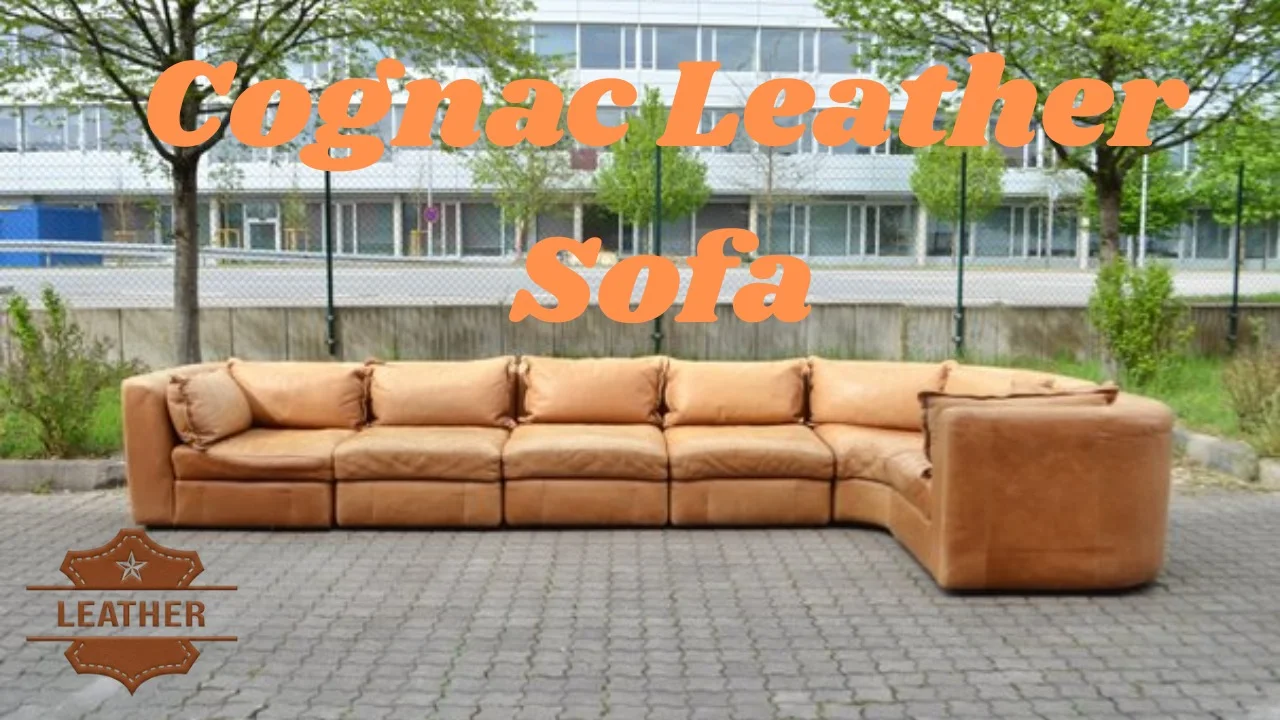
Cognac Leather Sofa
A Cognac Leather Sofa is one of the rare furniture pieces that can make a room feel warmer, richer, and more expensive without trying too hard. In 2026, it fits the design direction many buyers already want: soft luxury, practical living, and furniture that looks better with age. That is exactly why cognac continues to appear in design inspiration, buying guides, and trend-led interiors.
But buying the right cognac sofa is not only about color. The real difference comes from leather grade, finish, frame strength, cushion quality, and care. A beautiful sofa can still disappoint if it is made with weak construction or confusing “genuine leather” marketing. This guide breaks everything down in plain English so you can buy once, buy well, and enjoy the piece for years. Leather itself is highly durable, repairable, and meant to be maintained; with the right care, it can remain attractive for decades.
Quick answer
A good cognac leather sofa is a warm amber-brown leather couch that works best when it is made from full-grain or top-grain leather, built on a strong frame, and placed in a room that balances the sofa’s warmth with neutrals, wood, or deep accent colors. Leather should be cleaned gently, conditioned periodically, and protected from intense sun and heat.
What Is a Cognac Leather Sofa?
A cognac leather sofa is simply a leather sofa finished in a rich brown tone with amber, caramel, tan, or tobacco undertones. The shade usually sits somewhere between warm brown and golden chestnut, which is why it feels more alive than flat brown and less severe than black. It is popular because it works in modern, transitional, rustic, and classic interiors. The current design conversation still treats cognac as both timeless and highly relevant in today’s homes.
In practical terms, cognac is a great color for buyers who want a leather sofa that looks elevated but still approachable. It gives you visual warmth, a sense of age and character, and a finish that often pairs beautifully with wood, stone, linen, and matte metal accents. Interior inspiration pages repeatedly place cognac in rooms with white walls, green accents, navy, charcoal, and natural textures.
Mini summary: Cognac is a warm, versatile leather color that feels upscale without being overly formal.
Why Cognac Leather Sofas Matter in 2026
Cognac leather matters in 2026 because the market has moved toward warm minimalism, quiet luxury, and grounded interiors that feel lived-in rather than sterile. The current design pages on the SERP emphasize cognac in large sectionals, calm neutrals, and “new neutral” styling. That is a strong sign that buyers want furniture with personality, but still enough flexibility to work across future decor changes.
There is also a practical reason for its staying power: quality leather is easy to maintain relative to many fabrics, and leather furniture is known for durability and long life when properly cared for. Leather Naturally describes leather as highly durable, repairable, and restorable; Crate & Barrel and Pottery Barn both recommend routine dusting, spill control, and conditioning to protect lifespan and appearance.
Why buyers still choose it
- It feels rich without looking flashy.
- It ages into a natural patina.
- It styles easily with many color palettes.
- It works in both apartment living rooms and larger family spaces.
- Good leather can last for many years with basic care.
Mini summary: Cognac leather is not a fad piece. It is a practical luxury choice that fits how people actually live today.
A Short History of Cognac Leather in Furniture
Leather furniture has long been associated with durability, repairability, and a premium feel. Natural leather’s structure gives it strong resistance to tearing, puncturing, and abrasion, while tanning converts raw hide into a stable, long-lasting material. Cognac as a color became especially popular because it bridges classic leather tradition and contemporary interiors.
In modern furniture styling, cognac became a go-to because it works with the lighter walls, mixed materials, and softer silhouettes that dominate current interior design. That is why you now see it in mid-century rooms, industrial lofts, Scandinavian spaces, and quiet-luxury layouts.
Types of Cognac Leather Sofas
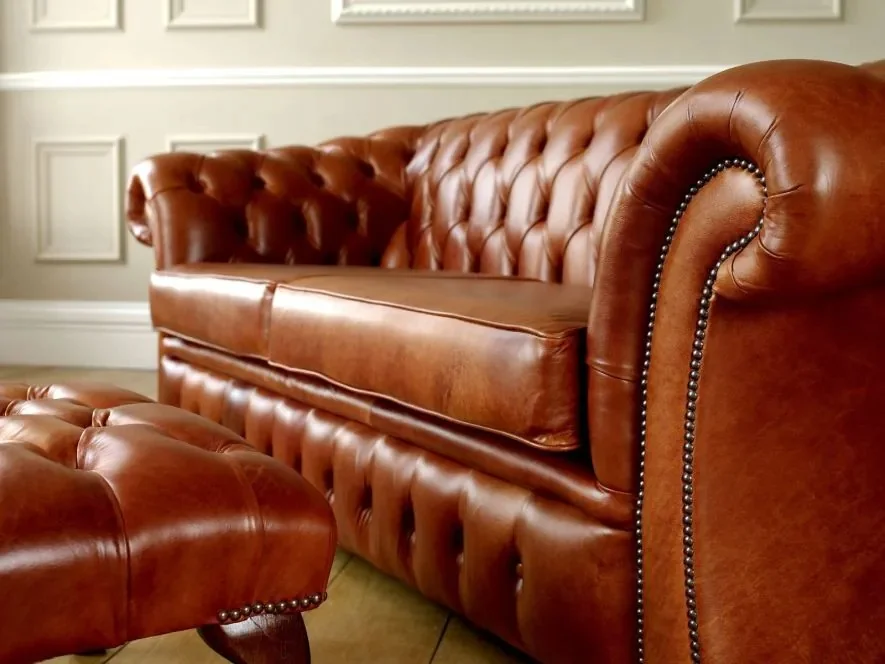
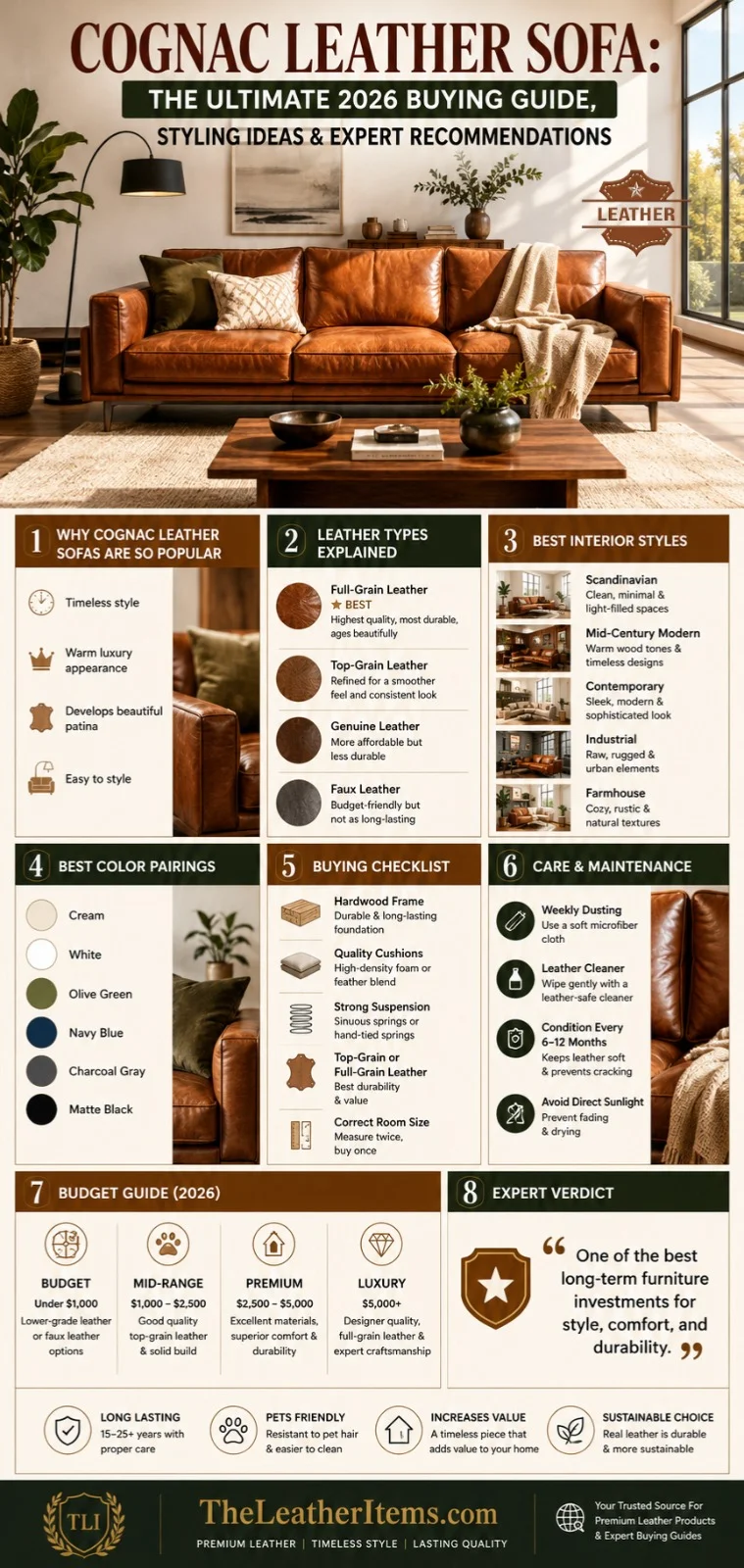
Not every cognac leather sofa is made the same way. The most important difference is not just the color; it is the leather type and finish. Leather Naturally explains that full grain keeps the full natural grain and strength of the hide, while top grain is lightly sanded for a thinner, more pliable surface. Both are durable and authentic, but they serve different buyers.
| Leather Type | What It Means | Best For | Watch Out For |
| Full-Grain Leather | Natural top layer with full character and strength | Buyers who want maximum durability and patina | Usually, a higher price and more visible natural marks |
| Top-Grain Leather | Slightly sanded the top layer, smoother and more uniform | Most buyers seek comfort, durability, and cleaner visuals | Less natural character than full grain |
| Genuine Leather | Real leather, but often lower on the quality ladder | Budget-conscious buyers who still want real leather | Can be misleading if you expect premium longevity |
| Suede | Napped leather with a soft, velvety feel | Style-first rooms and low-contact use | More vulnerable to stains and moisture |
| Nubuck | Sanded top grain with a soft touch | Premium tactile feel | Needs more careful maintenance |
| PU / Faux Leather | Synthetic imitation leather | Lowest-cost styling option | Does not age like real leather and can fail differently |
Which one is best?
For most buyers, top grain is the safest balance of performance and price. For buyers who want the best long-term aging and strongest natural character, full grain is the premium choice. Leather Naturally also notes that authentic leather outperforms split or bonded leather in longevity.
A note on finish
Aniline leather is the most natural-looking leather, dyed with soluble dyes that preserve the hide’s grain and markings. It is soft and breathable, but it tends to show more natural variation. Semi-aniline keeps more uniformity. That matters because cognac buyers often want visible depth and richness rather than a flat, Plastic-Looking finish.
Mini summary: If the sofa is for real everyday use, top grain is often the best value. If you want the richest aging and most natural look, full grain wins.
Pros and Cons of a Cognac Leather Sofa
Pros
- Timeless, warm, and easy to style
- Strong visual character
- Works across many interior styles
- Leather can be cleaned more easily than many fabrics
- Quality leather develops a desirable patina over time
- Repairable and restorable if cared for properly
Cons
- Better models cost more upfront
- Lower-grade leather can crack or look tired sooner
- Needs conditioning and protection from the sun/heat
- Scratches can happen in active homes
- Very glossy finishes can look less natural over time
How Cognac Leather Sofas Are Made
A quality leather sofa is not just “fabric with leather on top.” The result depends on how the hide is selected, tanned, dyed, finished, cut, and assembled. Leather Naturally and Britannica both describe tanning as the process that turns perishable hide into stable leather; chrome tanning is the modern standard for many products because it produces soft, flexible leather, while vegetable tanning is a traditional method known for character and patina.
Simplified manufacturing process
- Hide selection – better hides mean cleaner grain and more consistent results.
- Tanning – the hide is stabilized so it becomes leather.
- Drying and finishing – the tannery adds softness, color, protection, and texture.
- Cutting and panel matching – pieces are matched for grain and shade consistency.
- Frame building – the structure is built, ideally from hardwood.
- Upholstery assembly – leather is stretched, stitched, and fitted.
- Final inspection – seams, cushions, and finish should be checked before shipping.
What matters most to the buyer
The buyer rarely sees the first four steps, so the real quality signals are the ones listed on the product page: leather grade, frame material, cushion fill, suspension system, and care instructions. Crate & Barrel and other major furniture retailers emphasize these details because they directly affect longevity and comfort.
How to Identify Original Leather vs Fake Leather
This is one of the most important buyer skills. Real leather is durable, breathable, and repairable; faux materials can peel, delaminate, or age badly. Leather Naturally states that authentic leather does not peel the way synthetic materials do, and surface dryness can often be managed with conditioner.
Practical checks
- Look at the grain: real leather usually has natural variation.
- Check the edges: perfect uniformity can sometimes signal synthetic material.
- Read the product language: avoid vague descriptions.
- Ask about the leather layer: full grain, top grain, split, or bonded.
- Confirm the care instructions: real leather should have specific care guidance.
- Inspect smell and hand feel in person: genuine leather usually feels warmer and more organic than plastic-based alternatives.
Red flags
- “Leather match” with no explanation
- No clear leather grade
- No frame material listed
- No cushion fill listed
- Unrealistically low price for a “full leather” sofa
- Phrases like “luxury leather look” without material detail
Mini summary: If the listing avoids direct language about the actual leather layer, treat it carefully.
Complete Buying Guide: What to Check Before You Buy
This is where most shoppers make expensive mistakes. The color may be perfect, but the construction may not be. The strongest leather-buying guides from major furniture retailers emphasize frame quality, cleaning requirements, and long-term care, not just aesthetics.
1) Frame construction
Look for a kiln-dried hardwood or another durable hardwood frame. A sofa’s frame is what keeps it stable over time.
2) Suspension system
Good support systems help the seat keep its shape and comfort. Ask what kind of springs or webbing are used.
3) Cushion fill
High-density foam is common for support; down or feather blends create a softer, sink-in feel. Choose the feel that fits the way you live.
4) Leather grade
Use the following priority:
- full grain
- top grain
- genuine leather
- bonded leather only as a last resort
5) Finish
Aniline and semi-aniline keep a more natural character. Pigmented finishes are often easier to maintain and more uniform.
6) Room size
Measure the room, not just the sofa space. Leave walking clearance, door clearance, and visual breathing room.
7) Light exposure
Leather should be protected from direct sun and intense heat, which can cause fading, cracking, or stiffness. Crate & Barrel and West Elm both stress keeping leather away from harsh light and heat sources.
8) Cleaning and conditioning expectations
A good leather sofa needs routine dusting, spill control, and Periodic Conditioning. Pottery Barn recommends gentle dusting with a soft cloth, while Crate & Barrel recommends weekly dust removal and pH-balanced leather cleaner.
Buying checklist
- Leather grade disclosed
- Frame material disclosed
- Cushion fill disclosed
- Return policy clear
- Care instructions provided
- Warranty or support available
- Shade shown in natural light
- Dimensions fit your room and access points
Best Interior Styles for Cognac Leather Sofas
Cognac is one of the most adaptable leather colors because it sits naturally between warmth and sophistication. That is why it shows up in minimalist spaces, moody interiors, and classic rooms alike.
| Style | How to Style It | Best Supporting Pieces |
| Mid-Century Modern | Keep lines clean and add warm wood | Walnut table, tapered legs, geometric art |
| Scandinavian | Use light walls and natural textures | Oak accents, cream rug, linen pillows |
| Industrial | Add contrast and raw materials | Black metal, exposed brick, reclaimed wood |
| Contemporary | Keep the palette simple and polished | Marble, glass, matte black lighting |
| Farmhouse | Soften the look with tactile layers | Woven rug, cotton throw, aged wood |
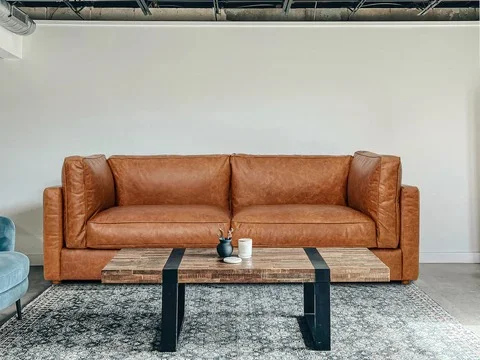
Color pairings that consistently work
- cream
- ivory
- beige
- warm white
- sage green
- olive green
- navy
- charcoal
- matte black
- natural wood tones
Simple styling rule
If the sofa is the warm focal point, let the rest of the room do one of three jobs: soften it, contrast it, or echo it. That means either creamy neutrals, dark contrast, or layered wood and earth tones.
Best Uses of a Cognac Leather Sofa
A cognac sofa works especially well in rooms where you want the furniture to feel intentional, not disposable.
Best uses
- family living rooms
- formal living spaces
- open-plan apartments
- home offices
- reading rooms
- media rooms
- loft-style interiors
Leather’s durability and wipe-clean practicality make it appealing in homes that need both style and function. The material is also frequently favored where people want a premium look with manageable upkeep.
Not the best use
If the sofa will sit in direct sun all day, in a very dry room with no climate control, or in a household where nobody wants to maintain it at all, leather may not be the easiest choice. Leather care guidance from major brands consistently warns against heat, sun, and neglect.
Worldwide Price Ranges
Price varies by leather grade, brand, country, shipping, and taxation. Rather than chasing a “cheap” sofa, think in terms of value bands.
| Value Band | What You Usually Get | Typical Buyer Profile |
| Budget | Faux or lower-grade leather, simpler build | Style-first, short-term use |
| Mid-range | Top-grain or mixed leather, decent frame | Most practical buyers |
| Premium | Better hardwood frame, higher-grade leather, better cushions | Long-term home use |
| Luxury | Full grain, refined tailoring, higher-end construction | Design-conscious buyers seeking heirloom quality |
Practical advice
In real shopping, the difference between a mediocre sofa and a great one is often not the color; it is the construction and leather disclosure. That is why it is smarter to compare leather grade, frame, and care plan than to shop by shade alone.
Best Countries and Brands Famous for Cognac Leather Sofas
Instead of judging by country alone, judge by transparency. That said, Italian leather sofas are strongly associated with premium upholstery, and current trend pages still position Italian leather in the cognac category as a luxury signal.
What to look for from any country
- clear leather grading
- certification or responsible-sourcing claims
- detailed care instructions
- honest disclosure of finish and construction
- reliable shipping and aftercare
Strong sourcing signal
Leather Working Group is a global not-for-profit organization focused on responsible leather production. It says its audit standard assesses environmental and social accountability, and its certification system covers areas like water and energy use, chemical management, and waste management. That makes it a strong reference point when evaluating leather sourcing claims.
Budget-Friendly Options
Budget cognac sofas can work, but the shopper should know exactly what tradeoff is being made.
Best budget strategy
- Choose a simpler silhouette
- Prioritize a clear material label
- Check cushion comfort in person when possible
- Avoid bonded leather unless the goal is very short-term styling
Leather Naturally notes that bonded and split leathers are lower on the longevity ladder than authentic full-grain and top-grain options.
Premium & Luxury Options
Premium cognac sofas stand out because they usually give you three things at once: stronger frame quality, better leather, and a more considered finish. Full-grain and top-grain leathers are the main choices here, and aniline or semi-aniline finishes often give the richest visual depth.
Premium indicators
- full-grain or top-grain leather
- hardwood frame
- well-made cushions
- clean seam alignment
- real care documentation
- visible but attractive natural variation
Common Buyer Mistakes to Avoid
- Buying only for color.
A beautiful cognac tone cannot rescue weak construction. - Ignoring the leather grade.
“Genuine Leather” can sound premium while still being lower quality than top grain or full grain. - Skipping care instructions.
Leather needs regular dusting, cleaning, and conditioning. - Placing it in direct sunlight.
Heat and sunlight can fade and dry leather. - Forgetting access dimensions.
A great sofa is useless if it cannot fit through the doorway or stairwell. - Choosing the wrong finish for the household.
A highly natural aniline finish may be gorgeous, but it can show marks more readily than a more protected finish.
Mini summary: The most expensive mistake is buying a pretty sofa that does not match your lifestyle.
Care, Cleaning, and Maintenance Tips
Leather care does not need to be complicated. It just needs to be consistent. Leather Naturally recommends a simple “clean, condition and protect” approach, while major furniture brands advise dusting, blotting spills quickly, using leather-specific products, and keeping furniture out of direct sun and heat.
Weekly care
- Dust with a soft cloth
- Vacuum seams and crevices gently
Monthly care
- Wipe with a leather-safe cleaner
- Check for surface dryness or dull spots
Every 6–12 months
- Condition with a product designed for leather upholstery
- Test on a hidden area first
Avoid
- bleach
- ammonia
- acetone
- alcohol-heavy cleaners
- abrasive pads
- over-wetting the leather
Best practice
If a spill happens, blot immediately rather than scrubbing. Scrubbing can damage the protective finish and make leather more vulnerable to cracking.
Expert Tips Most Buyers Ignore
- Buy the room, not just the sofa.
A cognac sofa looks best when the surrounding palette is planned. - Use texture to balance the leather.
Linen, wool, boucle, jute, and wood stop the room from feeling too heavy. - Ask for the finish type.
Full grain, top grain, aniline, and semi-aniline are not interchangeable. - Inspect the underside and back.
Quality brands do not hide everything behind marketing photos. - Rotate cushions regularly.
This helps the wear pattern stay even. Crate & Barrel recommends rotating seat and back cushions every three months.
Who Should Buy a Cognac Leather Sofa?
A cognac leather sofa is ideal for:
- buyers who want a timeless focal point
- families who prefer wipe-clean surfaces
- design lovers who enjoy warm, earthy interiors
- people investing in a long-term home piece
- buyers who like furniture that develops character over time
Who Should Avoid It?
You may want to reconsider if:
- You want a very soft, cloud-like fabric feel
- Your room gets intense direct sunlight all day
- You do not want to maintain leather at all
- You are shopping only by price and not by construction
- You prefer cool-toned, ultra-minimal furniture without warmth
Future Trends in the Leather Industry
The leather industry is moving toward stronger transparency, responsible sourcing, and more measurable sustainability claims. LWG says its certification system is an international standard for environmentally and socially accountable leather manufacturing, and it uses audit categories such as water and energy, chemical management, waste, and health and safety. LWG also states that over a third of global finished leather production is assessed under its audit standard.
For buyers, that means the future is not just about color trends. It is about asking better questions:
- Where was the leather sourced?
- Was the tannery audited?
- What finish was used?
- How does the brand support repair and maintenance?
- Does the company disclose care and longevity guidance?
People Also Ask
A: It is both, but the reason it stays relevant is that it works as a warm neutral. Design commentary across current search results consistently frames cognac as a lasting choice rather than a short-lived fad.
A: Cream, warm white, greige, charcoal, navy, and soft green are the safest choices. Those combinations show up repeatedly in current style guidance because they balance warmth and contrast.
A: Full grain keeps the entire natural grain and character of the hide, while top grain is lightly sanded for a more uniform and pliable finish. Both are authentic and durable, but full-grain is the premium longevity choice.
A: Many brand care guides recommend conditioning the sofa around twice a year, while also keeping the sofa out of direct sun and heat. Always follow the care instructions for the exact finish on your sofa.
A: Yes. The warm tone can anchor a small room without making it feel cold, especially when paired with lighter walls, good lighting, and a slim-profile design.
Conclusion
A cognac leather sofa is a strong choice for buyers who want warmth, luxury, and long-term value in one piece. The best option is not simply the prettiest one. It is the sofa with the right leather grade, the right frame, the right cushion feel, and the right maintenance plan. Full grain and top grain remain the most dependable, authentic choices, and good care habits can help the sofa age beautifully instead of wearing out quickly.
For TheLeatherItems.com, this topic is a strong authority-building opportunity because it connects product education, Material Trust, care, and buying confidence. Readers should leave this article knowing exactly what to buy, what to avoid, and how to make cognac leather work in real homes. That is the kind of content people bookmark, share, and return to later.