Introduction
A leather sofa is a long-term investment, but only if you treat it the right way. Cleaning Leather Sofa care is not just about wiping away dust. It is about protecting the finish, preserving softness, preventing cracking, and removing stains before they become permanent. Manufacturer care guides consistently emphasize quick spill cleanup, regular dusting, sunlight protection, and periodic conditioning.
The problem is that most homeowners are given one vague instruction: “Use leather cleaner and conditioner.” That is not enough. Different leather finishes react differently to water, soap, alcohol, and conditioners. Aniline leather, semi-aniline leather, pigmented leather, faux leather, bonded leather, nubuck, and suede all need different care logic.
This guide breaks the process into simple steps so you can clean your sofa safely, remove common stains, choose the right products, and build a maintenance routine that actually works. It is written for real homes, real spills, and real leather furniture.
Why Proper Leather Sofa Cleaning Matters
Leather can last for years, but dirt, body oils, sunlight, and moisture all shorten its life. Regular upkeep helps prevent cracking, fading, staining, and premature wear. Brand care guides repeatedly stress weekly dusting, prompt spill cleanup, and periodic conditioning as the core of leather maintenance.
The biggest mistake people make is waiting until the sofa looks dirty. By then, the soil has already settled into seams, oils have built up on armrests, and the surface may already be drying out. A simple routine is much easier than restoration later. That is why leather care should be treated like furniture maintenance, not emergency cleaning.
Mini summary: Clean leather early, clean it gently, and condition it on a schedule. That is the difference between a sofa that ages beautifully and one that looks tired too soon.
Understanding Leather Before You Start Cleaning
1. Aniline Leather
Aniline leather is usually the most natural-looking and most sensitive to stains. Because it has less surface protection, it can absorb spills more quickly and show wear more easily. Sources on leather finishes consistently describe aniline leather as the most natural and softest style, but also the least forgiving when it comes to stains and sunlight.
Best care approach: gentle dry dusting, very careful spot cleaning, immediate spill response, and limited exposure to direct sun.
2. Semi-Aniline Leather
Semi-aniline leather sits between beauty and durability. It keeps a more natural look than pigmented leather but adds a protective finish that offers more stain resistance. That makes it a popular upholstery choice.
Best care approach: regular dusting, prompt cleanup, mild leather-safe cleaner, and conditioning based on usage.
3. Pigmented Leather
Pigmented leather has a more complete surface finish, which makes it more resistant to wear, stains, and fading. The Leather Working Group’s definitions describe pigmented leather as leather whose natural grain or surface is concealed with a pigment-containing finish. Manufacturer guides for pigmented leather commonly recommend regular dust removal and approved leather cleaners.
Best care approach: wipe with a slightly damp cloth or approved cleaner, avoid harsh household chemicals, and condition only as recommended by the maker.
4. Nubuck Leather
Nubuck has a soft, brushed surface and behaves differently from smooth leather. It is usually maintained with a nubuck brush and gentle cleaning methods rather than wet conditioning routines.
Best care approach: dry brushing, careful spot treatment, and using only nubuck-safe products.
5. Faux Leather
Faux leather is usually easier to wipe down than natural leather, but it still needs proper care. Brand guides commonly recommend warm soapy water, a soft cloth, gentle cleaning, and drying afterward.
Best care approach: mild soap, damp microfiber cloth, no abrasive scrubbing, and no harsh solvents.
6. Bonded Leather
Bonded leather needs extra caution because its surface can be less forgiving than genuine leather. Some care guides say it should not be treated with the same creams used on full leather, and spot testing is important before applying any product.
Best care approach: gentle wiping, low-moisture cleaning, and product testing in a hidden area first.
Leather Type Comparison Table
| Leather Type | Appearance | Durability | Cleaning Difficulty | Best Care Method |
| Aniline | Most natural | Medium | High | Dry dusting, fast spill response, careful spot cleaning |
| Semi-aniline | Natural with protection | High | Medium | Mild cleaner, prompt blotting, occasional conditioning |
| Pigmented | Most uniform | Very high | Low to medium | Approved leather cleaner, damp cloth, gentle maintenance |
| Nubuck | Soft brushed finish | Medium | High | Dry brush, nubuck-safe products |
| Faux leather | Smooth synthetic look | Medium | Low | Mild soap and water, soft cloth |
| Bonded leather | Leather-look composite | Low to medium | Medium | Gentle wipe-down, product testing, avoid over-treating |
Mini summary: The leather finish decides the cleaning method. Do not use one routine for every sofa.
Tools and Supplies Needed
You do not need a huge cleaning kit. A safe leather routine usually starts with:
- microfiber cloths
- soft dry cloth
- vacuum with soft brush only if the care guide allows it
- mild leather cleaner or gentle soap solution
- leather conditioner approved for your leather type
- cotton swabs for small stains
- soft brush for nubuck or suede-safe cleaning when appropriate
Several brand guides recommend microfiber cloths, mild soap, leather cleaner, and conditioner, while also warning against harsh chemicals, strong scrubbing, and soaking the leather.
How to Clean a Leather Sofa Step-by-Step
Step 1: Remove Loose Dust and Debris
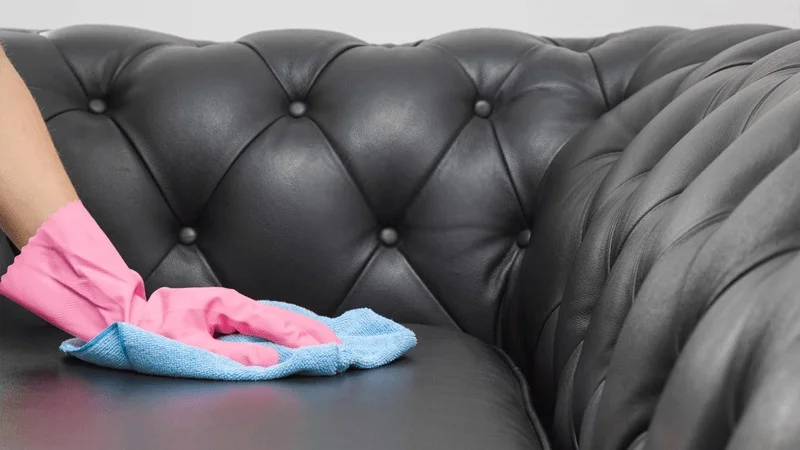
Start by removing dust, crumbs, and surface grime. Many manufacturers advise a dry cloth for regular dusting, while some also recommend careful vacuuming in seams and creases depending on the leather and furniture design.
Step 2: Test Any Product First
Always test in a hidden area. Leather finishes vary, and the same cleaner can behave differently on different hides. This is especially important for semi-aniline, bonded leather, and any sofa with an unknown finish. Spot testing is a common recommendation across care guides.
Step 3: Wipe the Surface Gently
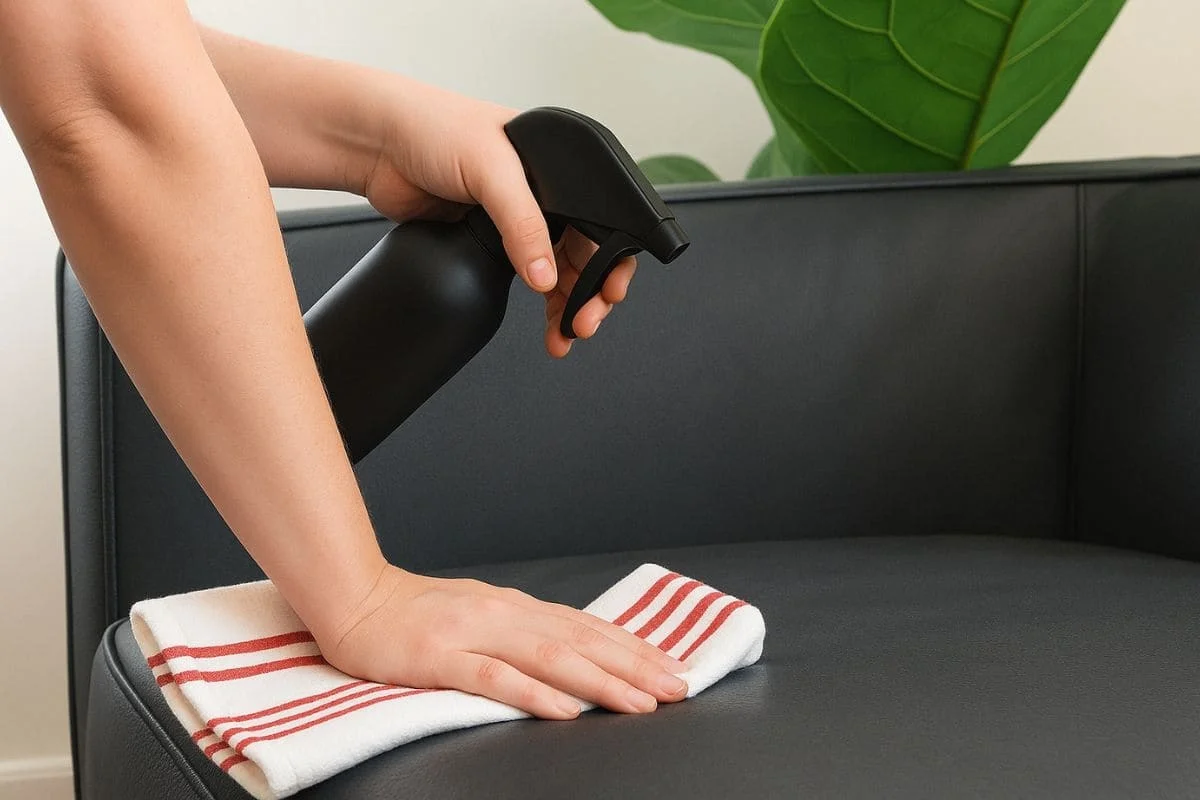
Use a barely damp microfiber cloth or a manufacturer-approved leather cleaner. Work in small sections. Do not soak the leather. Do not scrub hard. DFS and King Living both stress gentle care, while Southern Living and Architectural Digest recommend controlled cleaning and immediate drying.
Step 4: Tackle Mild Dirt and Grime
For light grime, use a mild soap solution or a leather-safe cleaner, depending on the finish. Wipe in gentle circular motions and keep the cloth clean so you are lifting dirt, not redistributing it. Some sources also note that for certain leathers, a diluted vinegar solution may Help With Grime, but only where the finish can tolerate it and after spot testing.
Step 5: Dry the Leather Properly
Dry the leather with a clean, soft cloth. Let it air-dry fully before sitting on it again. Leaving moisture behind can encourage mildew or dull the finish.
Step 6: Apply Leather Conditioner
Conditioning helps keep leather soft and reduces the risk of drying and cracking. Some brands advise conditioner as soon as a new sofa arrives for protection, while others recommend regular intervals such as monthly or every 6 to 8 weeks, depending on use and product instructions.
Cleaning Frequency Table
| Task | Recommended Frequency | Why It Matters |
| Dusting | Weekly | Prevents grit from scratching the surface |
| Spill cleanup | Immediately | Reduces staining and absorption |
| Light wipe-down | Weekly | Stops buildup on armrests and seams |
| Deep clean | Every 3 months | Removes oils and stubborn soil |
| Conditioning | 1–2 times per year, or as directed | Helps prevent dryness and cracking |
These timing patterns align with published care guidance from DFS, ScS, King Living, Southern Living, and Architectural Digest, although exact intervals vary by finish and manufacturer.
How to Deep Clean a Leather Sofa
A deep clean is different from a normal wipe-down. It is for visible buildup, sticky areas, or furniture that has not been maintained regularly. The process should still be gentle.
- Dust or vacuum lightly, depending on the care instructions.
- Test the cleaner in a hidden spot.
- Clean one section at a time.
- Wipe away product residue.
- Dry completely.
- Condition if the leather type needs it.
Manufacturer and editorial guides repeatedly advise against soaking leather, using aggressive scrubbing, or relying on harsh household chemicals.
Mini summary: Deep cleaning should refresh leather, not strip it.
How to Remove Common Leather Sofa Stains
Ink Stains
Ink is one of the hardest common stains. Some expert guides suggest rubbing alcohol on a cotton swab for small ink spots, but only with extreme caution because alcohol can damage or lighten leather. A targeted, minimal approach is essential.
Grease and Oil Stains
Grease should be blotted first, then treated with absorbent powder such as baking soda, talcum powder, or cornstarch in some guidance. This is one of the most widely repeated leather stain methods across care articles.
Food Stains
Remove solids first, then clean the area with a soft cloth and leather-safe cleaner or mild soap solution. Do not rub aggressively. Food stains become harder to remove once they are pushed deeper into the grain.
Pet Stains
Pet accidents should be dealt with immediately. Blot the area, remove residue carefully, and dry fully. Because body oils and moisture can penetrate leather, quick response matters.
Water Marks
Water marks are often a sign that the leather finish absorbed moisture unevenly. Use a gentle, even cleaning approach and dry the sofa properly afterward. If the leather is untreated or highly absorbent, professional restoration may be the safest path. That caution is consistent with the warnings from manufacturer care pages about not saturating leather.
Mold and Mildew
Mold usually happens when moisture is trapped. Dry the sofa thoroughly, improve airflow, and avoid soaking the leather in the future. If mold is severe, professional cleaning is safer than repeated DIY wetting. Architectural Digest specifically warns against leaving too much surface moisture behind.
Stain Cheat Sheet Table
| Stain Type | First Action | Safe Next Step | Risk Level |
| Ink | Blot, do not rub | Spot test alcohol only if appropriate | High |
| Grease | Blot immediately | Use absorbent powder | Medium |
| Food | Lift solids first | Mild cleaner and soft cloth | Medium |
| Pet stain | Blot and dry fast | Gentle leather-safe cleaner | High |
| Water mark | Dry evenly | Re-clean gently if needed | Medium |
| Mold | Remove moisture source | Air-dry and evaluate professionally | High |
Cleaning Different Leather Sofa Colors
White Leather Sofa
White leather shows transfer, grime, and discoloration more easily, so it needs regular dusting and fast spill cleanup. Gentle, even maintenance matters more than aggressive cleaning.
Cream Leather Sofa
Cream leather can darken with body oils around armrests and headrests. Focus on those contact zones, because care guides specifically note these as high-touch areas.
Brown Leather Sofa
Brown leather is a bit more forgiving visually, but it still dries out and can crack if ignored. Dust regularly and condition on schedule.
Black Leather Sofa
Black leather hides some marks better, but oils and dust still build up. Use the same routine as other leather types, especially in sunlight-exposed rooms.
Natural vs Commercial Leather Cleaners
Commercial leather cleaners are designed for leather care and usually give more predictable results. Natural solutions can work for light cleaning in some cases, but they are not universal. The current live advice online shows some variation: some sources use diluted vinegar or mild soap, while others warn against detergent, alcohol, or harsh household cleaners on leather. That is why finish type and product testing matter so much.
Practical rule: use the mildest product that gets the job done, and always follow the sofa maker’s care instructions first.
Can You Use Vinegar on Leather Furniture?
Sometimes yes, sometimes no. Some editors and experts recommend a diluted vinegar-and-water mix for certain grime or Stain Situations, while other care guides warn against harsh or unsuitable cleaners. The safest answer is this: only use vinegar when the finish allows it, test first, and never soak the leather.
Best Leather Cleaners in 2026
A good leather cleaner should be:
- pH-conscious or leather-safe
- suitable for your finish
- easy to apply with a microfiber cloth
- free from harsh solvents where possible
- approved by the sofa manufacturer if available
Better Homes & Gardens’ cleaner roundup highlights the importance of matching the cleaner to the use case, including specific options for couches, faux leather, and combined cleaner-conditioner products.
Best Leather Conditioners in 2026
A good conditioner should:
- Restore softness without leaving heavy residue
- Match the leather type
- Be used at the interval recommended by the manufacturer
- Be applied lightly and buffed properly
Arch Digest, DFS, and King Living all emphasize regular conditioning as part of long-term leather maintenance.
Common Leather Cleaning Mistakes
Avoid these mistakes:
- using too much water
- scrubbing hard
- applying alcohol freely
- using abrasive powders or tools
- forgetting to test products
- leaving moisture behind
- conditioning bonded leather with the wrong products
- cleaning too aggressively on aniline or nubuck leather
These warnings align with brand care pages and broader cleaning guidance that caution against alcohol, saturation, and harsh scrubbing on leather.
Leather Sofa Maintenance Schedule
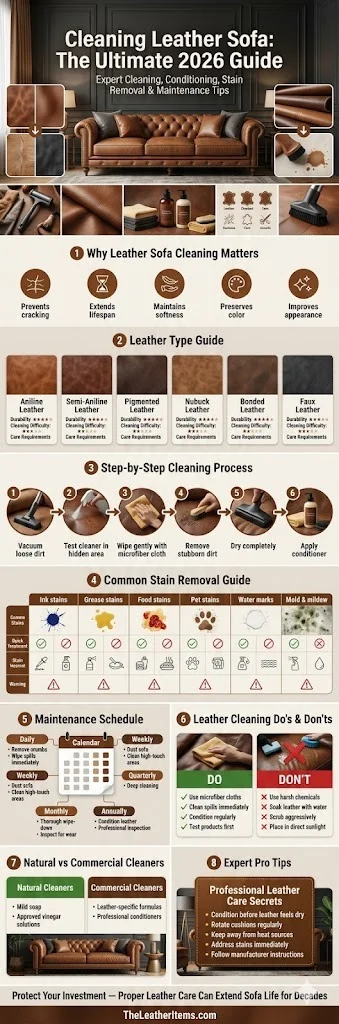
Daily Care
- Brush off crumbs
- Avoid food and drink spills
- Keep sharp objects away
Weekly Care
- Dust the surface
- Wipe armrests and headrests
- Inspect seams and creases
Monthly Care
- Do a more complete wipe-down
- Check for dryness or fading
- Clean high-contact zones
Quarterly Care
- Deep clean
- Review stain spots
- Evaluate whether conditioning is needed
Annual Care
- Inspect finish health
- Condition if your leather type requires it
- Consider professional cleaning for expensive or delicate pieces
This schedule is built from the recurring recommendations in current care guides: weekly dusting, immediate spill response, and periodic conditioning.
Professional Leather Cleaning vs DIY
DIY works well for routine care, light dirt, and small stains. Professional cleaning is smarter when:
- The leather is expensive or delicate
- The stain is large or old
- Mold is present
- The finish is unknown
- The sofa has cracking, peeling, or visible surface damage
That matches the practical advice repeated across manufacturer and editorial care pages: use gentle home care for maintenance, but do not force restoration where the leather may be damaged further.
Who Should Buy This Product
This guide is most useful for:
- Homeowners with leather sofas
- Families with kids or pets
- Buyers comparing real leather vs faux leather
- People caring for expensive upholstery
- Anyone trying to extend furniture life and reduce replacement costs
Who Should Avoid Heavy DIY Cleaning
Avoid aggressive DIY methods if:
- Your leather is aniline or nubuck
- The stain is large, old, or unknown
- The sofa is under warranty with specific care rules
- The finish is peeling, cracking, or unstable
Future Trends in Leather Care
The biggest trend is smarter, finish-specific care. Buyers are moving away from one-size-fits-all advice and toward leather-type matching, manufacturer-approved cleaners, and maintenance schedules that prevent damage instead of reacting to it. That is exactly where a detailed guide can outperform generic sofa-cleaning pages.
People Also Ask
A: A light wipe-down weekly is a good baseline, while deeper cleaning is usually done every few months, depending on use. Several current guides also recommend regular conditioning at intervals that vary by product and leather type.
A: Use a soft cloth, a leather-safe cleaner, or a mild soap solution. Test first, and never soak the leather. That is the most consistent advice across the live manufacturer guides I checked.
A: Sometimes, but only on finishes that can tolerate it and only after spot testing. Current guidance online is mixed, so the sofa’s care label should come first.
A: Not as a general cleaner. Some experts use it carefully for ink spots, but alcohol can also dry out and damage leather, so it should never be a routine cleaner.
A: Yes, in most cases. Conditioner helps keep leather supple and can reduce dryness and cracking, but the right frequency depends on the leather type and the manufacturer.
Conclusion
A strong leather care article wins because it is practical, specific, and Trustworthy. The live pages currently ranking for this topic tend to repeat the same basics: dust weekly, protect from sunlight, wipe spills quickly, and use conditioner. Your advantage is depth. Cover the leather type, the stain, the schedule, the mistakes, and the finish-specific warning before the reader even has to ask.
For TheLeatherItems.com, this topic also opens the door to broader authority around leather bags, jackets, belts, wallets, shoes, and leather care. That makes the page useful not only for search traffic, but for internal linking, brand trust, and long-term topical authority.
Legal disclaimer: Leather quality, pricing, manufacturing standards, and product availability may vary by country, brand, and supplier. Always verify authenticity, material details, and care instructions before purchase.