Introduction
A Hancock and Moore Leather Sofa is not a “buy it because it is expensive” purchase. It is a long-term furniture decision, and buyers usually want the same few answers before they commit: Is the leather real and high quality? Is the frame and suspension worth the premium? How long will it last? And is it the right sofa for my home, my family, and my budget? Hancock & Moore’s own construction and leather pages make it clear that the brand is built around handcrafted methods, eight-way hand-tied springs, solid frames, and leather selected for natural character rather than mass-produced uniformity.
That matters because current market pricing shows these are serious investments. Retail listings place many Hancock & Moore sofas in the mid-thousands and up, depending on model and leather selection, while competing luxury brands like Stickley and Bradington-Young occupy a similar premium buying zone with their own construction claims and customization options. This guide will help you decide whether the price is justified, what leather type to choose, and how to evaluate the sofa like an expert instead of a showroom impulse buyer.
What Is a Hancock and Moore Leather Sofa?
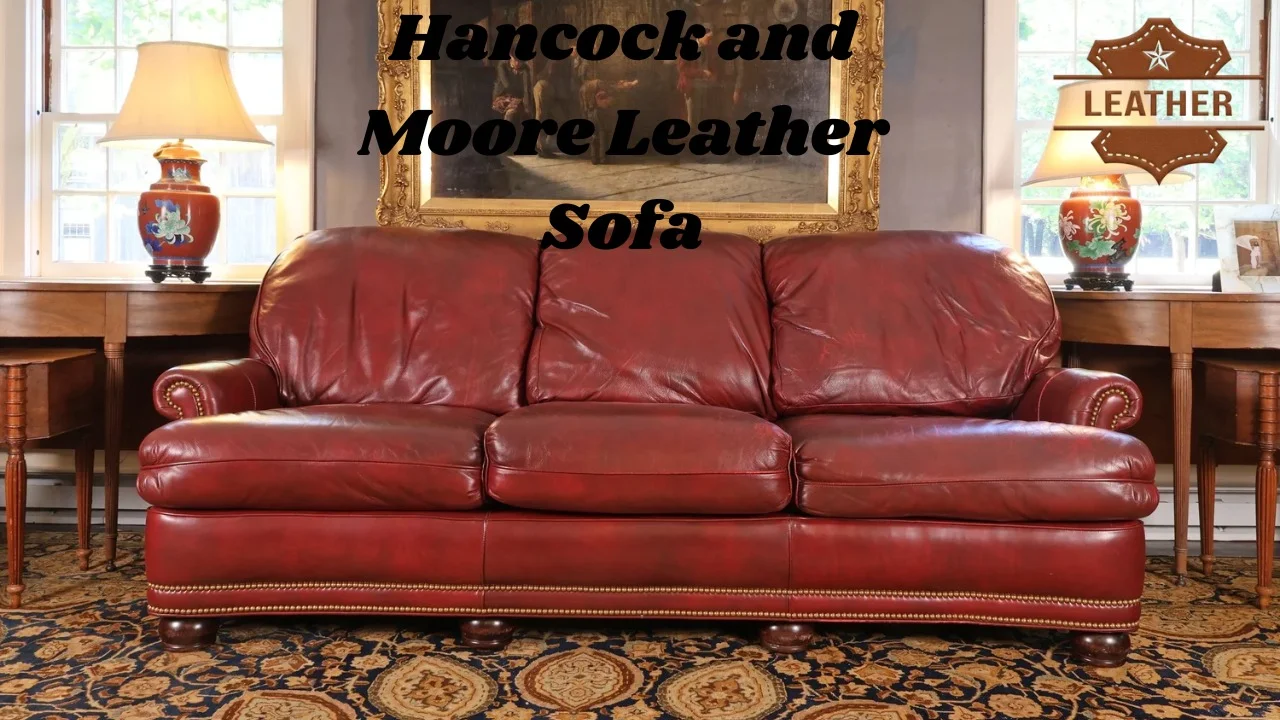
A Hancock & Moore leather sofa is a custom-built, high-end upholstered sofa made by a North Carolina furniture manufacturer known for handcrafted construction, made-to-order production, and a broad leather offering. The brand says its artisans spend up to 80 hours on a piece, and that no two pieces are exactly alike because they are handmade and built to order.
Snippet-ready answer:
A Hancock and Moore leather sofa is a handcrafted luxury sofa built to order in North Carolina, typically using solid-frame construction, eight-way hand-tied springs, and premium leather selections.
Why Hancock and Moore Matter in 2026
In 2026, buyers are more skeptical than ever about “luxury” marketing. They want proof. Hancock & Moore stands out because the brand’s own site gives concrete construction language instead of vague claims: solid frames, double-doweled corners, corner blocks, and labor-intensive eight-way hand-tied springs. That kind of transparency matters in a market where many sofas look premium online but use lower-cost suspension and foam shortcuts in real life.
The other reason it matters is longevity. Buyers at this price point are no longer shopping for a temporary sofa; they are shopping for a piece that should age well, develop character, and retain usefulness over many years. Hancock & Moore’s leather philosophy is built around natural markings, genuine hide variation, and performance-based leather classes, which is exactly the kind of story long-term buyers want to hear.
Types, Styles, and Variations You’ll See
Hancock & Moore sofas appear in a wide range of silhouettes and leather covers, from classic roll-arm and tailored traditional shapes to more relaxed, contemporary profiles. Retailer listings currently show models such as the Tinley, City, Santa Fe, Begador, Loftin, Oasis, Luna, Eli, Kent, and Morrow, which signals that the brand spans multiple design personalities rather than one fixed look.
That matters for SEO and buyer intent because searchers may be looking for a sectional, a sofa review, a modern leather couch, or a traditional luxury leather sofa, even when they start with the same brand name. Your article should speak to all of those variations without feeling scattered.
Leather Types Used: What Buyers Need to Know
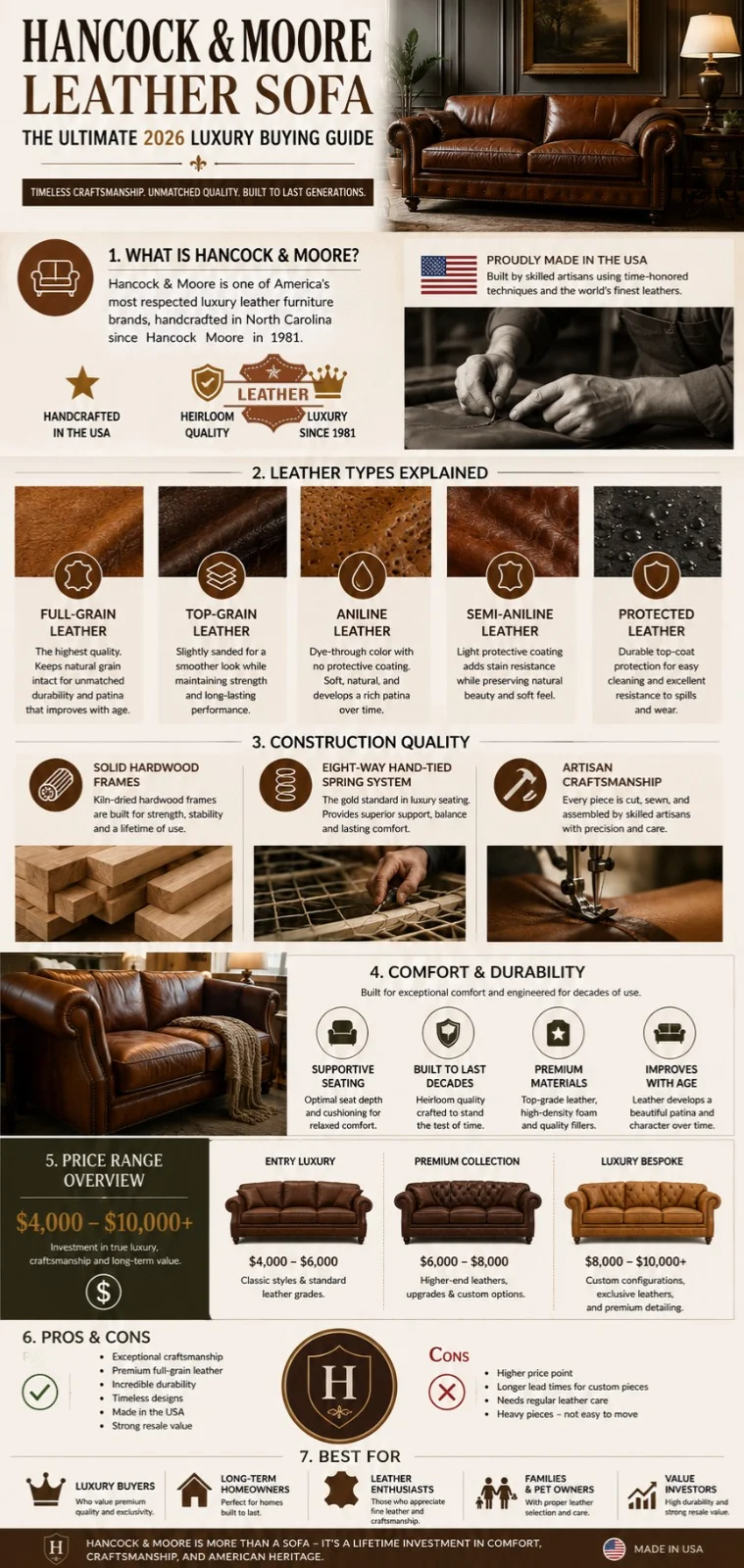
Leather education is where weak competitor pages usually fail. A strong article should explain the main leather categories in plain English. Industry references describe full-grain leather as leather with the original grain surface intact, while top-grain leather is leather that has been sanded, buffed, or otherwise corrected to remove some surface marks. Industry sources also define aniline leather as leather with no pigmented coating, semi-aniline leather as lightly pigmented leather that still shows natural characteristics, and pigmented leather as leather with a more opaque protective finish. Patina is the natural change in appearance that occurs as leather ages and wears.
Hancock & Moore’s own leather pages show how those ideas matter in practice. The company states that leathers are classified by characteristics, not quality, and that classes vary based on performance for different lifestyles. It also sells protected and unprotected leathers, and product pages sometimes describe specific leathers as top grain with a protective finish or as top grain with an aniline-dyed, unprotected, pull-up effect.
Table 1: Leather types and what they mean for buyers
| Leather type | What it generally means | Best for | Trade-off |
| Full-grain | Original grain surface intact | Buyers who want natural character and aging | Usually shows marks and variation more easily |
| Top-grain | Surface is sanded/buffed/corrected | Buyers who want a more even look | Less natural surface character than full-grain |
| Aniline | No pigmented coating | Natural look and patina lovers | More Vulnerable to staining and marks |
| Semi-aniline | Light pigment with natural appearance | Balanced luxury and practicality | Not as raw-looking as pure aniline |
| Protected | Added protective finish | Families, pets, heavy use | Less natural feel than unprotected leathers |
How Hancock and Moore Leather Is Selected
The brand says it travels around the world to hand-select leathers with natural appearance and distinctive markings, and it emphasizes that those marks are part of genuine leather’s identity. It also shows examples of brands, healed scratches, grain pores, and neck wrinkles as part of the hide’s natural story. That is the opposite of mass-market “perfect” upholstery, and it is exactly why the brand appeals to buyers who want character rather than a plastic-looking surface.
In practical terms, this means the best Hancock & Moore leather for one household may not be the best for another. A protected leather can be a smarter family choice, while an unprotected leather can be more rewarding for a buyer who wants patina and is willing to care for it properly. Hancock & Moore’s own class system supports that lifestyle-first idea.
Hancock and Moore Sofa Construction Breakdown
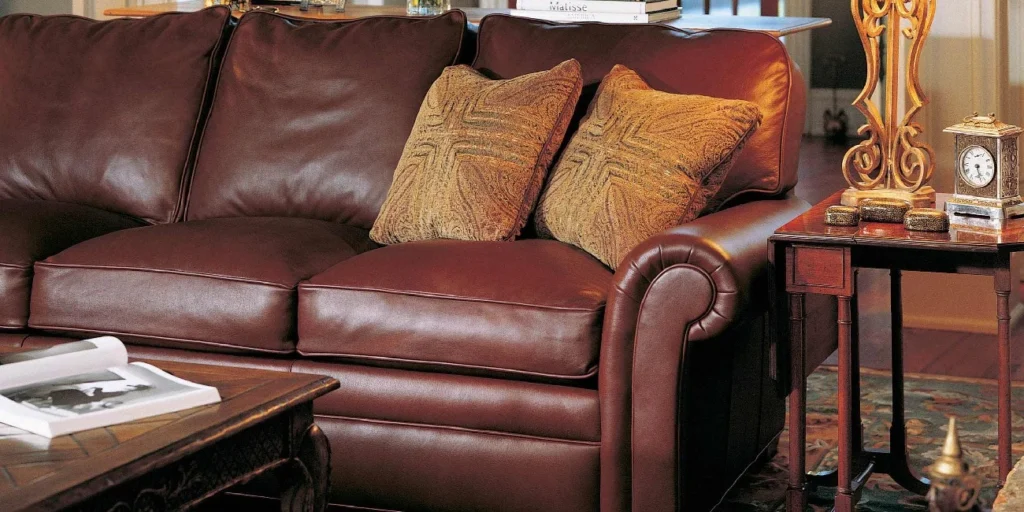
This is the section that should separate your page from the pack. Hancock & Moore says its frames are solidly built, corners are double-doweled and reinforced with screwed-in corner blocks, and up to 80 hours can be spent on a style. The company also says as many as 17 craftsmen may work on one piece, and it continues to use eight-way hand-tied coil construction, a labor-intensive method now rare in the market.
That construction story matters because suspension is what supports the seat feel over time. A sofa with premium leather but a weak structure will disappoint sooner than a sofa with excellent structure and good leather. Hancock & Moore is selling the full package: frame, springs, upholstery labor, leather selection, and custom build quality.
Construction checklist buyers should evaluate
When you are evaluating a Hancock & Moore sofa, ask these questions: Is the frame hardwood and well reinforced? Is the suspension eight-way hand-tied or a lower-cost system? Are the cushions down-filled, foam-wrapped, or spring-down? Is the leather protected or unprotected? These are the real drivers of comfort, longevity, and resale value. Bradington-Young product pages show how luxury competitors also emphasize eight-way hand-tied coils, hardwood frames, and premium cushion systems, which makes construction the right comparison point rather than brand hype alone.
Comfort Analysis: What Does It Feel Like?
Hancock & Moore sofas are usually built for supportive, tailored comfort rather than ultra-deep sink-in lounging. That is consistent with the kind of construction they advertise and with the way premium luxury upholstery brands describe their own stationary seating. In real buying terms, that means the sofa is more likely to feel substantial, structured, and durable than soft and cloud-like.
For many buyers, that is a feature, not a bug. Structured seating is often better for long-term posture, easier entry and exit, and a more formal living room look. If the goal is napping, movie-marathon sprawl, or extra-deep lounge seating, a different silhouette may fit better. If the goal is heirloom quality and everyday elegance, Hancock & Moore is doing what it is known for.
Durability and Expected Lifespan
A well-made Hancock & Moore sofa should be evaluated as a long-horizon purchase, not a short-cycle furniture buy. The brand itself frames its work as furniture that endures for generations, and its use of solid frames and eight-way hand-tied construction supports that positioning. The exact lifespan will depend on leather type, usage intensity, room climate, maintenance, and whether the piece is protected or unprotected leather.
Snippet-ready answer:
A Hancock and Moore sofa is best viewed as a decades-long investment if it is maintained properly, especially when built with the brand’s solid-frame and eight-way hand-tied construction.
Are Hancock and Moore Worth the Price?
The Price can be justified when the buyer values craftsmanship, longevity, natural leather character, and custom options. Current retail listings show Hancock & Moore sofas commonly priced in the mid-thousands to above $10,000, depending on style and customization, which places them squarely in luxury territory. Comparable premium competition from Stickley and Bradington-Young also sits in the several-thousand-dollar range, so the question is less “cheap or expensive” and more “which luxury build gives the best value for my needs?”
A simple ownership lens helps. If a sofa costs $8,000 and lasts 20 years, the cost is $400 per year before maintenance. If it lasts 25 years, that drops to $320 per year. That is why luxury buyers should compare cost-per-year, not just sticker price. The higher the build quality and repairability, the more the value proposition improves over time. That said, exact costs still vary by dealer, leather class, and fabric/leather combination.
Table 2: Why Hancock & Moore can be a value play, not just a luxury splurge
| Value factor | What it means | Why buyers care |
| Solid frame + corner reinforcement | Better structural integrity | Less likely to loosen early |
| Eight-way hand-tied springs | Labor-intensive premium suspension | Better seat support and ride consistency |
| Natural leather selection | Visible grain and marks are expected | More character, better aging story |
| Protected/unprotected choices | Different lifestyle fit | Easier buying decision for families vs patina lovers |
| Current luxury pricing | Mid-thousands to $10k+ range | Lets buyers benchmark against Stickley and Bradington-Young |
Best Hancock and Moore Sofa Collections
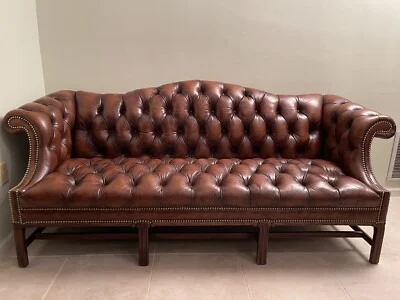
Your article should not pretend that every model is the same. Current listings show a wide spread, from relaxed contemporary options like Morrow to more tailored and transitional models such as City, Kent, and Santa Fe. Retailer pages also show custom and select-leather variants, which means the final look and price can shift significantly depending on the chosen cover and build level.
The practical message for readers is simple: choose the collection that matches the room, not just the brand. A deep, modern room may favor a softer silhouette, while a formal room may need tighter tailoring and a more upright seat. Since Hancock & Moore offers both traditional and contemporary styles, the brand works best when matched carefully to lifestyle and layout.
Hancock and Moore vs Other Luxury Brands
Here is the competitive reality you should explain in the article. Bradington-Young also pushes eight-way hand-tied construction, hundreds of leather options, and luxury customization. Stickley positions its sofas around made-in-USA craftsmanship, eight-way hand-knotted springs, and a price range that overlaps the premium tier. The right comparison, therefore, is not “which brand is the fanciest,” but “which brand gives the best combination of structure, leather, and seat feel for the money.”
Mini comparison summary
Hancock & Moore tends to win when the buyer wants a highly handcrafted, leather-first, heirloom-style sofa with deep natural character. Bradington-Young is a strong comparison when the buyer wants similar leather-luxury positioning and broad customization. Stickley is the comparison to study when the buyer values American craftsmanship, premium upholstery, and strong design identity.
Ownership Cost Analysis
This is one of your biggest ranking opportunities. Buyers want to know not only “what does it cost today?” but “what does it cost to own?” Start with the sofa price, then add maintenance, conditioner, occasional professional cleaning, and potential repair or recoloring if the leather is unprotected and heavily used. Because Hancock & Moore offers both protected and unprotected leathers, maintenance costs can differ substantially from one sofa to another.
A good long-term page should include a cost-per-year example, a note about repairability, and an honest explanation that unprotected leather may age beautifully but can require more careful treatment. That is how you make the article more useful than a surface-level review.
Maintenance Guide
Use this section to reduce fear and build confidence. For most premium leather sofas, the right care routine is simple: dust or vacuum gently, keep the piece out of harsh direct sunlight, test cleaning products in a hidden area, and match the leather-care approach to the exact finish. Protected leather is usually more forgiving, while unprotected leather rewards careful treatment and fast attention to spills. Hancock & Moore’s own protected/unprotected labeling makes that distinction easier for buyers to understand.
For unprotected or aniline-style leathers, buyers should expect more visible character development, including patina and marks from use. That is not a defect; it is part of the appeal. For families or high-traffic rooms, a protected leather is often the safer selection.
Simple care steps
- Vacuum with a soft brush attachment.
- Wipe with a clean, dry, or lightly damp microfiber cloth.
- Avoid harsh cleaners unless the leather maker approves them.
- Keep away from direct sun and heat vents.
- Match the conditioner and cleaner to the exact leather finish.
Common Complaints and Drawbacks
The most honest article does not hide the downsides. The first drawback is price. The second is that unprotected leather is less forgiving of stains and wear. The third is that Hancock & Moore’s tailored comfort will not appeal to buyers who want a soft, cloud-like lounge sofa. Another practical consideration is lead time and customization complexity, because made-to-order furniture naturally takes longer than stock, mass-market seating. Hancock & Moore’s own made-to-order approach and retailer listings support that expectation.
Who Should Buy a Hancock and Moore Sofa?
This sofa is a good match for buyers who want Heirloom-Quality seating, visible leather character, strong construction, and a luxury piece that feels substantial rather than trendy. It is especially attractive to homeowners who value American craftsmanship, long-term durability, and customization options. The brand’s own construction and leather pages support that positioning clearly.
Who Should Avoid It?
Avoid it if the main goal is bargain pricing, ultra-soft lounging, or a sofa that can be ignored with little maintenance. Also, avoid unprotected leather if the home has highly active pets, frequent spills, or no willingness to care for the surface. Hancock & Moore gives buyers the right choices, but those choices need to match the household.
Buyer Persona Guidance
For pet owners, protected leathers are usually the safer choice. For design purists who love patina, unprotected leather is often the more rewarding option. As families, durability plus easier cleaning should matter more than the rawest leather look. For luxury buyers, the real question is not whether Hancock & Moore is expensive; it is whether the craftsmanship, natural leather, and long lifespan justify the premium over time.
Future Trends in the Leather Industry
The future is moving toward clearer leather labeling, stronger lifestyle guidance, better repairability, and buyers who want honest explanations rather than vague “premium” claims. Hancock & Moore is already closer to that model than many competitors because it separates leather by characteristics and lifestyle performance, not just by a simplistic quality label. That makes it well-positioned for the kind of educated buyer who reads before buying.
People Also Ask
A: For buyers who care about craftsmanship, leather character, and long-term ownership, it can be. The brand’s solid-frame, eight-way hand-tied construction and made-to-order process support the premium price.
A: Protected leather is usually the safer everyday choice because it is built for more forgiving performance. Unprotected leather looks richer and ages more dramatically, but it needs more care.
A: Yes. Hancock & Moore says its upholstery leather is genuine leather with natural markings and characteristic variation, not engineered to look identical.
A: Bradington-Young also emphasizes eight-way hand-tied construction, premium leather options, and customization, so the decision often comes down to exact model, comfort feel, and dealer pricing.
With proper care, this is the kind of sofa buyers should expect to keep for many years, potentially decades, because of the construction method and premium materials used.
Conclusion
A Hancock and Moore leather sofa is best for buyers who want real craftsmanship, authentic leather character, and a sofa that can serve as a long-term home investment rather than a short-term furnishing. The brand’s construction story is strong, its leather selection is broad, and its lifestyle-based leather classes make it easier to choose the right cover for the right household. That is exactly why it deserves a deep, Honest Buying Guide instead of a thin review.
For the right buyer, the value is not only in how the sofa looks on delivery day, but in how it sits, ages, and holds up over time. That is the standard your article should promise, explain, and prove.
Legal Disclaimer
Leather quality, pricing, manufacturing standards, and product availability may vary by country, brand, and supplier. Always verify authenticity, material details, and care instructions before purchase.