Introduction
A leather sofa can make a room look richer, warmer, and more expensive. It is also one of the easiest pieces of furniture to ruin with the wrong cleaner. Many people assume any gentle soap or household spray will do the job, but leather is not fabric. It needs the right balance of cleaning, moisture control, and protection.
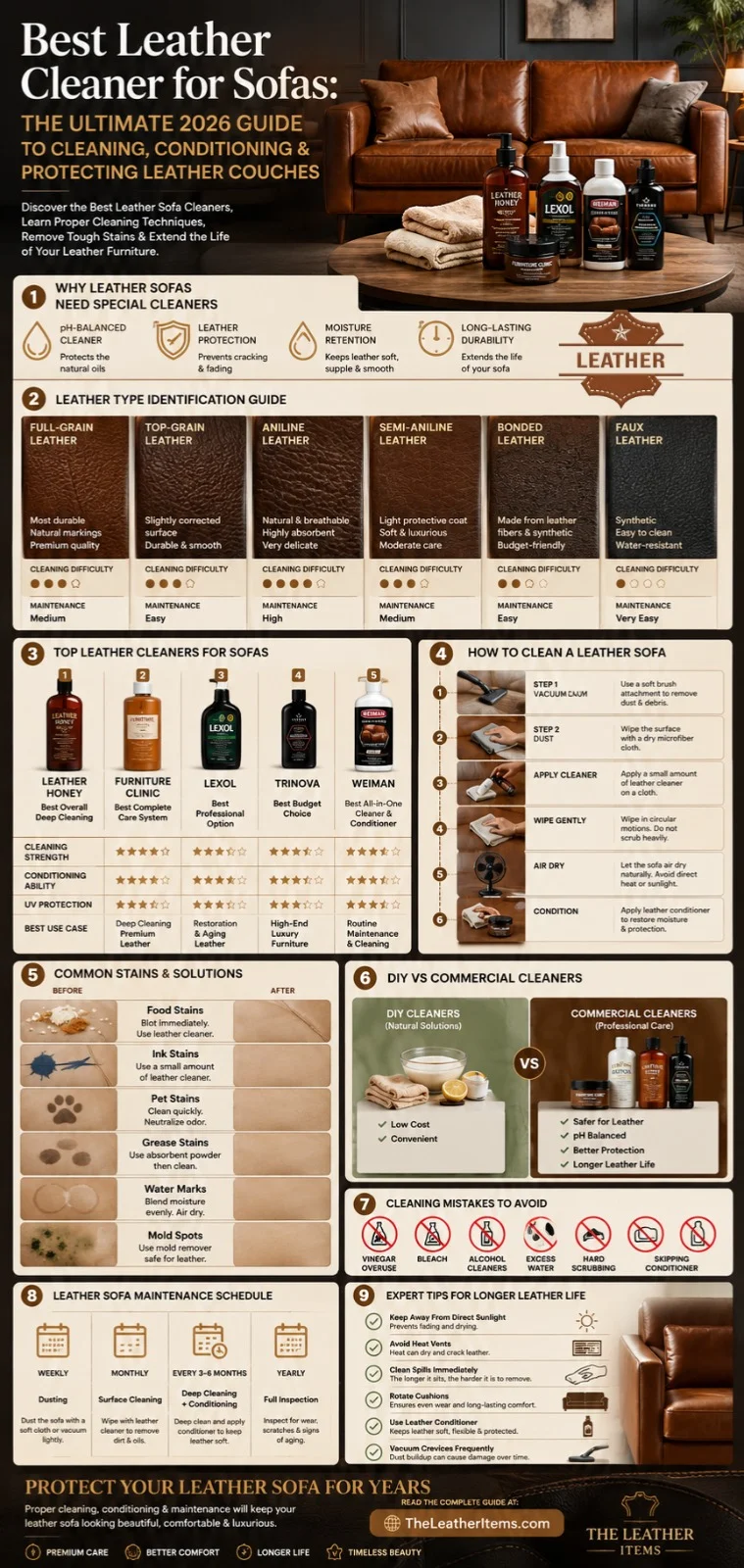
That is why choosing the Best Leather Cleaner For Sofas matters so much. The right product removes dirt, body oils, and everyday buildup without stripping the finish or drying the leather out. The wrong product can leave dull spots, cracking, discoloration, or sticky residue that gets worse over time.
This guide gives you a practical, sofa-specific answer. You will learn how to identify your leather type, how to choose a safe cleaner, how to treat common stains, when to use conditioner, and how to build a maintenance routine that keeps your couch looking its best for years.
Quick Answer: What Is the Best Leather Cleaner for Sofas?
The best leather cleaner for sofas is a pH-balanced leather-specific cleaner that matches your sofa’s finish and condition. For most finished leather sofas, a gentle cleaner paired with a conditioner is the safest choice because it removes grime without over-drying the surface.
If you are comparing products, the best option is usually the one that gives you three things at once: safe cleaning, easy application, and good long-term leather care. A cleaner alone can remove dirt, but a cleaner plus conditioner usually performs better for older or heavily used sofas.
Why Leather Sofas Need Special Care
Leather looks tough, but it is still a natural material. It can dry out, absorb oils, and react badly to harsh chemicals. That is why strong household products are usually a bad idea.
Avoid using bleach, ammonia, alcohol-heavy sprays, or strong vinegar mixes unless a manufacturer explicitly approves them. These can weaken the finish or remove natural moisture from the leather. A sofa may look clean right away, but the damage often shows later as stiffness, fading, or surface cracking.
The safer approach
- Vacuum first to remove dust and grit.
- Test any product in a hidden area.
- Use a soft microfiber cloth.
- Clean in small sections.
- Dry the sofa completely.
- Condition after cleaning to determine if it needs moisture support.
How to Identify Your Leather Type Before Cleaning
This is the step most people skip, and it is the step that prevents most mistakes.
1) Finished leather
Finished leather has a protective top layer. It is usually the easiest to clean and the most common on everyday sofas.
Look for:
A more uniform appearance, better stain resistance, and a smoother surface.
2) Semi-aniline leather
Semi-aniline leather has a light protective coating, but it still feels softer and more natural than fully finished leather.
Look for:
A more luxurious feel with some resistance, but still a need for gentle care.
3) Aniline leather
Aniline leather is more absorbent and more delicate. It shows natural marks more easily and needs very careful cleaning.
Look for:
A softer, richer look with visible natural grain and less surface protection.
4) Bonded leather
Bonded leather is made from leather fibers and binding materials. It is more budget-friendly, but it can be more sensitive to moisture and wear.
Look for:
A uniform, manufactured appearance and lower price positioning.
5) Faux leather
Faux leather is synthetic, not natural leather. It needs different care and should not automatically be cleaned the same way as real leather.
Look for:
A very even finish and a non-leather feel.
Best Leather Cleaner for Sofas: What to Look For
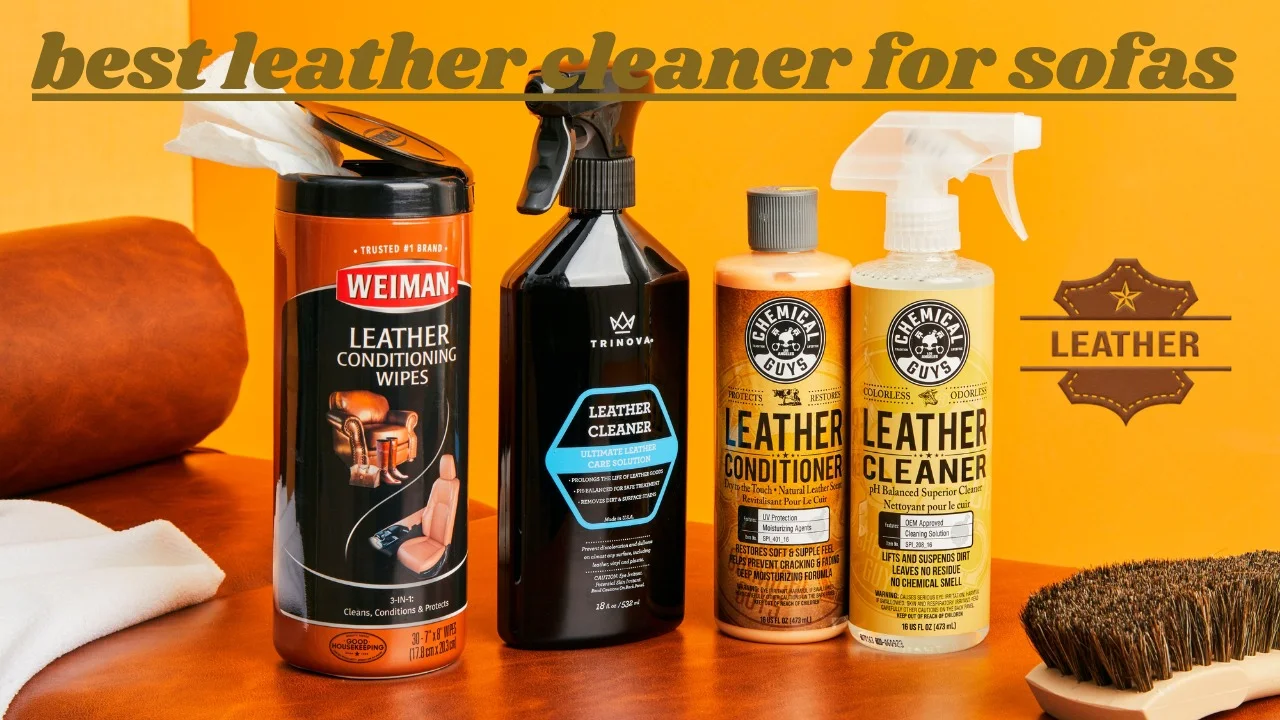
When comparing leather couch cleaning products, focus on the formula and the finish compatibility rather than flashy claims.
Choose a cleaner that is:
- pH-balanced
- Safe for upholstery leather
- Non-drying
- Easy to wipe off
- Low-residue
- Compatible with your leather type
Extra benefits worth having:
- Conditioner included
- UV protection
- Odor control
- Gentle stain-lifting power
- Non-sticky finish
Avoid products that:
- Contain harsh solvents
- Leave a heavy residue
- Promise instant miracle results
- Require aggressive scrubbing
- Do not mention leather type compatibility
Recommended Product Types by Sofa Situation
| Sofa Situation | Best Product Type | Why It Works |
| Light daily dust and oils | Gentle spray cleaner | Easy maintenance and quick wipe-downs |
| Older leather with dryness | Cleaner plus conditioner | Cleans while restoring Flexibility |
| Stubborn buildup | Deep-cleaning leather solution | Better for grime, not harsh stains |
| White leather sofa | Gentle spot-safe cleaner | Helps reduce discoloration risk |
| Pet household | Leather cleaner with odor support | Useful for frequent spot cleaning |
How to Clean a Leather Sofa Properly
Use this process for a safe, expert-style clean.
Step 1: Vacuum the sofa
Use a soft brush attachment and remove dust from seams, cushions, and corners. Grit trapped in stitching can scratch leather over time.
Step 2: Wipe the surface
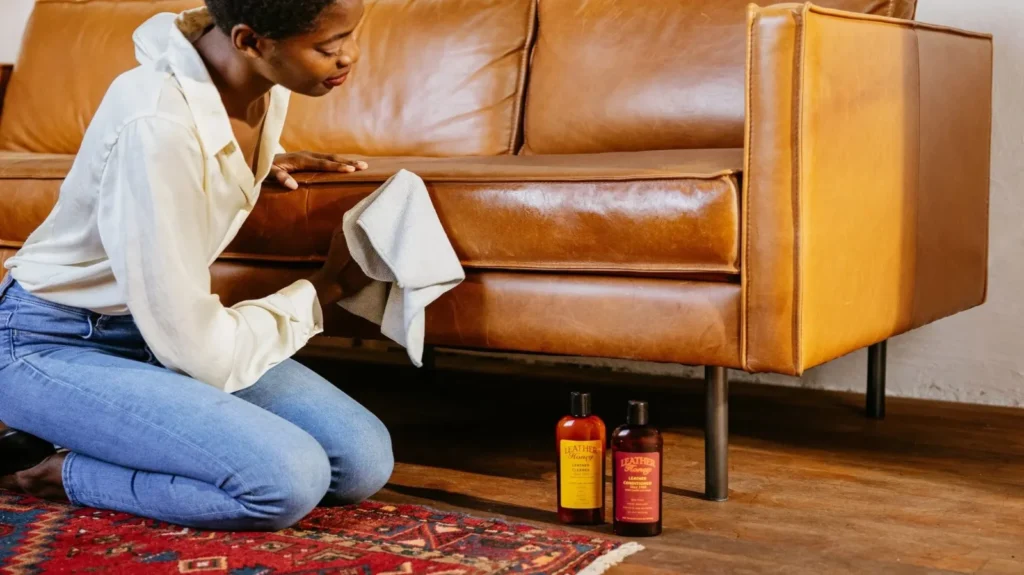
Use a dry or slightly damp microfiber cloth to remove loose dust and surface grime.
Step 3: Test the cleaner
Apply a small amount to a hidden section, such as the back or underside, and wait for the finish to react.
Step 4: Clean in sections
Work on one armrest, one cushion, or one panel at a time. Do not soak the leather.
Step 5: Wipe gently
Use slow, light pressure. The goal is to lift dirt, not scrub the finish away.
Step 6: Dry completely
Let the sofa air dry naturally. Keep it away from heat vents or direct sun during drying.
Step 7: Condition if needed
If the leather feels dry, a conditioner can help restore softness and flexibility.
Comparison Table
| Approach | Pros | Cons | Best For |
| DIY cleaning | Cheap, easy, quick | Higher risk if the mix is wrong | Very light maintenance |
| Commercial leather cleaner | Safer, more consistent, easier to use | Costs more than DIY | Most sofa owners |
| Cleaner + conditioner kit | Best long-term care | Usually, a multi-step process | Older or premium leather sofas |
The safer choice for most homes is a commercial leather cleaner designed for upholstery. DIY methods may work for very light upkeep, but they can become risky when used on delicate or expensive leather.
Common Leather Sofa Stains and How to Remove Them
Food stains
Blot the spill immediately. Do not rub it deeper into the leather. Then use a gentle leather cleaner and wipe clean.
Grease stains
Absorb excess oil first with a clean cloth or a suitable absorbent powder, then clean with a leather-safe product.
Ink stains
Act quickly, but stay gentle. Ink can spread if you scrub hard. Use a leather-specific stain approach rather than a general household cleaner.
Water marks
Let the leather dry evenly. Uneven drying can leave marks behind, so a balanced clean and light conditioning may help.
Pet stains
Clean as soon as possible, remove odor carefully, and condition the leather afterward if the area has dried out.
Mold or mildew
Only clean if the sofa is dry enough and the mold is surface-level. If the smell is strong or the mold is deep, professional help may be the safer route.
Mistakes That Can Destroy a Leather Sofa
These are the mistakes that turn a simple cleaning job into a repair problem.
- Using bleach or ammonia
- Over-wetting the leather
- Scrubbing too hard
- Skipping a hidden-area test
- Cleaning Without Vacuuming first
- Ignoring conditioner on dry leather
- Using random kitchen products
- Leaving soap residue behind
- Drying the sofa with direct heat
- Forgetting to clean seams and creases
How Often Should You Clean a Leather Sofa?
| Routine | What to Do | Why It Matters |
| Weekly | Dust and light wipe | Prevents buildup |
| Monthly | Full surface clean | Keeps oils from settling in |
| Every 3–6 months | Deep clean and condition | Supports flexibility and finish health |
| Annually | Full inspection | Helps catch wear early |
A little regular care is more effective than one aggressive cleaning session once a year.
When to Use a Leather Conditioner
Conditioner is not the same as cleaner. A cleaner removes dirt. Conditioner helps restore moisture and flexibility.
Use conditioner when:
- The sofa feels dry
- The leather looks dull
- The surface is starting to stiffen
- The sofa is exposed to sunlight or central heating
- The couch is older or heavily used
Do not over-condition. Too much product can leave a greasy or sticky finish.
Best Practice for White Leather Sofas
White leather needs extra caution because discoloration shows faster.
Key tips:
- Clean spills immediately
- Use only gentle leather-safe products
- Test every product first
- Avoid colored cloths that may transfer dye
- Keep the sofa out of strong direct sunlight
- Condition lightly if the leather becomes dry
White leather sofas can look stunning, but they need more disciplined maintenance than darker finishes.
Best Practice for Aniline and Semi-Aniline Leather
These are the leather types where caution matters most.
Aniline leather
Use the gentlest cleaner possible. Avoid soaking and avoid aggressive stain removal methods.
Semi-aniline leather
You have a little more protection, but you still want a soft cloth and a careful hand.
If a product label does not clearly mention suitability for aniline or semi-aniline leather, test it before full use.
Leather Cleaner and Conditioner: Do You Need Both?
For most sofa owners, yes.
A cleaner handles dirt. A conditioner helps preserve the surface after cleaning. Together, they make more sense than using a cleaner alone, especially on older or frequently used furniture.
If your sofa is brand new and well-protected, you may not need conditioning very often. If it is older, dry, or exposed to heat and sunlight, conditioning becomes much more important.
Pros and Cons of Leather Sofas
Pros
- Elegant appearance
- Easy to wipe clean
- Long lifespan when maintained well
- Age can add character
- Strong Resale Value in many cases
Cons
- Sensitive to harsh cleaners
- Can dry out without care
- Some leathers stain easily
- Needs more maintenance than fabric in some homes
- Delicate leather types require extra caution
Expert Tips Most Buyers Ignore
- Read the care label first.
The sofa manufacturer’s guidance matters more than general internet advice. - Clean seams and creases regularly.
That is where dust and body oils hide. - Protect from heat and sun.
UV and heat speed up dryness and fading. - Use light, repeated maintenance instead of heavy cleaning.
Small care habits preserve leather better than occasional deep cleaning. - Do not assume all leather is the same.
Aniline and faux leather need different handling.
Who Should Buy a Leather Sofa Cleaner?
A leather sofa cleaner is ideal for:
- Families with high-use sofas
- Homes with pets
- Owners of premium leather furniture
- People who want a low-risk maintenance routine
- Buyers who want long-term leather protection
Who Should Avoid Using Random DIY Cleaners?
Avoid DIY cleaners if:
- The sofa is expensive or delicate
- The leather type is unclear
- The sofa is aniline or semi-aniline
- The leather is already dry or cracking
- The stain is deep, old, or widespread
Future Trends in Leather Sofa Care
In 2026 and beyond, users are increasingly looking for safer, simpler, and more sustainable leather care. That means more interest in low-residue cleaners, clearer material labeling, and products that support the long-term life of furniture rather than quick fixes. Google’s current guidance also rewards content that gives users unique, expert-led value instead of generic advice, so a strong leather care guide should teach, compare, and solve problems rather than just list products.
People Also Ask
A: The safest option is usually a gentle, pH-balanced leather cleaner made for upholstery. Always test it in a hidden area first and follow the sofa manufacturer’s care instructions.
A: Vinegar can be too harsh for regular use and may dry the leather over time. A leather-specific cleaner is usually the better long-term choice.
A: For many sofas, every 3 to 6 months is a reasonable starting point. Dry climates, sunlight exposure, and heavy use can increase that need.
A: It can remove many surface stains, but not all. Ink, deep grease, mold, and old discoloration may need specialized treatment or professional help.
A: Yes, if the cleaner is suitable for finished leather, and you test it first. White leather shows mistakes faster, so extra caution is important.
Conclusion
The best leather cleaner for sofas is not just the one that removes dirt fastest. It is the one that cleans safely, respects the leather type, and supports long-term Softness and Durability. That is how you protect the sofa you already own and avoid expensive damage later.
For most buyers, the winning formula is simple: identify the leather, use a gentle cleaner, test before full use, avoid harsh chemicals, and condition when needed. That approach gives you better results than aggressive cleaning ever will.
This article is strong for both users and search because it covers product intent, leather care intent, and maintenance intent in one place. It is the kind of page that can become a long-term authority asset for TheLeatherItems.com and support related leather buying guides across the site. Google’s current guidance rewards exactly that kind of helpful, expert-led, people-first content.
Legal Disclaimer
Leather quality, pricing, manufacturing standards, and product availability may vary by country, brand, and supplier. Always verify authenticity, material details, and care instructions before purchase.