Introduction
A faux leather sofa looks stylish, feels easy to live with, and usually costs less than real leather. But that “easy-care” label can be misleading. If you use the wrong cleaner, scrub too hard, or let spills sit too long, the surface can turn sticky, dull, cracked, or peeled.
So, How Do I Clean a Faux Leather Sofa the right way?
The short answer is simple: remove loose dust first, wipe with a soft microfiber cloth dampened with mild soap and water, then dry the surface immediately. That approach fits the way faux leather is made. Artificial leather is usually a synthetic material such as PU or PVC, and many retail care guides recommend gentle wiping, spot cleaning, and avoiding harsh cleaners like bleach, ammonia, acetone, and abrasive pads.
The problem is that most “cleaning tips” pages stop there. Real users need more: what to do with ink, grease, food spills, dye transfer, pet mess, and sticky residue. They also need to know what to avoid so they do not make the damage worse. This guide covers all of that in a simple, practical way.
Quick Answer: The Safest Way to Clean a Faux Leather Sofa
If the sofa is only dusty or lightly dirty, use this routine:
- Vacuum or dust the surface with a soft brush attachment or a dry microfiber cloth.
- Mix a small amount of mild soap with lukewarm water.
- Dip a microfiber cloth into the solution and wring it out so it is only damp.
- Wipe one small section at a time.
- Wipe again with a clean damp cloth to remove residue.
- Dry immediately with a soft towel.
That method aligns with retailer care guidance that favors gentle blotting or wiping, mild soap or approved cleaners, and immediate drying. It also reduces the risk of finish damage because faux leather is a layered synthetic surface rather than a natural hide.
What Faux Leather Actually Is
Faux leather, also called artificial leather or pleather, is made to imitate the look of real leather. Britannica explains that artificial leather is commonly associated with materials such as PU and PVC, both of which are synthetic polymer-based materials. It also notes that faux leather lacks the natural pores of real leather, which is one reason spills and cleaners behave differently on the surface.
That matters for cleaning because faux leather does not respond like genuine leather. Real leather can sometimes tolerate specific conditioners and hide-care products, while faux leather is usually better served by gentle surface cleaning. In many product guides, the safest recommendation is still the simplest one: soft cloth, mild soap, spot test first, and no aggressive scrubbing.
Why this matters for your sofa
Faux leather often has a surface coating bonded to a backing material. Once that top layer is stressed by harsh chemicals or rough cleaning, the finish can become dull, sticky, or worn. Cleaning is not just about making the sofa look good today. It is also about preserving the surface for the long term.
Mini summary:
Faux leather is a synthetic material, usually PU or PVC-based, and it needs gentle surface cleaning rather than heavy-duty treatment.
What You Should Know Before Cleaning Faux Leather
Before you touch the sofa with any cleaner, check three things.
1) Read the care tag
Some upholstered furniture includes a cleaning code or care label. Ashley notes that upholstery products often have tags that explain the recommended cleaning method, and those instructions should be followed first. That is always safer than guessing.
2) Test in a hidden area
Even a mild cleaner can affect a finish differently depending on the brand, dye, and coating. A hidden test spot prevents a visible mistake.
3) Use very little liquid
The safest approach is a damp cloth, not a wet one. Most guidance for upholstered care emphasizes blotting, wiping, and quick drying rather than saturating the surface.
4) Work in small sections
Cleaning a sofa section by section helps avoid streaking and lets you stop before over-wetting seams or edges.
Mini summary:
Follow the care tag, spot test first, and keep moisture low. That is the safest way to protect faux leather.
Step-by-Step Guide to Cleaning a Faux Leather Sofa Safely
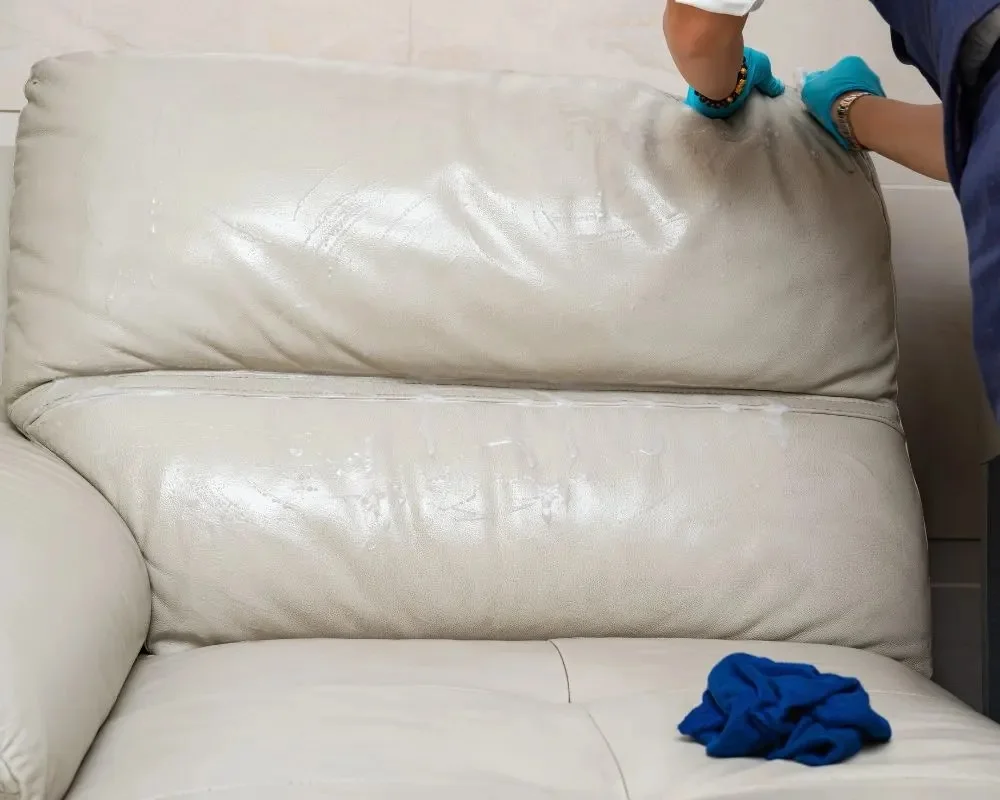
Step 1: Remove dust and surface debris
Start with a dry microfiber cloth, a lint-free towel, or a vacuum with a soft brush attachment. Focus on seams, corners, and under cushions where dirt collects. If you skip this step, you can drag dust across the surface and create fine marks.
Why this matters: fine dirt acts like grit. Even gentle wiping can become mild abrasion if the surface is dirty enough.
Step 2: Prepare a mild soap solution
Use lukewarm water with only a few drops of mild dish soap or a gentle cleaner approved by the manufacturer. You are not trying to create a foamy wash. You only need enough cleaning power to lift everyday soil.
Retail care guides consistently recommend mild soap, gentle wiping, and immediate drying rather than strong solvents or abrasive cleaners.
Step 3: Wipe gently, one section at a time
Dip the cloth into the solution and wring it out thoroughly. It should feel slightly damp, not dripping.
Wipe in small circular motions or light straight passes. Do not scrub hard. If a spot is not moving, pause and treat it as a stain problem instead of attacking it with pressure.
Step 4: Rinse residue away
Take a second clean cloth, dampen it with plain water, and wipe the same section again. This removes soap residue, which can make the surface look cloudy or tacky if left behind.
Step 5: Dry immediately
Use a dry Microfiber Towel to remove remaining moisture. Then let the sofa air-dry naturally in a well-ventilated room.
Do not use a hair dryer or other heat source. Even if the sofa looks dry, forcing heat onto the surface is unnecessary and can stress delicate coatings. It is safer to let air do the work.
Mini summary:
Dust first, clean with a damp soapy cloth, wipe away residue, and dry immediately. That is the core cleaning system.
How to Remove Different Stains from a Faux Leather Sofa
A one-size-fits-all approach is not enough here. Different stains behave differently, so the response should match the stain.
Ink stains
Ink is best treated as a spot issue, not a full-sofa cleaning issue.
Blot the stain gently first. If the care tag and manufacturer guidance allow a solvent-based spot treatment, use a tiny amount on a cotton swab and test carefully in an unseen area first. For many synthetic upholstery items, care guidance may allow solvent cleaning, but the label should control the decision. General care guidance still warns against overuse of alcohol-heavy cleaners and harsh solvents.
Best practice: start small, do not rub, and stop if the finish changes.
Food and drink spills
Act fast. Blot the spill with a clean cloth before it spreads. Then wipe the area with a mild soap solution and dry it right away. This approach follows the same logic used in major upholstery care instructions: remove excess liquid first, then clean gently.
For sticky drinks, sauces, or sugary spills, repeat the wipe rather than scrubbing harder. Repeated gentle passes are safer than one aggressive one.
Oil and grease marks
Grease should be lifted, not ground in. Blot excess oil with a dry cloth, then clean the area with mild soap and water. If the stain remains visible, repeat the process after the surface dries.
Do not attack grease with a harsh degreaser unless the manufacturer explicitly recommends it. Many strong household products damage the finish faster than the stain damages the sofa.
Dye transfer from jeans or clothing
Dye transfer often shows up on light-colored faux leather. The safest approach is a mild soap wipe, repeated patiently, with immediate drying between passes. Avoid abrasive sponges, which can rough up the surface and make the mark more noticeable.
Pet stains
For pet messes, first remove any residue carefully. Then clean the area with a mild soap solution and dry thoroughly. If odor remains, use the mildest approved upholstery-safe cleaner available on the care tag.
Stain Matrix
| Stain Type | First Move | Best Next Step | What to Avoid |
| Ink | Blot gently | Spot test a tiny amount of cleaner on a hidden area | Rubbing hard, soaking the surface |
| Food/drink | Blot excess liquid | Mild soap + damp cloth | Letting it sit, scrubbing |
| Oil/grease | Blot dry | Mild soap and repeat gently | Harsh degreaser, abrasive sponge |
| Dye transfer | Gentle wipe | Repeat with a mild soap solution | Strong solvents, rough pads |
| Pet mess | Remove residue first | Mild cleaner and full drying | Over-wetting seams |
This matrix follows the same care philosophy used by major furniture brands: start with the least aggressive option, blot or wipe gently, and avoid harsh chemicals or scrubbing.
How to Clean a Sticky Faux Leather Sofa
A sticky faux leather sofa usually means there is either cleaner residue, built-up grime, humidity-related tackiness, or surface wear. The fix should be gentle.
First, wipe the sofa with a microfiber cloth dampened with plain water to remove residue. Then clean it again with a mild soap solution. Finish with a clean, damp cloth and dry it completely.
If the surface is still tacky, stop adding products. A sticky finish can get worse when too many cleaners are layered on top of each other. In that case, the issue is no longer simply dirt. It may be finish failure, and cleaning alone may not fully restore it.
Mini summary:
Sticky faux leather usually needs residue removal, not stronger chemicals.
What NOT to Use on Faux Leather
This is the section most competing pages miss, and it is one of the most important.
Avoid these unless the product care tag specifically says otherwise:
- Bleach
- Ammonia-Based Cleaners
- Acetone or nail polish remover
- Alcohol-heavy household cleaners
- Abrasive scrubbing pads
- Rough sponges
- Strong solvent sprays
- Unknown all-purpose cleaners
- Excess water
Furniture care pages from major retailers consistently warn against harsh chemicals, alcohol-based products, and abrasives because they can damage the protective finish or topcoat.
Why these are risky
Faux leather is a surface-finished material. Once that finish is attacked, the damage may show as dull patches, color loss, cracking, or peeling. Cleaning should protect the surface, not strip it.
A useful rule
If a cleaner is powerful enough to “cut through anything,” it is usually too strong for faux leather furniture.
Mini summary:
No bleach, no acetone, no abrasive pads, and no hard scrubbing.
How to Prevent Cracks and Peeling
Cleaning helps, but prevention is what keeps the sofa looking good longer.
Keep the surface clean
Dust and body oils can build up over time. Gentle regular cleaning prevents that buildup from becoming sticky or abrasive.
Do not let spills sit
The longer a spill remains on the surface, the more likely it is to stain or leave residue.
Avoid harsh product buildup
Many sofas become tacky because too many cleaners or protectants have been used without proper rinsing.
Keep the sofa away from harsh environmental stress
Even when faux leather is easy to wipe clean, it still does better when it is not constantly exposed to avoidable stressors like prolonged sun, heat, or repeated rubbing. That caution is consistent with the broader care advice furniture makers give for upholstery and leather-like finishes.
Protect high-wear zones
Armrests, seat fronts, and headrest areas wear faster because they get the most contact. Clean these spots more often than the rest of the sofa.
Replace cleaning habits that cause damage
If you are scrubbing, soaking, or using strong chemicals, the “care” routine is actually wearing the sofa down. Gentler habits last longer.
Mini summary:
The best way to prevent peeling is consistent gentle care, fast spill cleanup, and no harsh products.
Maintenance Routine for a Long-Lasting Faux Leather Sofa
A simple schedule works better than random deep cleaning.
Weekly
Dust the sofa with a dry microfiber cloth. Vacuum seams and corners.
Monthly
Wipe the full surface with a mild soap solution, then dry it completely.
After spills
Blot immediately, then clean and dry the affected area the same day.
Every few months
Inspect armrests, seams, and headrest areas for signs of wear, tackiness, or early peeling.
This routine is practical because it mirrors the way major care guides approach upholstered furniture: regular light cleaning, gentle products, and immediate attention to spills.
How to Tell When Cleaning Is No Longer Enough
Cleaning can remove dirt, residue, and many stains. It cannot reverse damaged surface coating.
Look out for these signs:
- The surface is flaking or peeling
- Color is missing in worn areas
- The finish feels permanently tacky
- Cracks keep reappearing after cleaning
- The sofa looks patchy even after gentle care
At that point, cleaning may improve appearance but will not restore the original finish. It is better to treat the sofa as a maintenance or repair issue instead of a Cleaning Issue.
Pro-Level Faux Leather Cleaning Tips Most People Miss
Use two cloths, not one
One for cleaning, one for drying. This reduces residue and streaking.
Do not clean in a rush
Rushing usually means using too much liquid or pressure.
Always finish dry
Leaving moisture behind can create streaks, residue, or tackiness.
Clean seams separately
Dirt collects in seams faster than on flat panels. Use a lightly damp cotton swab or soft cloth corner.
Keep a dedicated microfiber cloth for the sofa
Laundry residue or fabric softener from other cloths can transfer back onto the surface.
Treat the sofa like a finish, not a fabric
That mindset helps you avoid the “scrub it harder” mistake.
Who This Cleaning Method Is Best For
This method works best for:
- Apartment and family living rooms
- Budget-friendly faux leather sofas
- Light-use to medium-use seating
- Homes that want easy maintenance without complicated products
- Buyers who want a practical, low-risk routine
Who Should Be Extra Careful
Use the gentlest possible approach if:
- The sofa is very light in color
- The finish is already cracking
- The care tag is missing
- You are dealing with a brand-new product and want to protect the warranty
- The sofa has a special coated or performance finish

People Also Ask
A: Yes, but only in small amounts. Use a damp cloth, not a wet one, and dry the surface right away. That keeps moisture from lingering on the finish.
A: The safest home cleaner is usually mild soap mixed with lukewarm water. Start with the least aggressive option and spot test first.
A: Wipe away residue with a damp microfiber cloth, then clean again with mild soap and dry thoroughly. If the stickiness stays, the finish may fail rather than be dirty.
A: Blot first, then clean with mild soap and a damp cloth. For tougher spots, repeat gently instead of scrubbing. Always spot test any stronger product first.
A: Keep the sofa clean, avoid harsh chemicals, dry it after cleaning, and do not scrub the finish. Regular gentle care is better than occasional aggressive cleaning.
Conclusion
Cleaning a faux leather sofa is easy when you use the right method and Avoid The Wrong Products. Start with dust removal, use a mild soap-and-water solution, treat stains gently, and dry the surface fully. Most of all, do not attack the finish with bleach, acetone, abrasive sponges, or heavy scrubbing.
If you follow the care tag and clean the sofa regularly, you can keep it looking smooth, neat, and comfortable for years. Faux leather may be a synthetic material, but it still rewards careful maintenance. That is the difference between a sofa that ages well and one that starts peeling too soon.
For TheLeatherItems.com, this article also creates a strong bridge into related leather care and buying content, helping readers trust the site for practical guidance across leather and leather-like products.
Legal disclaimer: Leather quality, pricing, manufacturing standards, and product availability may vary by country, brand, and supplier. Always verify authenticity, material details, and care instructions before purchase.