Introduction
Male Leather Strap Watches have stayed popular for one simple reason: they solve more than one style problem at once. They look refined, feel comfortable, and work in a wider range of outfits than most metal-bracelet watches. The real challenge is choosing the right one. A watch can look great online and still feel wrong on the wrist if the case size is off, the strap quality is poor, or the movement does not match your lifestyle.
This guide breaks the topic down in a practical way. You will learn how to choose the right leather type, how to match case size to wrist size, whether quartz or automatic makes more sense, which colors work best, and how to care for the strap so it lasts. I will also show you what most competitor articles miss: the details that help a buyer make a confident, long-term decision. That matters because modern search results reward depth, clarity, and real usefulness, not just keyword repetition.
What Are Male Leather Strap Watches?
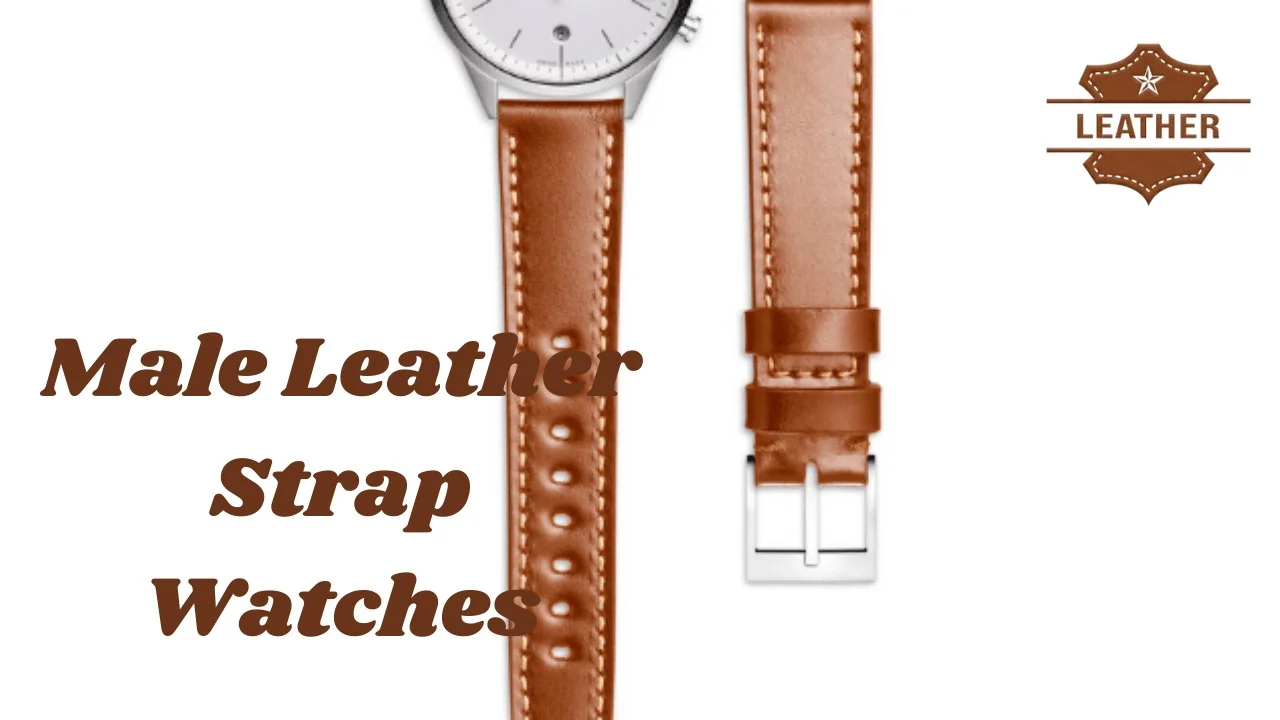
Male leather strap watches are timepieces designed with a leather band instead of a metal bracelet. They are usually chosen for comfort, elegance, and versatility. In practice, they are often worn as dress watches, office watches, or everyday style pieces.
A good leather strap watch is not just about the strap. It is the whole package: case size, dial design, movement, crystal, buckle, and strap material all work together. The strap is the part you feel every day, but the movement is what keeps the watch honest, and the case proportions are what make it look balanced on your wrist. Watch buyers often miss that fit is not just about case diameter; lug-to-lug length matters too.
Key parts to understand
- Case: The body of the watch.
- Dial: The face you read.
- Movement: The mechanism that keeps time.
- Crystal: The covering over the dial.
- Strap: The leather band that secures the watch.
- Lugs and lug width: The points where the strap connects.
Why Male Leather Strap Watches Still Matter in 2026
Leather strap watches remain relevant because style is moving toward quieter, more intentional choices. Recent fashion coverage shows continued interest in smaller, more refined watches, including thin straps and compact silhouettes that feel modern without being loud. That trend makes leather strap watches especially attractive for men who want a classic, polished look that still feels current.
They also matter because they are flexible. One watch can move from office wear to dinner to formal events simply by changing the strap color or finish. That makes leather watches useful for buyers who want fewer, better pieces instead of a large collection.
Why buyers still choose leather
- It looks more formal than most sports straps.
- It feels lighter than metal on the wrist.
- It can age beautifully and develop character.
- It pairs well with suits, jackets, shirts, and smart-casual clothes.
- It is often the easiest way to make a watch look more elegant.
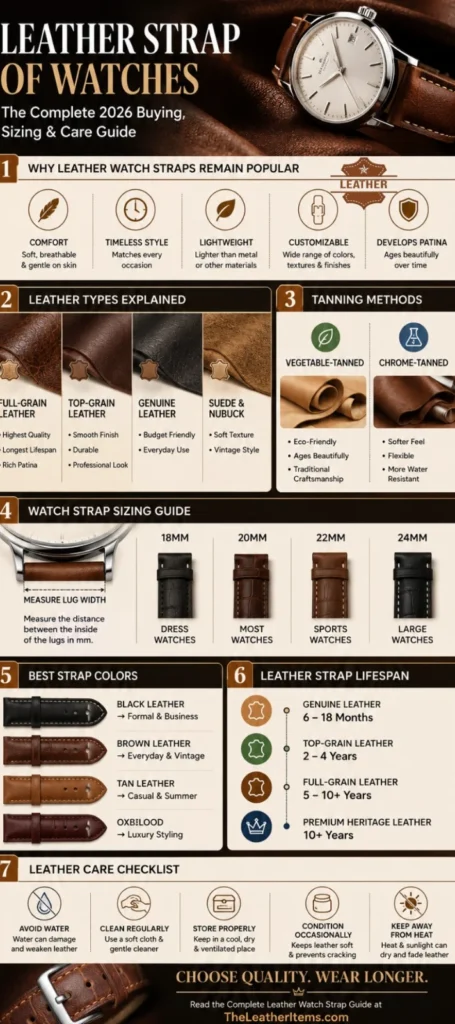
Types of Leather Used in Men’s Watch Straps
Leather quality matters more than most buyers realize. Industry references define full-grain leather as the original grain surface of the hide with nothing removed from the top layer, while leather terminology can be inconsistent across marketing, so buyers should ask for exact material and finish details rather than trusting a label alone. Suede and nubuck are also distinct: suede is typically a velvet-like finish created by buffing, while nubuck is buffed on the grain side.
1) Full-grain leather
This is the most natural-looking option and usually the most durable when made well. It keeps the original grain surface, which means it can age nicely and develop patina.
Best for: buyers who want durability, premium feel, and long-term wear.
2) Top-grain leather
In technical leather references, top grain and full grain are sometimes treated closely, but in retail language, the term is often used to describe leather that has been refined or finished for a cleaner appearance. Ask the seller exactly how the leather was processed.
Best for: buyers who want a smoother, more uniform finish.
3) Genuine leather
This phrase sounds premium, but it is too broad to judge quality on its own. It only tells you that the product is real leather, not necessarily that it is the best leather. Always ask what part of the hide was used and how it was finished.
Best for: budget-conscious shoppers who still want real leather.
4) Calfskin leather
Soft, fine-grained, and popular for dress watches. It often feels smoother and more elegant than heavier leathers.
Best for: office wear and formal watches.
5) Suede leather
Suede has a soft nap and a more relaxed texture. It looks stylish, but it needs more care and is less ideal for wet or sweaty conditions.
Best for: casual and fashion-forward looks.
6) Nubuck leather
Nubuck is similar in feel to suede but is buffed on the grain side. It has a velvety look and can feel luxurious, but it also needs careful maintenance.
Best for: premium casual style.
7) Horween leather
Horween is a well-known tannery name in leather goods. For watch straps, a named tannery can be a useful trust signal because it gives buyers more transparency than vague “genuine leather” marketing.
Best for: buyers who care about provenance and craft.
8) Exotic leathers
This includes materials such as crocodile-style finishes or other specialty skins where legal and responsible sourcing matters. If you buy exotic leather, verify authenticity, compliance, and care instructions carefully.
Leather Types Compared
| Leather Type | Look | Durability | Care Level | Best Use |
| Full-grain | Natural, premium | High | Medium | Daily premium wear |
| Top-grain | Smooth, refined | High | Medium | Office and dress wear |
| Genuine leather | Variable | Medium | Medium | Budget buyers |
| Calfskin | Fine, elegant | Medium-High | Medium | Dress watches |
| Suede | Soft, textured | Medium | High | Casual style |
| Nubuck | Velvety, upscale | Medium | High | Smart Casual |
| Exotic | Distinctive, luxury | Variable | High | Luxury collectors |
Mini summary:
If you want the safest all-round choice, start with full-grain or good calfskin. If you want style on a tighter budget, genuine leather can still be acceptable, but ask clear questions about the hide, finish, and lining.
How a Male Leather Strap Watch Is Made
A quality leather strap watch is the result of several decisions, not one. The case may come from one maker, the movement from another, and the strap from a separate leather supplier or tannery. On the leather side, major industry groups like the Leather Working Group focus on traceability, environmental performance, chemical management, and responsible manufacturing across the supply chain.
Typical strap-making steps
- Hide selection and sorting
- Tanning
- Splitting and trimming
- Coloring and finishing
- Cutting strap blanks
- Reinforcing the strap
- Stitching and edge finishing
- Adding lining and a buckle
- Quality inspection
- Final fit and packaging
What buyers should care about
- Is the leather thin but strong, or just thin?
- Is the lining comfortable against the skin?
- Are the stitches even and tight?
- Is the buckle secure?
- Does the strap taper nicely from lugs to buckle?
A well-made strap should feel soft without feeling flimsy. It should bend naturally, not crack sharply at the first curve.
Quartz vs Automatic Leather Watches
Movement choice is one of the most important decisions a buyer can make. Quartz watches are battery-powered and known for accuracy and low maintenance. Automatic and mechanical watches use a spring-driven system and are valued for craftsmanship, tradition, and the experience of wearing a mechanical object. Retail watch guides continue to describe quartz as the more accurate and lower-maintenance option, while automatic watches appeal to buyers who value mechanical engineering and brand heritage.
Quartz
Pros: accurate, affordable, low maintenance, beginner-friendly.
Cons: less mechanical romance, battery changes required.
Automatic
Pros: mechanical appeal, no battery, collector value, elegant feel.
Cons: usually more expensive, less accurate than quartz, may need servicing.
Mechanical
This is the broader category that includes manual-wind and automatic movements.
Best choice by buyer type:
- First-time buyer: quartz
- Daily office wearer: quartz or entry-level automatic
- Watch enthusiast: automatic or manual mechanical
- Gift buyer: depends on budget and style preference
Mini summary:
If the buyer wants convenience, choose quartz. If the buyer wants the emotional and technical appeal of horology, choose automatic.
Choosing the Right Watch Size
This is where many competitors fall short. Case size alone does not tell the full story. Watch fit depends on case diameter, lug-to-lug, wrist shape, and strap length. Watch sizing references consistently emphasize that lug-to-lug and wrist circumference matter, not just the number on the dial.
A practical fit guide for men often starts around the following ranges:
| Wrist Size | Safe Starting Case Size | Fit Notes |
| 5.5–6.5 in | 36–39 mm | Balanced, classic, dress-friendly |
| 6.5–7.5 in | 40–42 mm | Most versatile range |
| 7.5–8.5 in | 43–46 mm | Larger, bolder presence |
Important note: these are starting points, not rules. A slim 40 mm watch can be worn smaller than a thick 38 mm watch with long lugs. Strap watches usually look best when the case sits within the natural width of the wrist and does not overhang the edges.
How to measure your wrist
- Wrap a soft tape measure around the wrist bone area.
- Record the circumference.
- Check the watch’s lug-to-lug measurement.
- Compare the case shape, not only the diameter.
- Make sure the strap length works for your hand size and wrist thickness.
Best sizes by wrist type
- Small wrists: 36–39 mm
- Average wrists: 40–42 mm
- Large wrists: 43 mm and up
Mini summary:
A leather strap watch should feel balanced, not oversized. If it hangs over the wrist, it will look less elegant, even if the dial itself is beautiful.
Best Leather Strap Watch Styles for Different Occasions
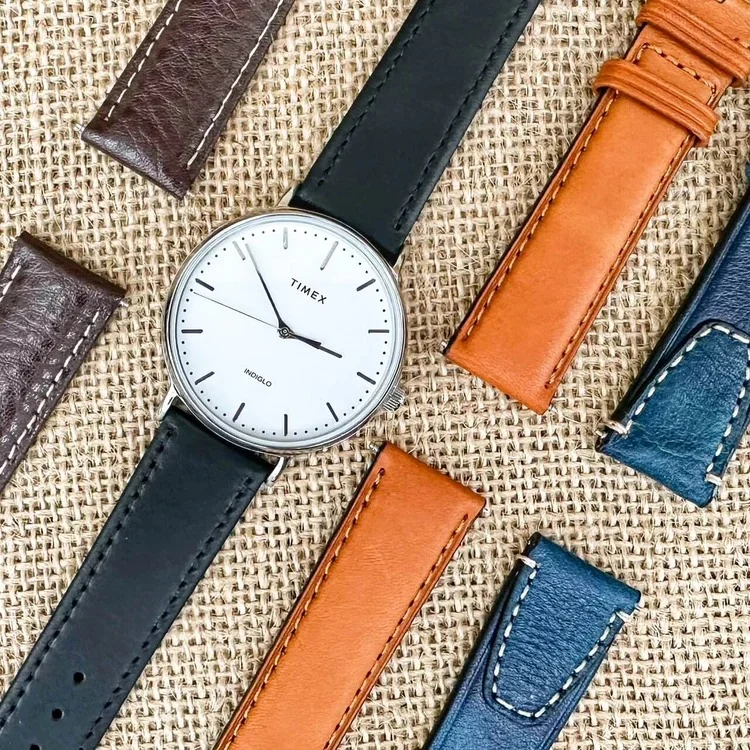
Leather strap watches are strong because they adapt easily to the setting. Styling guides and watch buyer discussions consistently show that leather works especially well for dress and smart-casual use.
1) Business meetings
Choose a clean dial, slim case, and black or dark brown strap. Avoid too many complications or overly sporty markers.
2) Weddings
A dress watch with a thin leather strap and a simple dial is usually the safest choice.
3) Casual wear
Try tan, suede, or distressed leather with a relaxed dial design.
4) Date nights
Burgundy, dark brown, or black leather can look more polished and intentional.
5) Travel
Choose a strap that is comfortable, quick to swap, and easy to maintain.
6) Formal events
Go minimal. Slim case, understated markers, black leather, and classic proportions.
Read more: https://theleatheritems.com/leather-sofa-and-loveseat-set/
How to Match Leather Watches With Outfits
A good rule is simple: match the watch’s tone to the rest of the outfit. That does not mean every piece must be identical, but it should feel coordinated.
Easy style rules
- Black leather watch + black shoes/belt = safest formal combination
- Brown leather watch + brown shoes/belt = classic business look
- Tan leather watch + lighter shirts/jackets = casual and warm
- Burgundy strap = stylish, richer tone for evenings
- Blue dial + brown strap = modern and versatile
Outfit pairings that work
- Navy suit + black leather strap
- Grey blazer + dark brown strap
- White shirt + black leather watch
- Denim jacket + tan leather watch
- Knit polo + suede strap
Mini summary:
For most men, black and brown are the two essential leather strap colors. If you buy only one, choose the color that matches your shoes and belt most often.
Features to Look for Before Buying
This section is where many shoppers save money later.
1) Sapphire or durable crystal
Sapphire crystal is preferred on better watches because it resists scratches well.
2) Stainless steel case
A solid case material helps with durability and long-term value.
3) Water resistance
Leather does not like water, and watch brands consistently warn against exposing leather straps to moisture, sweat, perfumes, chemicals, and direct sun for long periods. For humid climates or heavy daily use, a metal bracelet or rubber strap is often the safer choice.
4) Quick-release straps
These make it easier to swap straps for work, weekends, and formal wear.
5) Secure buckle or clasp
A deployment clasp can be more convenient, while a classic pin buckle is traditional and easy to adjust.
6) Luminous hands
Useful if you want daytime-plus-evening practicality.
7) Clean dial proportions
A leather watch usually looks best when the dial is calm and balanced.
Worldwide Price Ranges
Leather strap watches span a wide market. Product guides and retail search results commonly place entry-level options in the budget range, and mid-tier watches in the value sweet spot, with premium models rising from there depending on movement, case finish, brand, and strap quality.
| Price Range | What You Usually Get | Best For |
| Under $100 | Basic quartz, simple leather, fashion focus | First watch, budget gift |
| $100–$300 | Better straps, better finishing, strong value | Everyday buyers |
| $300–$800 | Sapphire, better movement options, stronger brand value | Office and enthusiast buyers |
| $800+ | Premium finishing, luxury branding, higher-end mechanics | Luxury buyers and collectors |
Value tip
The strongest value often sits in the middle tier, where the strap, movement, and case quality can all improve without a huge jump in price.
Best Countries and Regions Known for Leather Craft
Some regions are especially respected for leather craftsmanship, tanning, and luxury finishing. When a brand lists the tannery, origin, or production partner clearly, that usually builds trust.
Commonly respected leather centers
- Italy
- France
- England
- USA
- Japan
These locations are not magic labels by themselves. What matters more is transparency, finishing quality, and responsible sourcing. LWG’s standards exist precisely because traceability, environmental controls, and manufacturing transparency matter in the modern leather supply chain.
Budget-Friendly vs Premium Buying Logic
Budget-friendly options
Choose:
- quartz movement
- genuine or corrected leather
- simple dial
- stainless steel case
- straightforward buckle
This gives you a clean look without overspending.
Premium options
Choose:
- full-grain or named tannery leather
- automatic movement
- sapphire crystal
- better finishing
- comfortable lining
- well-balanced proportions
Premium should feel better on the wrist, not just look expensive in the product photo.
Pros and Cons
Pros
- elegant and timeless
- comfortable on the wrist
- versatile with business and formal wear
- often lighter than metal
- easy to style with shoes and belts
- can age with character
Cons
- Not ideal for heavy water exposure
- Needs more care than metal
- Lower-quality straps can wear out quickly
- Sweat and humidity can shorten strap life
- Some straps look cheap if the finish is too glossy or thin
Common Buyer Mistakes to Avoid
- Buying by dial size only and ignoring lug-to-lug.
- Assuming “Genuine Leather” automatically means premium.
- Choosing a strap color that clashes with your shoes and belt.
- Buying an automatic without understanding maintenance.
- Using leather in environments with heavy sweat or frequent water contact.
- Ignoring the strap lining quality.
- Overpaying for a watch with weak case finishing.
Care, Cleaning, and Maintenance Tips
This is one of the biggest content gaps in competitor pages, and it matters because leather is a natural material. Longines advises avoiding heat, strong light, and chemicals, while Breitling recommends protecting leather straps from water, perspiration, damp conditions, grease, perfume, cosmetics, and sun exposure.
Daily care
- Wipe the strap with a soft, dry cloth.
- Let moisture dry naturally at room temperature.
- Avoid direct heat sources.
- Rotate straps if you wear the watch every day.
Cleaning
- Use a dry microfiber cloth first.
- Use a barely damp cloth only if needed.
- Avoid soaking the strap.
- Do not use harsh chemical cleaners.
Storage
- Store the watch in a dry place.
- Keep it away from strong sunlight.
- Do not leave it in a closed car or a hot environment.
- Allow the strap to breathe after wear.
Conditioning
If the strap maker recommends conditioning, use a product suited to the leather type and apply very lightly. Too much conditioner can do more harm than good.
When to replace a strap
Replace it when you see:
- cracking
- loose stitching
- deep odor that does not go away
- stretching
- edge splitting
- shape collapse
Expert Tips Most Buyers Ignore
1) Ask for the tannery or supplier
A named tannery is often a better trust signal than vague marketing language.
2) Check the lining of the leather
The underside of the strap touches the skin the most, so comfort depends heavily on lining quality.
3) Look at the taper
A good strap should taper cleanly from the lugs to the buckle.
4) Buy for your daily environment
If you live in heat or humidity, leather will need more care or less frequent wear.
5) Choose the watch for the outfit you actually wear
A beautiful watch that never matches your wardrobe is not a good purchase.
Who Should Buy Male Leather Strap Watches?
- Men who wear business or formal clothing often
- Buyers who want one watch for many situations
- Men who prefer comfort over weight
- First-time watch buyers who want a safe style choice
- Gift buyers looking for a classic and low-risk option
Who Should Avoid Them?
- Men who swim often
- Heavy gym users who sweat a lot daily
- Buyers who want one watch for every rough condition
- People who prefer ultra-low maintenance materials
- Buyers who work in wet or harsh environments
Future Trends in the Leather Watch Market
The direction for 2026 is clear: cleaner designs, smaller cases, and more intentional styling. Recent trend coverage points to a renewed interest in compact watches and subtle luxury rather than oversized display pieces. That is good news for leather strap watches, because leather naturally supports that quieter, more elegant look.
Likely trend directions
- smaller and slimmer cases
- softer, more wearable strap profiles
- increased quick-release systems
- more sustainable sourcing language
- stronger demand for transparent tannery and material information
- renewed interest in dress and office watches
Sustainability and traceability will matter more, too, especially as LWG continues expanding standards for responsible leather production, chain of custody, and environmental accountability.
People Also Ask Section
A: Yes, if you choose a comfortable strap and avoid heavy water exposure. They are great for office wear, dinner wear, and smart-casual outfits.
A: Black is more formal and safer for business wear. Brown feels warmer and more versatile for casual and office looks.
A: Yes. The leather strap needs regular care, and the movement may eventually need servicing. The payoff is a more mechanical, premium experience.
A: It depends on the leather, lining, and how often you wear it. A well-made strap can last a long time if kept away from water, sweat, heat, and direct sun.
A: A good starting range is usually 36–39 mm, but lug-to-lug and case shape matter just as much as diameter.
Conclusion
Male leather strap watches remain one of the easiest ways to look polished without overcomplicating your wardrobe. The best choice is not just the Prettiest Watch; it is the one that fits your wrist, matches your style, suits your routine, and uses leather that is honest about its quality.
If you want the safest all-round purchase, start with a balanced case size, a known movement type, a well-made strap in black or brown, and clear material details from the seller. If you want more personality, step up to named leathers, stronger finishing, and a better strap profile. Either way, the smartest buyers do not just buy the watch. They buy the fit, the feel, and the long-term ownership experience.