Curved Leather Sofa
A Curved Leather Sofa can completely change how a living room feels. It softens hard corners, creates a more social seating area, and brings a sculptural, luxury look that straight sofas usually cannot match. That is exactly why curved seating remains a strong 2026 trend. Designers and furniture brands are still leaning into softer silhouettes, conversation-friendly layouts, and curved forms that help define open spaces.
But the shape is only part of the story.
A beautiful curve can still be a bad buy if the leather is weak, the frame is flimsy, the cushions are underbuilt, or the sofa overwhelms the room. This guide breaks down the design logic, leather quality, construction standards, sizing rules, style choices, and common mistakes so you can choose a curved leather sofa with confidence.
What Is a Curved Leather Sofa?
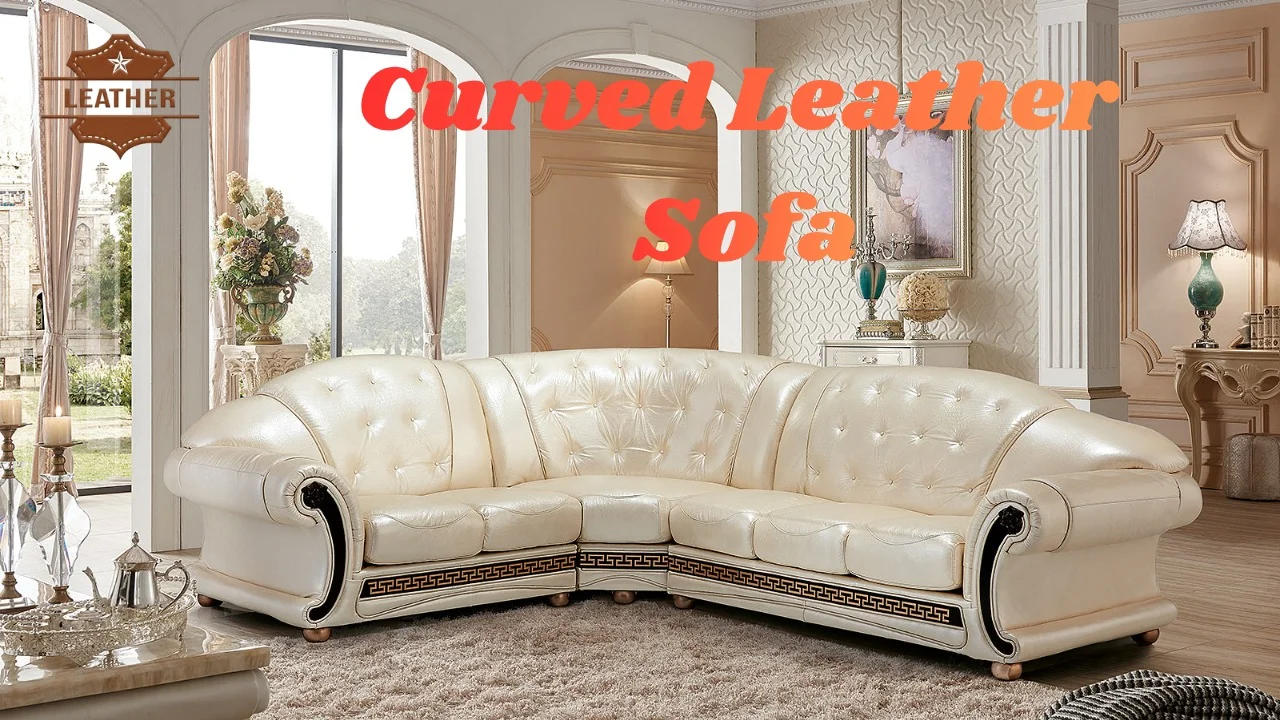
A curved leather sofa is a sofa with a rounded, arched, or crescent-shaped profile upholstered in leather. Instead of a strict straight line, it creates a softer visual flow and naturally directs people toward one another.
The best curved sofas do two jobs at once:
They look dramatic, and they still work in daily life.
Common versions include:
- crescent sofas
- semi-circular sofas
- curved sectionals
- modular curved sofas
- Italian-inspired sculptural sofas
A curve can be subtle or bold. A subtle curve works better in average living rooms. A dramatic crescent works better in large rooms, open-plan homes, and luxury interiors.
Snippet-ready answer: A curved leather sofa is a rounded sofa upholstered in leather that creates a softer, more social seating layout than a straight sofa.
Why Curved Leather Sofas Are Popular in 2026
Curved sofas continue to gain attention because modern interiors are moving away from boxy, rigid layouts. Sofatica and Povison both frame curved seating as a major 2026 design direction, especially for rooms that need flow, softness, and a focal point.
The appeal is easy to understand:
A curved sofa:
- softens square rooms
- improves conversation flow
- adds architectural movement
- Looks more luxurious than a basic straight sofa
- works well in open-plan layouts
That said, newer design coverage also warns against using oversized curved sofas just because they are trendy. The best choice is not always the biggest one. It is the one that fits your space, movement path, and lifestyle.
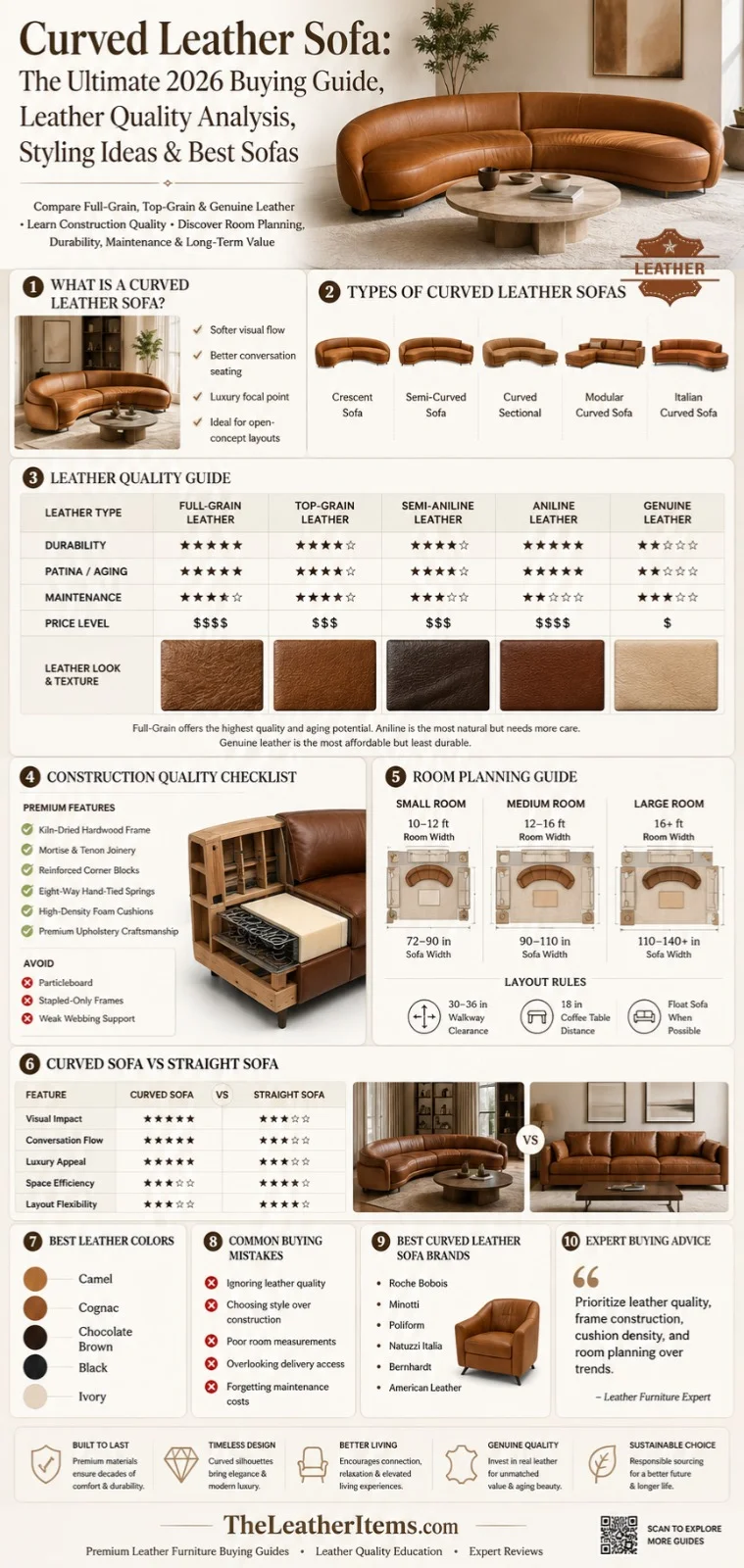
Types of Curved Leather Sofas
Crescent Sofas
A crescent sofa has a pronounced half-moon shape. It creates a dramatic focal point and works best in large rooms where the sofa can float away from walls.
Best for:
- luxury living rooms
- entertainment rooms
- open plans
Semi-Curved Sofas
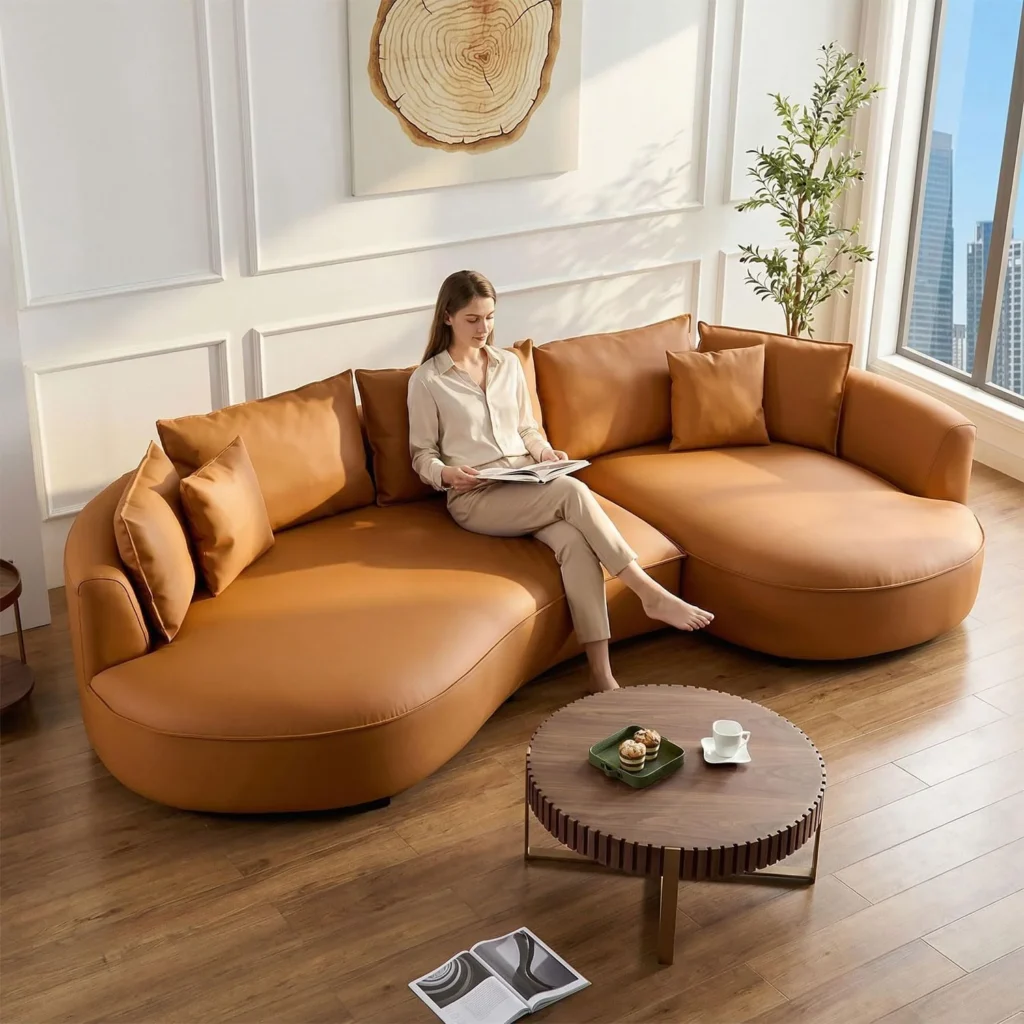
A semi-curved sofa has a gentler arc. It gives you the soft visual effect without demanding as much floor space.
Best for:
- medium-sized rooms
- apartments
- transitional interiors
Curved Sectionals
A curved sectional adds more seating and can make a room feel like a dedicated conversation zone. Dweva’s testing shows that curved sectionals can deliver strong comfort and durability, but they also need real footprint planning.
Best for:
- large families
- media rooms
- social spaces
Modular Curved Sofas
Modular curved sofas let you expand or reconfigure the layout. This is useful for buyers who expect the room to change over time.
Best for:
- evolving homes
- flexible spaces
- people who want future layout options
Italian-Style Curved Sofas
Italian-inspired curved sofas usually emphasize sculptural form, High-End Upholstery, and a more fashion-forward silhouette.
Best for:
- design-led interiors
- premium buyers
- statement rooms
Leather Types Explained
| Leather Type | What It Means | Best For | Main Trade-Off |
| Full-grain leather | The natural grain surface is left intact | Long life, patina, premium look | Higher price, more natural markings |
| Top-grain leather | The surface is refined for a more even look | Everyday premium use | Slightly less natural character than full grain |
| Aniline leather | Dyed with no pigmented coating | Ultra-soft, luxurious feel | Marks and stains more easily |
| Semi-aniline leather | Aniline-dyed with a light protective coat | Balanced beauty and practicality | Less natural feel than full aniline |
| Corrected-grain leather | Sanded and embossed for uniformity | Consistent appearance, easier retail use | Less character and less natural grain |
| Genuine leather | Real leather, but often the lowest grade in retail use | Budget-conscious buyers | Quality varies widely, so check carefully |
Leather authorities and specialist guides consistently note that full-grain preserves the hide’s natural surface, while top-grain is more processed; aniline is more natural and less protected; semi-aniline adds a light protective finish; corrected-grain is sanded and embossed; and “genuine leather” is often a confusing retail label that can signal lower quality than buyers expect.
How to choose the right leather
- Choose full-grain if you want character, durability, and a better aging story.
- Choose top-grain if you want a premium look that is easier to keep tidy.
- Choose semi-aniline if you want a strong balance of beauty and practical resistance.
- Choose aniline only if you accept higher care needs.
- Be cautious with genuine leather if the seller gives no more details than the label.
Why patina matters
Good leather often develops patina over time. That means it gains character, depth, and visual richness. Premium buyers often see patina as a benefit, not a flaw. Full-grain and aniline finishes are usually the best at developing it naturally.
How to Evaluate Curved Leather Sofa Quality
1) Frame Construction
The frame is the skeleton of the sofa. A premium curved leather sofa should use kiln-dried hardwood or another strong, solid-wood structure. Joybird describes kiln-drying as a gold-standard process for durable hardwood furniture, and Home Depot’s lumber guide explains why density and structural strength matter in load-bearing wood.
Look for:
- kiln-dried hardwood
- reinforced corner blocks
- strong joinery
- stable internal supports
Avoid:
- particleboard
- weak mixed-material frames
- stapled-only construction
- vague “wood frame” claims with no details
2) Suspension System
The suspension system supports the seat cushions and affects comfort over time.
Better options:
- eight-way hand-tied springs
- heavy-duty sinuous springs
Less desirable:
- webbing-only support on a large, heavily used sofa
3) Cushion Density
Cushions should feel supportive, not collapse after a few weeks. In practical terms:
- Lower-density foam feels softer at first
- Higher-density foam usually keeps its shape better
- Mixed foam and fiber can balance comfort and resilience
4) Upholstery Craftsmanship
Check:
- seam straightness
- leather panel matching
- even stuffing
- clean curve alignment
- consistent stitching
A curved sofa exposes craftsmanship more than a boxy sofa. If the curve is asymmetrical or the seams wobble, you will notice it immediately.
Construction Checklist
| What to Check | Good Sign | Red Flag |
| Frame | Kiln-dried hardwood | Particleboard or vague frame claim |
| Suspension | Springs or strong support system | Webbing only on a large sofa |
| Cushions | Supportive, resilient fill | Sagging or uneven cushions |
| Stitching | Clean and even | Loose or wavy seams |
| Leather | Clear grade and finish listed | “Genuine leather” only, no details |
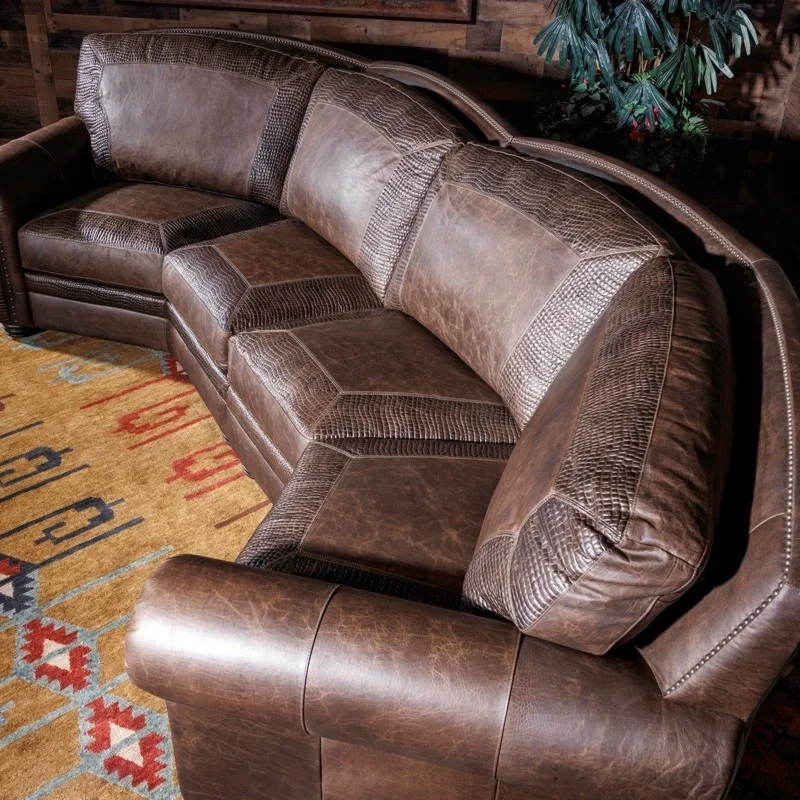
Curved Leather Sofa Dimensions Guide
A curved sofa must fit both the wall and the room flow. Sofatica recommends at least 14 feet of room width for many curved setups and says curves rarely work well in rooms under 12 feet wide. It also advises at least 18 inches between the inner curve and a coffee table.
Practical room-fit guide
| Room Size | Suggested Sofa Type | Typical Sofa Width |
| Small room | Gentle arc or semi-curved sofa | 72–90 inches |
| Medium room | Semi-curved or compact crescent | 90–110 inches |
| Large room | Curved sectional or crescent sofa | 110–140+ inches |
Clearance rules that actually help
- Keep 30–36 inches for main walking paths.
- Use 36 inches when possible for Comfortable Circulation.
- Keep the coffee table far enough away to move naturally, but close enough to use comfortably. Sofatica’s layout guidance uses around 18 inches as a useful reference point.
Measure before you buy
Do not measure only the wall. Measure:
- walking paths
- door swing
- coffee table space
- TV line of sight
- entry access
- delivery hallway width
A curved sofa can look perfect online and still fail in real life if the arc cuts into circulation.
Room Planning and Layout Rules
A curved leather sofa usually works best when it is floated slightly away from the wall. Designers increasingly recommend avoiding the “everything against the wall” layout because it can make a room feel tighter and less conversational.
Best layout rules
- Float the sofa when possible.
- Use a round or oval coffee table.
- Keep traffic paths open.
- Let the curve face the room’s main focal point.
- Build the layout around conversation, not just the TV.
Best coffee table shape
Curved sofas usually pair best with:
- round coffee tables
- oval coffee tables
- soft-edged sculptural tables
A square table can work, but it often fights the visual line of the sofa.
Best rug approach
- A large round rug can echo the curve.
- A rectangular rug can still work if it is oversized and anchors the full seating area.
Curved Leather Sofa vs Straight Sofa
| Feature | Curved Leather Sofa | Straight Sofa |
| Visual impact | Strong | Moderate |
| Conversation flow | Excellent | Good |
| Room flexibility | Moderate | High |
| Focal point effect | Strong | Lower |
| Space efficiency | Lower | Higher |
| Luxury feel | High | Depends on design |
Which one wins?
Choose a curved leather sofa when:
- The room is large enough
- You want a statement piece
- You entertain often
- The room needs softness
Choose a straight sofa when:
- The room is narrow
- You need maximum flexibility
- You want a simpler layout planning
Curved Leather Sofa vs Sectional
| Feature | Curved Leather Sofa | Sectional |
| Shape | Sculptural and softer | More angular or modular |
| Seating | Often more social | Often more practical |
| Layout | Best as a centerpiece | Easier to anchor against walls |
| Movement | Needs more planning | Usually easier to position |
| Best for | Design-led spaces | Family rooms and TV rooms |
A curved sectional is the bridge between both worlds. It gives you more seating while keeping the softer silhouette.
Pros and Cons
Pros
- visually striking
- improves conversation
- feels more luxurious
- softens hard room lines
- can elevate open-plan layouts
- ages beautifully when Premium Leather is used
Cons
- needs more planning
- Often costs more
- can dominate a small room
- harder to rearrange than a straight sofa
- Some designs sacrifice posture for style
Dweva’s testing highlights this trade-off clearly: curved sofas can be highly comfortable and supportive when built well, but the footprint and layout demands are real.
Best Interior Design Styles for Curved Leather Sofas
Curved leather sofas work especially well in:
- modern luxury interiors
- organic modern spaces
- contemporary living rooms
- soft minimal homes
- mid-century inspired spaces
- quiet-luxury rooms
The leather finish can change the mood completely:
- Camel or cognac feels warm and timeless
- black feels dramatic and modern
- Chocolate brown feels rich and grounded
- ivory feels soft and airy
Best Colors
| Color | Best Effect | Best Room Style |
| Camel | Warm, timeless, easy to style | Organic modern, transitional |
| Cognac | Rich, premium, designer feel | Contemporary luxury |
| Chocolate brown | Grounded and classic | Traditional-modern mix |
| Black | Bold and architectural | Modern, dramatic rooms |
| Ivory | Soft and upscale | Minimal, airy interiors |
Warm tones are especially strong in 2026 because design coverage has moved away from flat, cool-gray furniture toward richer, more enduring hues.
Maintenance and Care
Weekly
- dust with a soft cloth
- remove crumbs from seams and curve joints
- Check for spills quickly
Monthly
- vacuum crevices gently
- rotate cushions where possible
- Inspect stitching and wear spots
Every 6 months
- Condition the leather if the manufacturer recommends it
- Check for dryness, scuffs, or dull areas
Annually
- Deep clean according to the leather type
- Inspect frame feel, cushion shape, and seam tension
What to avoid
- harsh cleaners
- soaking the leather
- over-conditioning
- direct heat
- direct sunlight for long periods
Not all leather should be maintained the same way, so always follow the brand’s care instructions first.
Common Buying Mistakes
- Buying the curve before measuring the room.
- Choosing style over frame quality.
- Ignoring the leather grade.
- Forgetting delivery access.
- Buying a sofa too deep for daily use.
- Matching with the wrong coffee table shape.
- Putting a curved sofa in a room that is too narrow.
- Overlooking Long-Term Care.
Best Brands to Explore
Well-known names in the curved leather sofa space or premium leather furniture category include:
- Baxter
- Minotti
- Poliform
- Natuzzi Italia
- Bernhardt
- American Leather
- Hancock & Moore
- Century Furniture
Use these names as benchmarks for design, construction, and finish quality, even if the exact model changes by market.
Pricing Guide
| Segment | Expected Range | What You Usually Get |
| Entry level | $1,500–$3,000 | Simpler frame, mixed leather info, basic cushioning |
| Mid-range | $3,000–$7,000 | Better leather, stronger construction, better comfort |
| Premium | $7,000–$15,000+ | Higher-grade leather, refined craftsmanship, stronger design identity |
Dweva and Povison both show that curved sofas can move from affordable design pieces into premium territory quickly, especially once you add leather, modularity, or designer-level construction.
Best Uses of a Curved Leather Sofa
A curved leather sofa is best when you want to:
- create a conversation zone
- fill a large living room with one strong focal point
- soften a room with too many straight lines
- Add luxury to an open-plan layout
- make a sitting area feel more intimate
It is less ideal when:
- The room is narrow
- You need maximum modular flexibility
- The layout changes often
- circulation space is already limited
Expert Tips Most Buyers Ignore
- Test whether the curve works with your sightlines from the doorway.
- Sit on the sofa with your feet flat and shoulders relaxed; the shape should not force posture.
- Check whether the inner curve is usable or merely decorative.
- Ask whether the leather finish suits your lifestyle, not just your eye.
- Judge the sofa at room scale, not showroom scale.
Future Trends in Curved Leather Sofas
The next wave is likely to focus on:
- more responsible leather sourcing
- clearer traceability
- modular curved systems
- warmer leather shades
- softer, more organic silhouettes
- better balance between comfort and sculpture
Leather Working Group standards and certification are becoming more important as brands and consumers pay more attention to environmental performance, traceability, and responsible supply chains.
People Also Ask
A: Yes, they can be very comfortable, but comfort depends more on seat depth, cushion density, back support, and frame quality than on the curve alone. Dweva’s testing shows that well-built curved sofas can score well for comfort and support.
A: Usually, only gentle arcs or compact curved pieces work well in smaller rooms. Sofatica notes that curved sofas rarely work in rooms under 12 feet wide and that larger setups need more clearance.
A: Top-grain and semi-aniline are the most practical premium choices for many buyers. Full-grain is the most character-rich and ages beautifully, but it can be less uniform and needs thoughtful care.
A: Sometimes, but the term is vague. “Genuine leather” often signals a lower grade than buyers expect, so you should ask what layer of the hide was used and what finish was applied.
A: Round or oval coffee tables usually work best because they echo the curve and keep the layout visually soft. Sofatica also recommends leaving usable breathing room between the table and sofa.
Conclusion
A curved leather sofa can be one of the most rewarding furniture purchases you make, but only when the design, leather, and construction all work together. The best pieces are not just beautiful. They are Durable, comfortable, and sized correctly for the room.
If you want the strongest long-term value, focus on:
- premium leather grade
- kiln-dried hardwood frame
- good suspension
- well-planned room dimensions
- a layout that supports everyday use
That is how you choose a curved leather sofa that looks impressive today and still feels like a smart purchase years from now.
Legal note: Leather quality, pricing, manufacturing standards, and product availability may vary by country, brand, and supplier. Always verify authenticity, material details, and care instructions before purchase.