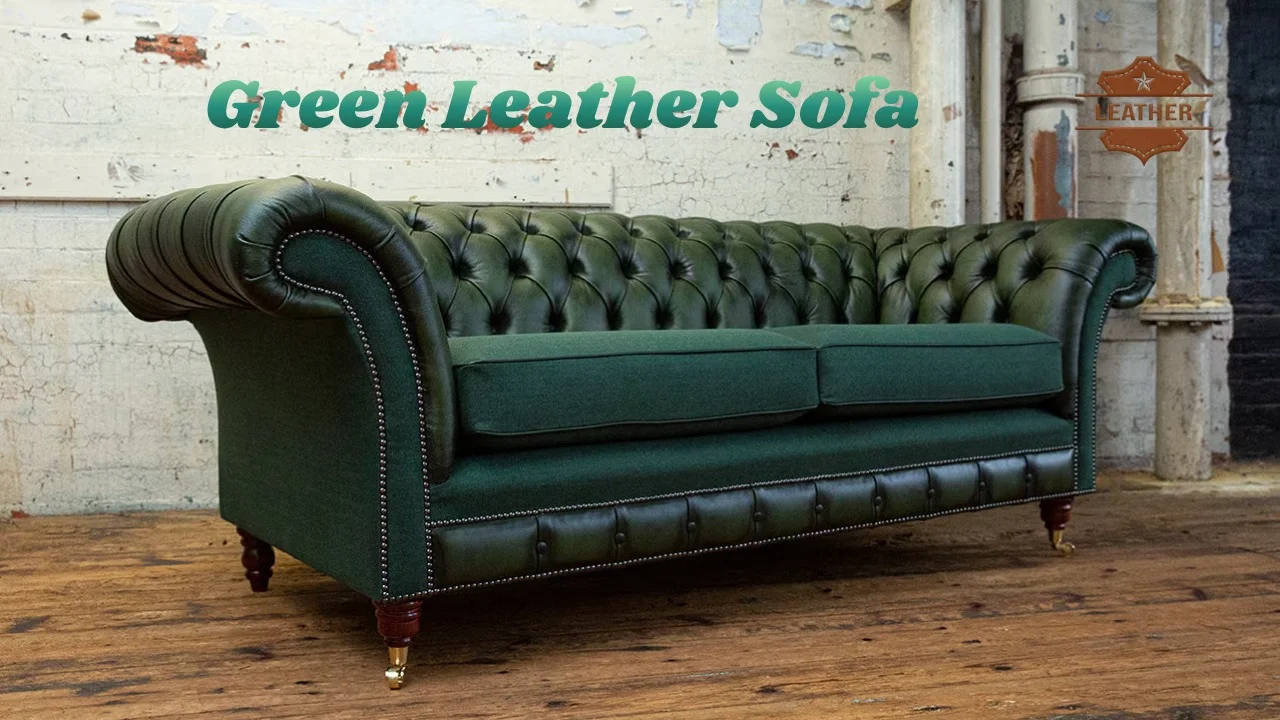
Green Leather Sofa
A Green Leather Sofa does something few furniture pieces can do well: it feels bold and calm at the same time. In the right shade, it adds richness without shouting, which is exactly why it fits so well into 2026 interiors. Current design coverage is moving toward earth tones, warm browns, tactile materials, sculptural furniture, and earthy greens that act almost like a neutral. Green is also being used more often in “jewel box” spaces and layered, nature-inspired rooms, while dark green and blue-green tones continue to look fresh beside woods, brass, stone, and softer neutrals.
That is why a green leather sofa is so compelling. Leather brings structure, durability, and a premium finish. Green adds depth, personality, and a grounded designer feel. Together, they create a sofa that can work in modern apartments, classic family rooms, masculine interiors, organic modern homes, and luxury-inspired living spaces.
Why Green Leather Sofas Are Trending in 2026
Green leather is benefiting from several overlapping design shifts. First, interiors are warming up: designers are leaning into comfort, curves, earth tones, rugs, antiques, and artisanal details instead of sterile minimalism. Second, green itself is being treated as a flexible interior color, not just an accent. Third, high-contrast but natural-looking materials are back, especially walnut wood, brass, patinated metals, stone, and tactile fabrics. Those trends make green leather feel current, sophisticated, and easy to live with.
There is also a sustainability-adjacent story here. Buyers are increasingly interested in long-life furniture rather than fast replacement, and responsible leather sourcing matters more than ever. The Leather Working Group says it sets audit standards for leather manufacturers, and more than a third of global finished leather production is assessed against its standards. That makes certified sourcing worth mentioning in any serious buying guide.
Benefits of a Green Leather Sofa
A green leather sofa offers four big advantages. It gives you a designer focal point without needing loud accessories. That is generally easier to keep clean than many fabric options. It works across a wide range of styles, from mid-century to contemporary luxury. And if you choose a solid leather grade, it can age beautifully over time. Full-grain leather is the strongest and most durable grade, while top-grain leather is also a high-quality choice that is sanded for a smoother, more uniform appearance.
For families and frequent entertainers, the practical appeal is just as important as the look. Leather furniture can be maintained with regular dusting, prompt spill cleanup, and careful conditioning or care based on the manufacturer’s instructions. Architectural Digest and RH both emphasize dusting, quick spill response, and keeping leather out of direct sun and heat.
Best Shades of Green Leather Sofa
Not every green works the same way. The shade changes the room’s mood, the style matches, and even the best wall color around it.
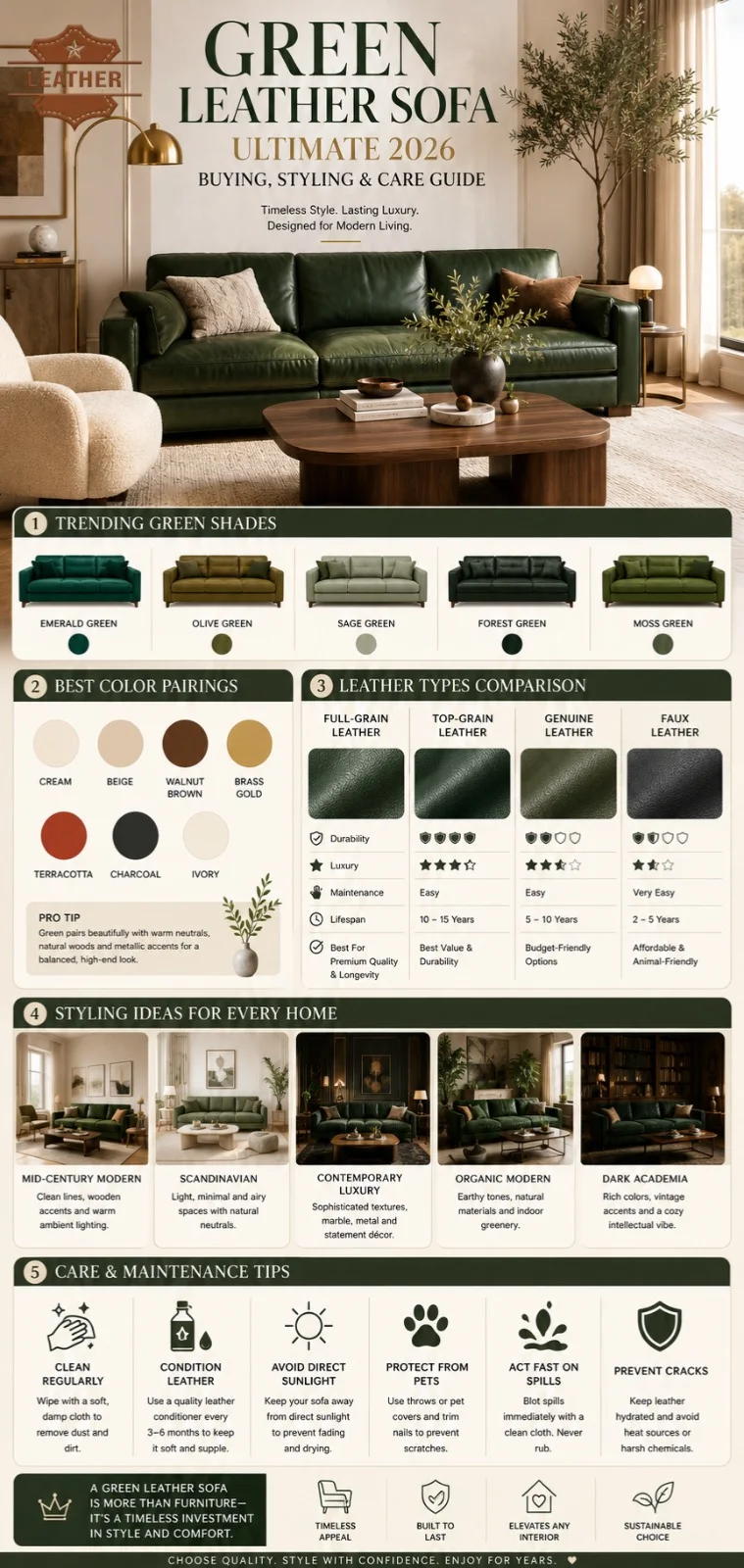
| Shade | Best For | Style Mood | Pair Best With |
| Emerald green | Glam, art deco, statement rooms | Rich and luxurious | Brass, velvet, marble, cream |
| Olive green | Masculine, modern, organic spaces | Calm and grounded | Walnut, black, tan, linen |
| Sage green | Scandinavian, soft modern homes | Airy and gentle | Oak, ivory, beige, boucle |
| Forest green | Traditional, timeless interiors | Deep and classic | Dark wood, leather, warm neutrals |
| Moss green | Organic modern, earthy homes | Natural and relaxed | Stone, cream, terracotta, oak |
This shade direction fits the broader 2026 story. Design coverage keeps returning to dark green, earthy green, and blue-green tones as flexible, livable options that work more like a neutral than a novelty color.
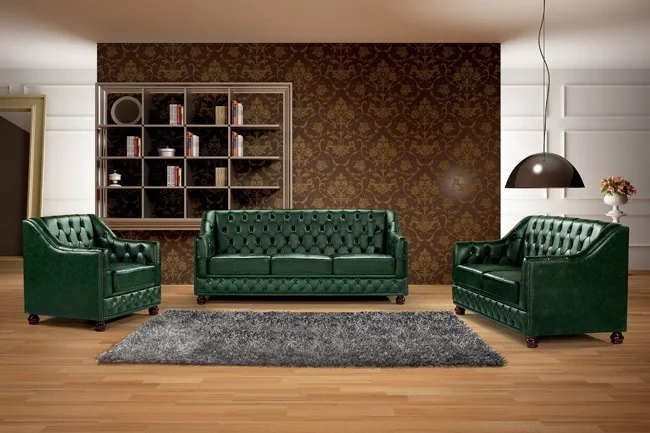
Emerald Green
Emerald green is the most dramatic option. It suits formal living rooms, jewel-toned interiors, and rooms with brass, black, or marble accents. It looks especially polished when the rest of the room is Simple and Airy.
Olive Green
Olive is the easiest to live with in everyday homes. It feels earthy, masculine, and grounded. It pairs naturally with walnut wood, tan leather accents, charcoal, and cream walls.
Sage Green
Sage is softer and more relaxed. It works beautifully in Scandinavian, Japandi, and minimalist rooms where the sofa should calm the space rather than dominate it. Sage is also a strong choice for small rooms because it lightens the visual weight.
Forest Green
Forest green feels timeless and architectural. It suits older homes, traditional rooms, reading corners, and rooms where you want a rich, collected look.
Moss Green
Moss green is ideal for organic modern spaces. It is softer than forest, but deeper than sage. It sits beautifully with textured rugs, natural stone, and warm woods.
Green Leather Sofa vs Fabric Sofa
Leather and fabric solve different problems. Leather usually wins on cleanability, visual sharpness, and long-term polish. Fabric often wins on softness, color range, and casual comfort. For a statement piece that should feel elevated and stay visually crisp, leather has the edge. For a softer, more laid-back room, fabric may be easier.
| Feature | Leather | Fabric |
| Durability | High | Medium |
| Cleaning | Easier | Harder |
| Luxury feel | Premium | Casual to varied |
| Pet resistance | Better in many cases | Usually weaker |
| Lifespan | Often longer with care | Usually shorter |
That said, leather quality matters. Full-grain is typically the most durable and develops character over time. Top-grain is a strong, more uniform option. “Genuine leather” is a less reliable label because it can be ambiguous and is often used for lower-grade split leather or mixed constructions unless the seller clearly explains the grain type. Bonded leather is made from leather scraps and adhesive with a polyurethane or vinyl layer, so it should not be mistaken for a premium long-life sofa material.
Types of Leather Explained
Full-Grain Leather
Full-grain leather keeps the natural grain and is the strongest and most durable grade. It holds character well and can develop a richer patina over time. It is usually the premium option.
Top-Grain Leather
Top-grain leather comes from the upper hide layer but is sanded or buffed to remove imperfections. It is smoother, more uniform, and easier to style in modern interiors. It is still a high-quality leather choice for sofas.
Genuine Leather
“Genuine leather” sounds premium, but the term is often too vague to judge quality on its own. Reliable sellers usually name the actual grain type rather than relying on the generic label.
Suede and Nubuck
These are softer, more tactile finishes, but they are less forgiving in busy homes because they show marks and require more careful maintenance. They work best in lower-traffic, design-forward spaces.
PU / Faux Leather
Faux leather can be budget-friendly, but it usually cannot match the lifespan, feel, or long-term aging of quality real leather. It is better suited to short-term use or very tight budgets.
How to Choose the Best Green Leather Sofa
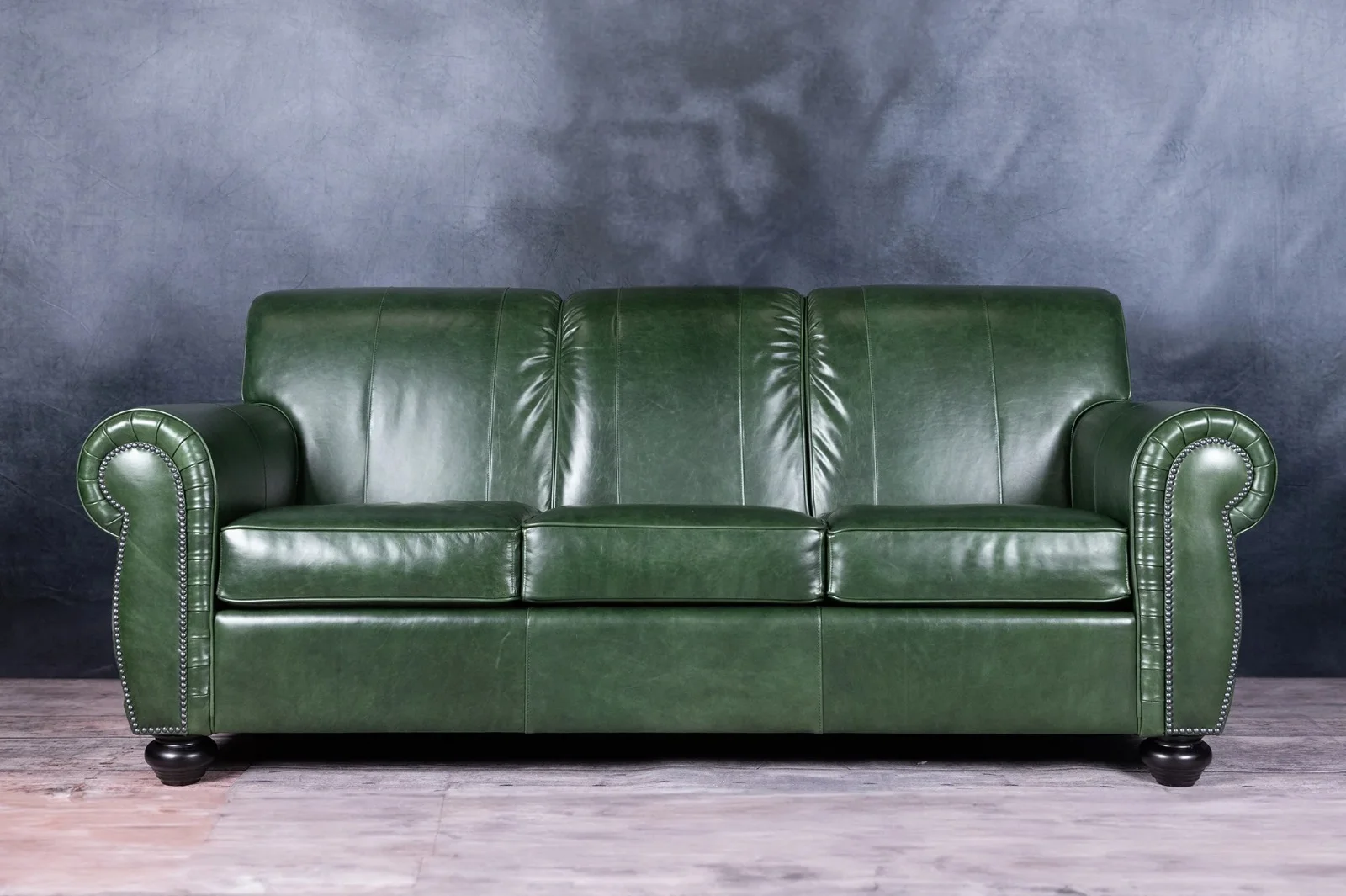
Start with room size, then move to shape, then material quality. A sofa should fit the room visually and physically. In 2026 interiors, curved forms and sculptural silhouettes are trending, but a clean rectangular sofa can still work better if the room already has lots of visual texture.
Measure the room
Leave enough walking space around the sofa. In smaller rooms, a slimmer frame with raised legs will feel lighter.
Pick the right shape
Sectionals are best for open plans and family rooms. Loveseats suit apartments. Chesterfield’s work in traditional interiors. Curved sofas feel current and luxurious, but they need more space.
Check cushion density
A sofa can look beautiful and still feel cheap if the cushions are weak. Medium-firm support usually works best for long-term comfort.
Inspect frame quality
A strong hardwood frame is a major sign of better build quality. If the sofa is meant to last, do not ignore the frame just because the color is attractive.
Look at the undertone
Some green leathers lean yellow, some lean blue, and some lean brown. Match the undertone to the rest of your room. Olive pairs with warm woods. Emerald looks stronger next to crisp neutrals. Sage works well with soft natural light.
Best Interior Styles for Green Leather Sofas
Green leather works across more styles than most people expect.
Mid-Century Modern: This is one of the easiest matches. Clean lines, walnut legs, and olive or forest leather create an effortlessly retro-luxury feel.
Scandinavian: Sage or moss green softens a pale, airy room without breaking the calm palette.
Contemporary Luxury: Emerald with brass, marble, and curved forms creates a polished statement.
Industrial: Deep green leather works well with black metal, exposed brick, and reclaimed wood.
Art Deco: Jewel-toned green leather becomes glamorous when paired with symmetry, metallic accents, and glossy surfaces. AD’s 2026 coverage of “Neo Deco” points to polished finishes, chrome, lacquer, and glossy woods as part of the resurgence.
Modern Farmhouse: A muted olive or moss leather sofa can add sophistication to a room of light woods, cream walls, and tactile textiles.
Japandi: A restrained sage or muted forest tone supports the calm, nature-led look, especially with low furniture and natural materials.
What Colors Go With a Green Leather Sofa?
The strongest pairings in current interiors are the ones that feel warm, natural, and collected rather than overly coordinated. Design coverage in 2026 continues to favor warm browns, earth tones, and green-leaning palettes, while green itself is often described as surprisingly neutral-like when balanced with dark woods and soft textures.
The Best Pairings are:
cream, beige, taupe, walnut brown, black, brass, gold, terracotta, dusty pink, charcoal, and ivory.
For walls, cream and warm white are the safest choices. Rugs, use ivory, muted patterns, or earthy vintage tones. For curtains, linen, oatmeal, or soft taupe work best. For coffee tables, walnut, oak, stone, travertine, black metal, or glass all fit depending on the style direction.
Green Leather Sofa Living Room Ideas
Small apartments
Choose sage, olive, or moss in a compact silhouette. Keep the rest of the room light so the sofa does not overpower the space.
Luxury penthouses
Go with emerald or forest, then add brass, marble, a sculptural lamp, and a clean rug. The result feels expensive without trying too hard.
Masculine interiors
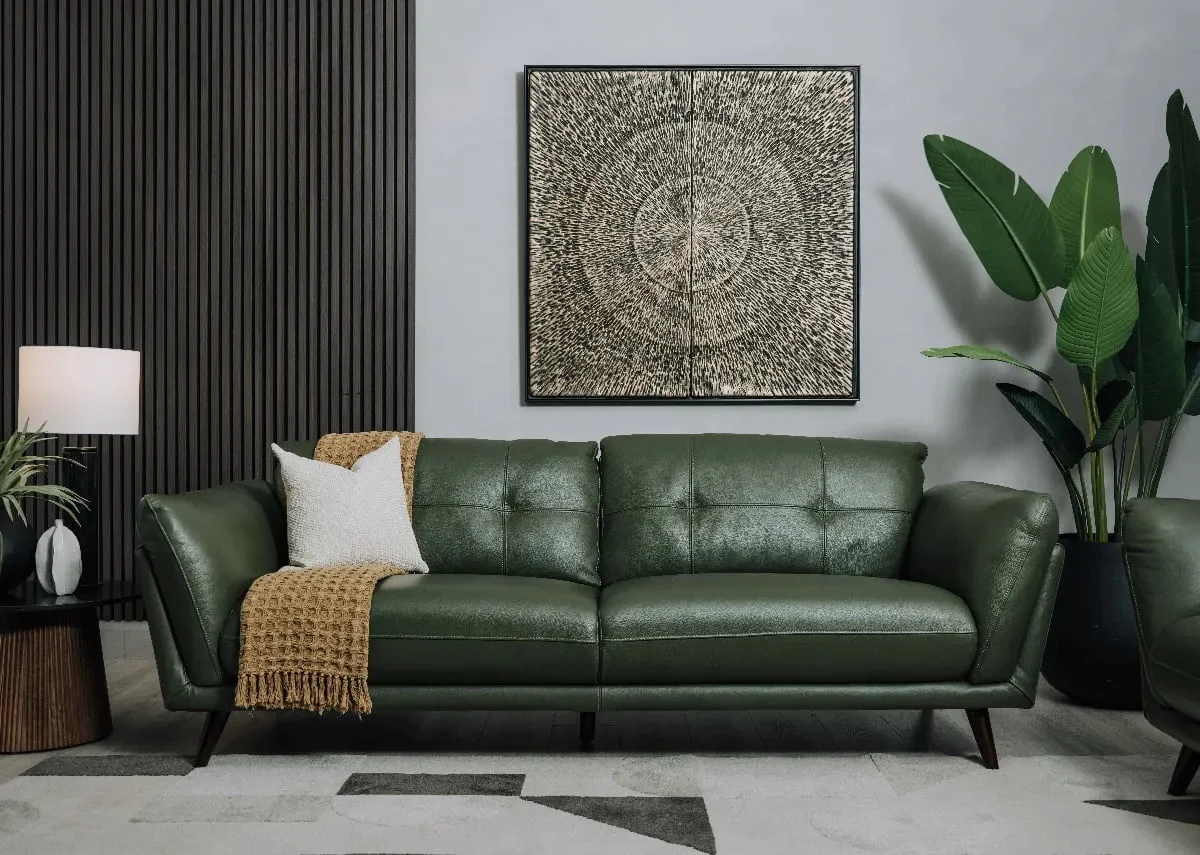
Olive leather, walnut furniture, black frames, and textured neutrals create a strong, moody, masculine balance.
Cozy family rooms
Choose a durable top-grain or full-grain sofa in a mid-tone green. Add washable throws, a soft rug, and warm lighting.
Dark academia
Forest green leather belongs here naturally. Pair it with dark wood, books, a patterned rug, and aged brass.
Modern minimalist
Pick sage or muted olive, then keep the room sparse and architectural. Use shape, not clutter, to create interest.
Organic modern
Moss green leather, linen curtains, stone, clay, and natural wood create a calm, grounded room that feels current.
Boho luxury
Use emerald or olive with mixed textures, layered rugs, woven accents, and vintage-style accessories.
House Beautiful’s 2026 coverage shows designers using green as a bold but controlled color, often in a jewel-box or accent role, while Livingetc and AD point to more comfort-led and tactile interiors overall. That is exactly why a green leather sofa can feel so fresh in 2026: it fits both the calm, earthy side of the trend and the richer, expressive side.
Best Materials & Décor Pairings
Green leather looks best next to materials that soften it or deepen it.
Best companions: walnut wood, marble, brass, boucle chairs, linen curtains, black metal, glass coffee tables, travertine, clay ceramics, and wool rugs.
AD’s 2026 trend coverage emphasizes earth tones, wood, antiques, rugs, and tactile detailing, while House Beautiful highlights green working especially well with dark woods, earthy tones, and brass hardware. That makes material contrast a major design advantage, not just a styling choice.
Green Leather Sectional Sofas
A green leather sectional is ideal for open layouts, large family rooms, and homes that need one strong anchor piece. It can define the conversation zone and make the whole room feel intentional.
For best results:
- Choose a modular layout if the room changes often
- Use a chaise if you want lounge comfort
- Keep the profile slim in smaller open plans
- Use lighter green tones in tight spaces
- Avoid oversized arms in compact rooms
Green Leather Sofa for Small Spaces
In smaller rooms, lighter green shades usually work best because they visually reduce bulk. Sage and muted olive are especially useful. Raised legs also help the sofa feel less heavy.
Use one sofa, one rug, one coffee table, and one or two accent chairs. That is enough. In a small room, the sofa should be the hero, not one of many competing pieces.
How to Care for a Green Leather Sofa
Leather care is simple, but it has to be consistent.
- Dust regularly with a soft, dry cloth.
- Blot spills immediately with a soft white cloth.
- Use a slightly damp cloth for light cleaning if the manufacturer allows it.
- Test any cleaner in an inconspicuous spot first.
- Avoid direct sun and direct heat.
- Condition only when the care guide recommends it.
RH’s care sheet advises dusting, prompt spill blotting, mild soap, and warm water for persistent stains when appropriate, testing first on a hidden area, and Avoiding direct sunlight and heat. Architectural Digest also recommends regular dusting and monthly conditioning or similar care products to keep leather soft and to help prevent cracking and discoloration. The exact routine depends on the finish, so the brand’s instructions matter.
What to avoid
Do not use harsh chemicals, bleach, or random household cleaners. Don’t soak the leather. Do not place the sofa directly against a radiator or in strong, all-day sun.
Common Mistakes Buyers Make
The most common mistakes are buying bonded leather thinking it is premium, ignoring undertones, choosing the wrong size, and forgetting how light changes the color in the room. Another big mistake is focusing only on the sofa’s appearance while ignoring foam density, frame quality, and care requirements.
Another smart move is checking whether the manufacturer or retailer mentions responsible sourcing or certification. LWG-certified suppliers are a useful signal when you are evaluating the broader leather supply chain.
Is a Green Leather Sofa Worth It?
Yes, for the right buyer, it is a strong long-term purchase. It has the right mix of style, durability, and character. It feels more distinctive than gray, more timeless than a fleeting trend shade, and more polished than many fabric alternatives. Because 2026 interiors are moving toward warmth, earth tones, and tactile comfort, green leather fits the direction of the market rather than fighting it.
The biggest value comes when you choose a quality leather grade, a shade that matches your light, and a shape that suits your room. That is what turns a sofa from a decor purchase into a long-term anchor piece.
Best Green Leather Sofa Brands to Mention
For an affiliate or roundup section, you can mention brands such as Article, West Elm, CB2, Joybird, Burrow, Poly & Bark, and Castlery, then separate them by style and price tier. Keep the recommendations current at publication time and verify inventory before linking.
People Also Ask
A: Yes, especially in olive, forest, moss, or muted sage. These shades behave more like sophisticated neutrals than novelty colors, which is why they last longer visually.
A: Cream, ivory, muted vintage pattern, taupe, or earthy wool rugs work best. They soften the leather and keep the room balanced.
A: Yes. Current coverage points to earthy greens, dark greens, blue-green tones, and nature-led interiors as major 2026 directions.
A: Olive is the safest all-rounder, sage is best for light rooms, emerald is best for statement spaces, and forest is best for classic interiors.
A: It can fade if it sits in strong direct sunlight for long periods. That is why placement and window protection matter.
Final Verdict
A green leather sofa is one of the smartest statement pieces you can buy in 2026. It feels stylish without being fragile, distinctive without being difficult, and luxurious without being overdesigned. The best results come from choosing the right shade, the right leather grade, and the right room palette around it. For buyers who want durability, character, and a sofa that still feels relevant next year, green leather is a very strong choice.
For TheLeatherItems.com, this topic is ideal for a pillar page because it naturally supports internal links to leather care, Leather Buying Guides, leather grades, and product-category pages. It also gives you room to build authority around leather quality, maintenance, and premium product selection.
Legal Disclaimer
Leather quality, pricing, manufacturing standards, and product availability may vary by country, brand, and supplier. Always verify authenticity, material details, and care instructions before purchase.