🧥 Men’s Leather Dress Coat
A Man’s Leather Dress Coat is far more than a simple outer garment—it is a symbol of refined taste, authority, and timeless sophistication. It communicates confidence, maturity, and an appreciation for enduring fashion. Unlike short leather jackets that lean toward casual styling, dress coats are elongated, structured, and tailored for formal and elevated smart-casual occasions.
In today’s rapidly evolving fashion landscape, most apparel trends fade quickly. However, a well-crafted leather coat remains relevant across decades. It transcends seasonal trends and remains a staple in luxury wardrobes worldwide. Whether you are attending a corporate meeting, an elegant dinner, commuting during winter, or traveling internationally, the right leather coat enhances your presence instantly.
This comprehensive guide is written from a professional, industry-informed perspective. It merges practical insights about leather grading, craftsmanship techniques, consumer behavior, and long-term value.
Inside this guide, you will learn:
- Different types of leather dress coats
- Leather materials and quality hierarchy
- Manufacturing and craftsmanship process
- Smart buying decisions and evaluation checklist
- Styling strategies for multiple occasions
- Global pricing insights and value analysis
- Maintenance techniques for longevity
By the end, you will be equipped to confidently invest in a men’s leather dress coat that can last 10–20 years or more, making it both a fashion and financial asset.
🧥 What Is a Men’s Leather Dress Coat?
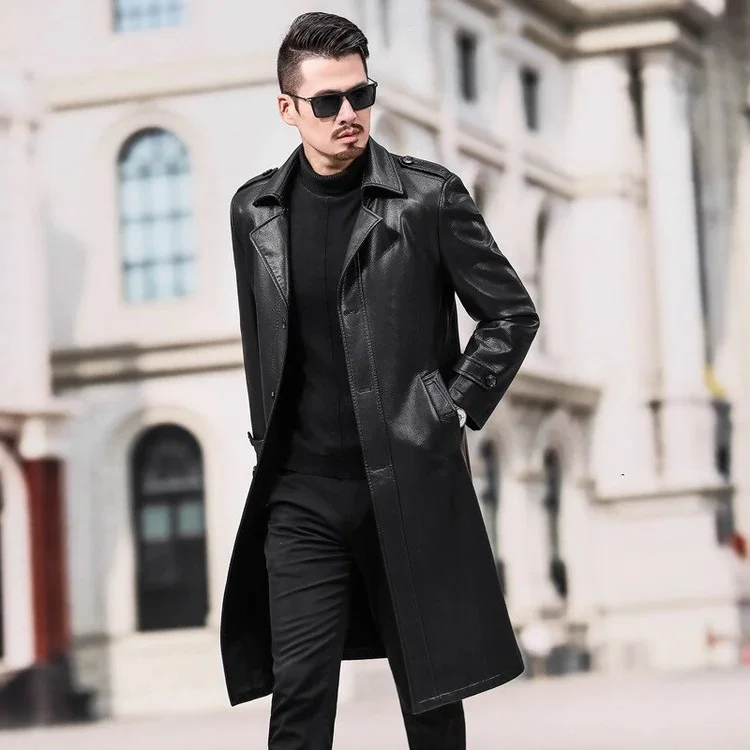
A men’s leather dress coat is a long-form leather outerwear piece designed for formal, business, or refined casual environments.
Key Characteristics
- Length: Extends from mid-thigh to knee
- Fit: Structured, tailored, and contoured
- Purpose: Polished, elegant appearance
- Design: Clean silhouettes with minimal ornamentation
👉 These coats are engineered to complement formal attire such as suits rather than replace them.
🆚 Dress Coat vs Leather Jacket
| Feature | Leather Dress Coat | Leather Jacket |
| Length | Long (thigh/knee) | Short (waist/hip) |
| Style | Formal / Sophisticated | Casual / Rugged |
| Fit | Tailored | Relaxed |
| Usage | Office, events | Everyday wear |
📌 Insight: If your goal is a refined, professional aesthetic, a dress coat is always the superior choice.
🕰️ History of Leather Dress Coats
Leather coats have evolved from purely functional garments into luxury fashion staples.
Timeline
1900s
Military trench coats emerged
Leather versions provided durability and protection
1920s–1940s
Worn by officers, elites, and influential figures
Associated with authority and prestige
1950s–1970s
Became a symbol of masculinity and rebellion
Popularized through cinema and cultural icons
Modern Era
Refined tailoring meets contemporary aesthetics
Adopted in both corporate and fashion settings
👉 Today, a men’s leather dress coat merges heritage craftsmanship with modern elegance.
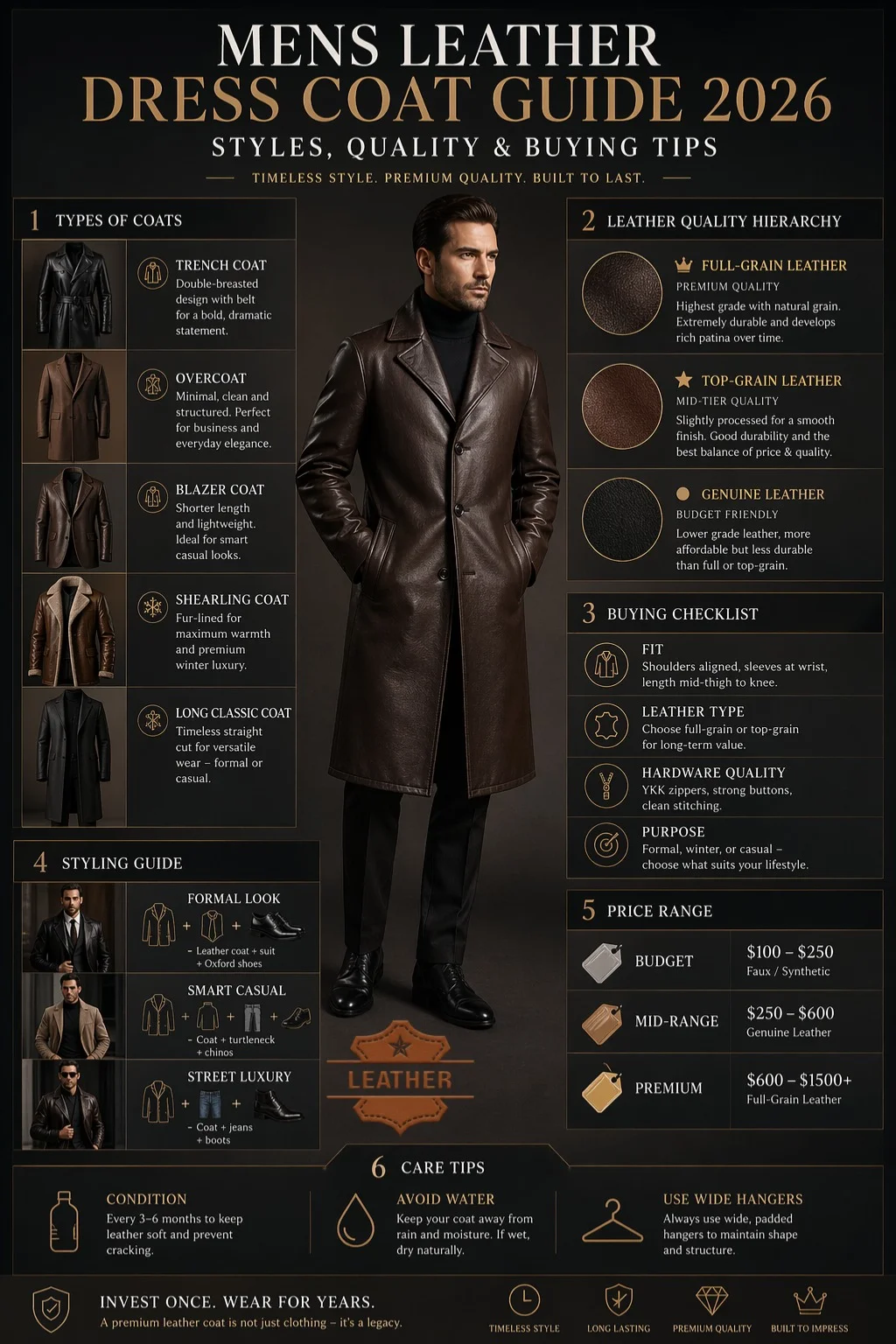
🧥 Types / Variations of Men’s Leather Dress Coats
Selecting the right style is crucial because each variation serves a distinct purpose.
Leather Trench Coat
- Double-breasted construction
- Belted waistline
- Dramatic and elongated design
✔ Best for:
Formal events
Winter layering
Statement fashion
Leather Overcoat
- Minimalist design
- Clean, structured silhouette
- Worn over suits
✔ Best for:
Business professionals
Daily formal wear
👉 Most versatile and practical option
Leather Blazer Coat
- Shorter length
- Lightweight structure
- Semi-formal appeal
✔ Best for:
Office settings
Smart casual looks
Shearling Leather Coat
- Fur-lined interior
- Exceptional insulation
- Premium luxury feel
✔ Best for:
Cold climates
High-end winter fashion
Classic Long Leather Coat
- Straight-cut silhouette
- Timeless design
- Balanced versatility
✔ Best for:
Both casual and formal wear
🧪 Leather Types Used in Dress Coats
Understanding leather composition is the most critical factor when investing.
🥇 Full-Grain Leather
- Highest grade available
- Retains natural grain
- Extremely Durable
- Develops a rich patina over time
✔ Ideal for long-term investment
🥈 Top-Grain Leather
- Slightly refined surface
- Smooth and consistent finish
- Good durability
✔ Best balance between quality and affordability
🥉 Genuine Leather
- Lower-tier material
- Processed and less durable
✔ Budget-friendly but shorter lifespan
🧪 Other Materials
| Material | Quality | Notes |
| PU Leather | Low | Synthetic |
| Bonded Leather | Very Low | Made from scraps |
| Vegan Leather | Variable | Eco-conscious option |
🐄 Animal Sources
- Lambskin: Soft, smooth, luxurious texture
- Cowhide: Strong, rugged, long-lasting
- Goatskin: Flexible, resilient, lightweight
📌 Expert Insight:
Choose lambskin for elegance and comfort
Choose cowhide for durability and longevity
⚙️ Manufacturing Process
Premium leather coats undergo a meticulous production process.
Raw Hide Selection
- High-grade hides are selected
- Inspected for grain consistency and thickness
Tanning
- Vegetable or chrome tanning
- Preserves and stabilizes leather
Dyeing & Finishing
- Color application
- Texture refinement
- Protective coatings
Pattern Cutting
- Precision cutting for an accurate fit
- Minimizes material waste
Stitching
- Reinforced seams
- High-tensile thread for durability
Lining & Assembly
- Interior lining added
- Enhances comfort and insulation
Quality Control
- Final inspection
- Ensures premium craftsmanship
🔍 How to Identify Original vs Fake Leather
| Feature | Real Leather | Fake Leather |
| Smell | Natural, earthy | Chemical |
| Texture | Irregular grain | Uniform |
| Flexibility | Soft and pliable | Rigid |
| Water Reaction | Absorbs | Repels |
📌 Always verify:
- Product labels
- Stitching precision
- Surface texture
🛒 Buying Guide
Purchasing a leather coat is a significant investment. Use this structured checklist:
Purpose
- Business → Overcoat
- Winter → Shearling
- Fashion → Trench
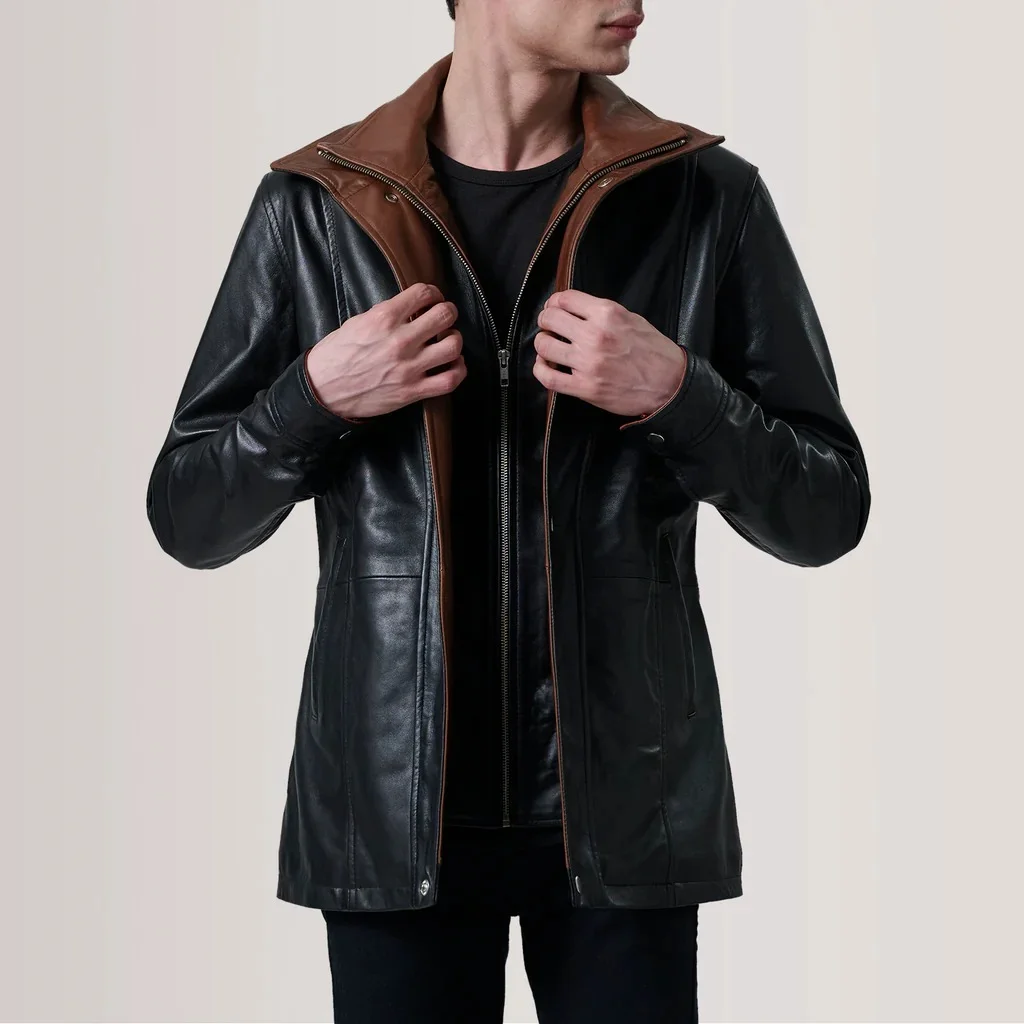
Fit
- Shoulders must align naturally
- Sleeves should end at the wrist
- Allow room for layering
Leather Quality
- Prefer full-grain or top-grain
- Avoid bonded materials
Hardware
- Durable zippers (YKK recommended)
- Strong buttons
- Clean stitching
Color Selection
- Black → Formal
- Brown → Smart casual
- Tan → Fashion-forward
👔 Top Uses of Men’s Leather Dress Coat
- Business meetings
- Formal gatherings
- Winter Travel
- Evening occasions
- Smart casual outfits
📌 One premium coat can replace multiple outerwear options.
🧥 Styling Guide
🔹 Formal Look
Leather coat + suit + Oxford shoes
🔹 Smart Casual
Coat + turtleneck + chinos
🔹 Street Luxury
Coat + jeans + boots
📌 Layering enhances both aesthetics and warmth.
📏 Fit & Sizing Guide
| Area | Ideal Fit |
| Shoulders | Aligned |
| Chest | Comfortable |
| Sleeves | Wrist-length |
| Length | Mid-thigh/knee |
📌 Poor fit can undermine even the most expensive garment.
💰 Price Range Worldwide
| Tier | Price | Quality |
| Budget | $100–$250 | Faux |
| Mid-Range | $250–$600 | Genuine |
| Premium | $600–$1500+ | Full-grain |
📌 Higher pricing typically reflects superior craftsmanship and materials.
🌍 Top Countries Famous for Leather Coats
- Italy → Luxury craftsmanship
- UK → Classic tailoring
- USA → Durable construction
- Turkey → Affordable quality
- Pakistan → Export-grade leather
⚖️ Pros & Cons
✅ Pros
- Timeless elegance
- Long lifespan (10–20 years)
- Versatile styling
- Strong value retention
❌ Cons
- High initial cost
- Requires maintenance
- Can feel heavy
- Sensitive to moisture
🧼 Care & Maintenance Tips
- Condition leather every 3–6 months
- Avoid prolonged exposure to rain
- Use wide wooden hangers
- Keep away from direct heat
- Clean with a soft cloth
📌 Proper care ensures decades of usability.
🔄 Best Alternatives
| Alternative | Best For |
| Wool Overcoat | Formal wear |
| Trench Coat | Lightweight use |
| Faux Leather | Budget option |
❓ FAQs
A: Yes, especially overcoat and trench styles.
A: 10–20 years with proper care.
A: Yes, due to durability and timeless appeal.
A: Yes, but avoid harsh weather conditions.
A: Full-grain and lambskin are top choices.
🏆 Conclusion
A man’s leather dress coat is one of the most valuable additions to any wardrobe. It blends sophistication, resilience, and long-term practicality into a single garment.
When you understand leather grading, construction quality, fit precision, and intended usage, you make an informed purchasing decision. Whether you choose a minimalist overcoat or a bold trench design, prioritize craftsmanship and timeless styling over trends.
Although the upfront cost may seem Substantial, the extended lifespan and versatility make it a cost-effective investment. With proper care, your coat will age beautifully and become a defining element of your personal style.
👉 This is not just clothing—it is a long-term lifestyle upgrade.