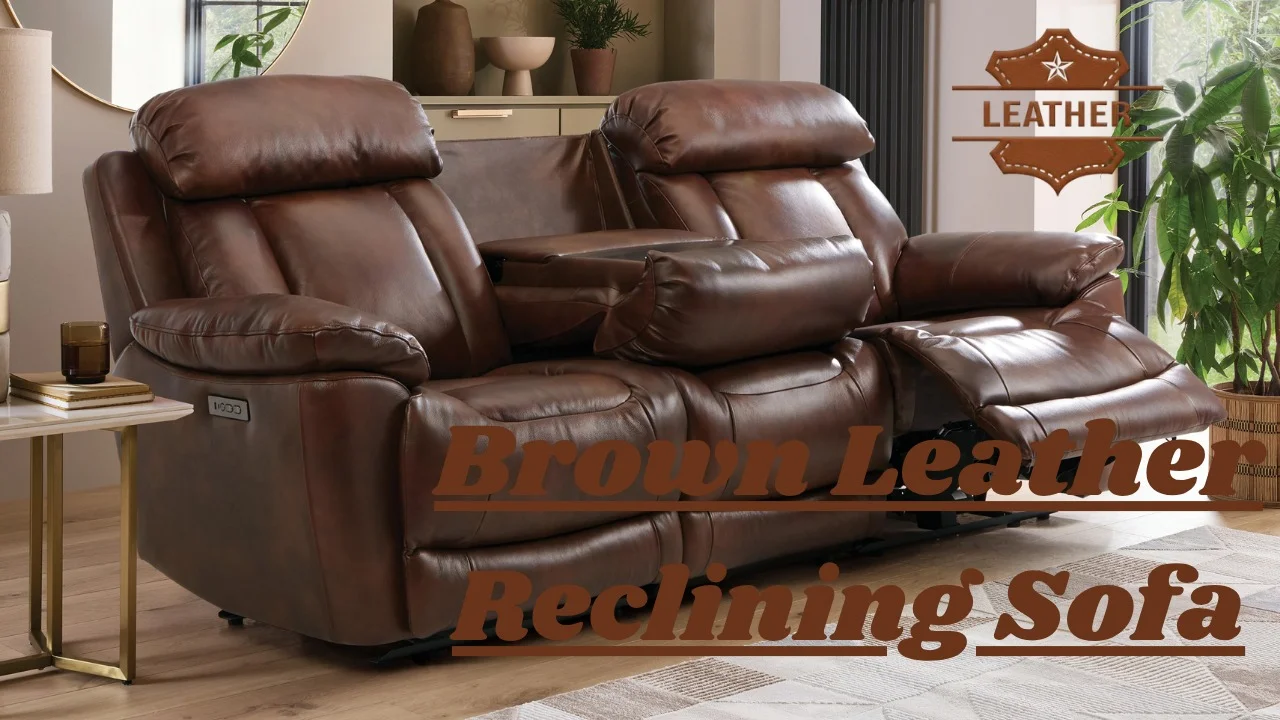
Brown Leather Reclining Sofa
Brown leather reclining sofas are popular for a simple reason: they solve two problems at once. They give you a warm, timeless look and real comfort in daily use. For families, movie rooms, and living rooms that need both style and practicality, a Brown Leather Reclining Sofa is often the piece that anchors the entire space. When chosen well, it can last for years, age beautifully, and become more comfortable over time. Leather itself is a durable, flexible, breathable material when it is properly made and maintained.
In 2026, buyers are asking smarter questions than before. They want to know whether the sofa is full-grain, top-grain, or corrected grain; whether the recline mechanism is manual or power; whether the frame is strong enough for long use; and whether the leather is coming from a responsible supply chain. That is the right way to shop. Leather Working Group’s audit standards focus on traceability, chemical management, water and energy usage, waste, and social responsibility, which makes certification a useful trust signal for modern buyers.
What Is a Brown Leather Reclining Sofa?
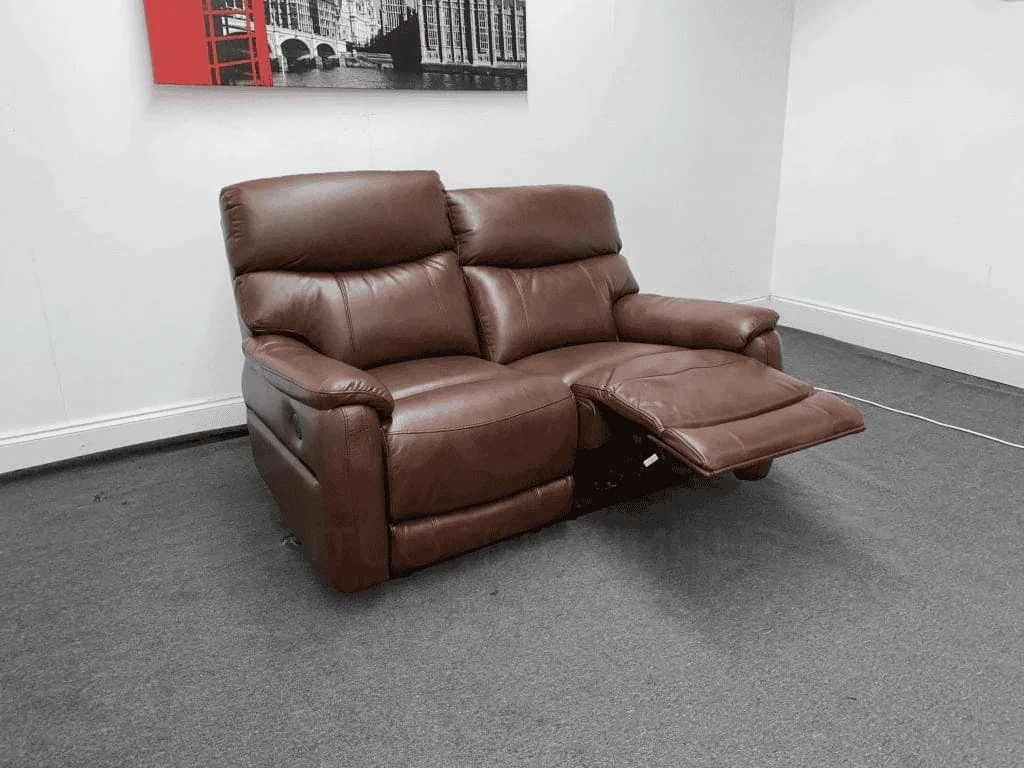
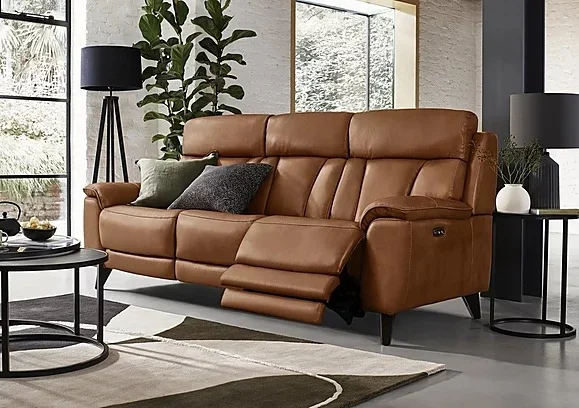
A brown leather reclining sofa is a motion sofa upholstered in leather that lets one or more seats recline backward while the footrest extends. It combines the seated support of a sofa with the relaxation of a recliner. In higher-end models, you may also see power controls, adjustable headrests, lumbar support, USB charging, storage, cup holders, heated seating, and massage functions. These features are not essential for everyone, but they can improve comfort for daily use.
Brown is especially popular because it feels warm, grounded, and easy to coordinate. It works in rustic spaces, traditional homes, family rooms, and even modern interiors when paired with cleaner lines and simpler décor. Brown also tends to hide everyday visual wear better than very light colors, which makes it practical for homes with children or pets. That is one reason buyers often choose brown leather when they want a sofa that feels luxurious but still lived-in.
Why Brown Leather Reclining Sofas Matter in 2026
The big 2026 shift is trust. Buyers are no longer satisfied with vague labels like “real leather” or “premium comfort.” They want traceable materials, clearer terminology, and realistic durability expectations. LWG’s new 2026 Sustainability System will replace Protocol 7 and includes a Leather Production Standard, Chain of Custody Standard, and Decarbonisation Framework. That matters because modern buyers increasingly care about what the sofa is made from, where it came from, and how the leather was processed.
It also matters because the leather category itself is often misunderstood. Industry sources define leather as a hide or skin with its original fibrous structure more or less intact and tanned so it will not decay. In practice, that means quality is shaped by the hide, the tanning method, the finish, and the construction method. A sofa can look similar on the outside and perform very differently over time, depending on those factors.
Types of Brown Leather Reclining Sofas
Manual Reclining Sofas
Manual recliners use a lever or pull mechanism. They are usually more affordable, simpler to maintain, and do not depend on electricity. They are a smart option if you want fewer moving parts and a lower purchase price.
Power Reclining Sofas
Power recliners use electric motors and usually offer smoother adjustment, more position options, and easier operation. They are especially useful for older adults, people with mobility concerns, or buyers who want more precise comfort control.
Wall-Hugger Recliners
Wall-hugger designs need less space behind the sofa to recline. They are ideal for apartments, condos, or smaller living rooms where every inch matters.
Zero-Gravity Recliners
Zero-gravity recliners aim to distribute body weight more evenly and reduce pressure on the spine. They are a strong choice for buyers who want a more relaxed, body-supported posture.
Reclining Sectionals
Reclining sectionals are best for larger households and media rooms. They offer more seats, more lounging space, and a more theater-like experience.
Mini summary:
If you want value, start with the manual. If you want comfort and convenience, choose power. If you have limited space, a wall-hugger is often the smartest move.
Leather Types Explained
This is where most buyers make expensive mistakes. They focus on the color and ignore the actual leather structure. That is risky because the leather type affects durability, appearance, and maintenance.
| Leather Type | Look and Feel | Durability | Maintenance | Best For |
| Full-grain leather | Most natural, visible grain, rich patina | Very high | Moderate | Premium buyers, long-term use |
| Top-grain leather | Smoother, more uniform surface | High | Easier | Family rooms, balanced value |
| Genuine leather | Real leather, but often lower-tier in retail use | Moderate | Moderate | Mid-budget buyers |
| Bonded leather | Leather fibers bonded with synthetic material | Low | Lower upfront, shorter life | Tight budgets only |
| Faux leather | Synthetic leather alternative | Variable | Easy | Budget or vegan preference |
Leather terminology can be confusing because trade definitions and retail marketing are not always the same. Official and technical sources define full-grain leather as leather with the original grain surface intact, while corrected-grain leather is leather whose grain has been partly removed by buffing and then rebuilt with finishes. Bonded leather is made from leather fibers or scraps combined with a binding material.
Full-Grain Leather
Full-grain leather is the premium benchmark. It keeps the original grain surface and usually develops a richer patina over time. That makes it a strong choice for buyers who want character, longevity, and a more natural appearance. It is often the best long-term value, even when the upfront price is higher.
Top-Grain Leather
Top-grain is commonly used for high-quality furniture because it gives a smoother and more uniform finish. It is often chosen when buyers want a cleaner look with easier day-to-day upkeep. In retail, sellers sometimes use “Top Grain” loosely, so always ask for the exact finish and whether the leather has been corrected or pigmented.
Genuine Leather
“Genuine leather” sounds premium, but in retail it often signals a lower tier than buyers expect. The term can simply mean real leather rather than the highest leather grade. That is why shoppers should never rely on the word alone; they should ask for the grain structure, finish, and backing material.
Suede and Nubuck
Suede has a velvety nap created by buffing, usually on the split side. Nubuck is buffed on the grain side, which gives a similar soft feel but usually with a more refined surface. These finishes can look beautiful, but they usually require more careful maintenance than protected leathers.
Aniline, Semi-Aniline, and Pigmented Leather
Aniline leather has minimal surface finish, which gives it a very natural look but less protection. Semi-aniline has a light pigment layer that preserves more of the natural surface while adding some protection. Pigmented leather has a more opaque protective finish and is usually more forgiving for daily use. For sofas, semi-aniline and pigmented leathers are often easier for families than pure aniline.
Manufacturing Process: Why It Changes Sofa Quality
Leather quality begins long before the sofa is built. Raw hide must be preserved, cleaned, tanned, dyed, conditioned, and finished. Tanning is the process that stabilizes the hide so it becomes durable leather rather than a material that would decay. Vegetable tanning and chrome tanning create different results: vegetable tanning is slower and often develops stronger patina, while chrome tanning is faster and typically produces softer, more flexible leather.
A useful way to think about it is this: the hide, tanning, and finish determine how the leather will age; the frame, mechanism, and assembly determine how the sofa will function. A good-looking sofa with weak internal construction will disappoint quickly. A well-built sofa with a quality finish can handle years of daily use.
Step-by-Step View
- Hide selection
- Preservation and soaking
- Liming and dehairing
- Fleshing and splitting
- Tanning
- Retanning, dyeing, and fatliquoring
- Drying and surface finishing
- Cutting, sewing, and upholstery assembly
- Mechanism installation
- Final inspection and testing
How to Identify Original vs Fake Leather
Here are the practical signs buyers should check before paying:
- Ask for the exact leather type, not just “real leather.”
- Request whether it is full-grain, top-grain, corrected-grain, pigmented, or bonded.
- Look for natural variation in grain rather than perfect uniformity.
- Check the back and hidden areas for consistency.
- Ask whether the leather is finished, coated, or embossed.
- Request care instructions from the seller.
- Look for traceability or certification claims when possible.
A useful truth: many problems come from misleading labels, not just low material quality. Technical sources warn that vendors sometimes market corrected grain as higher-grade leather or describe split leather as top grain. That is why exact material disclosure matters more than marketing language.
Complete Buying Guide
1) Measure Your Room First
Measure width, depth, doorways, hallway turns, and wall clearance. Reclining sofas need more functional space than regular sofas, especially if the seats extend outward.
2) Decide How You Will Use It
A family TV room needs different features than a formal living room. If the sofa is for nightly use, comfort and durability matter more than decorative detail.
3) Choose the Right Mechanism
Manual is best for simplicity. Power is best for convenience. A wall-hugger is best for small rooms. Sectionals are best for large households.
4) Choose the Leather Grade
For long-term ownership, full-grain or quality top-grain is usually the best decision. Bonded leather may look attractive at first, but it often falls short in longevity.
5) Check the Frame and Support System
A strong sofa should use a durable frame, reinforced joinery, and quality mechanism hardware. The leather matters, but the internal structure matters just as much.
6) Match the Sofa to Your Lifestyle
If you have kids, pets, or heavy daily use, choose a more protective finish. If you want a more luxurious, natural look and are Comfortable with extra care, a more open leather finish may suit you better.
| Buyer Profile | Best Choice | Why |
| Busy family | Top-grain or pigmented leather, power recline | Easier daily care |
| Luxury buyer | Full-grain or premium aniline/semi-aniline | Best character and aging |
| Small apartment | Wall-hugger manual recliner | Space-saving |
| Home theater | Power sectional with headrest support | Maximum comfort |
| Budget buyer | Good faux leather or carefully chosen genuine leather | Lower upfront cost |
Best Uses of a Brown Leather Reclining Sofa
A brown leather reclining sofa works best in:
- family rooms
- home theaters
- reading corners
- rustic and farmhouse interiors
- traditional living rooms
- masculine or neutral interiors
- mixed-material modern rooms with wood, metal, or stone accents
Its strength is versatility. Brown brings warmth, while leather brings structure and visual richness. That combination makes it easier to center a room around the sofa instead of fighting the sofa as a design problem.
Worldwide Price Ranges: What Affects the Cost?
Rather than focusing on exact numbers that change by brand and country, it is smarter to understand the price drivers:
- leather grade
- tannery quality
- finish type
- recline mechanism
- frame construction
- seat count
- power features
- brand reputation
- certification and supply-chain transparency
In general, the price climbs as you move from faux or bonded leather to genuine leather, top-grain, and full-grain. Power features, modular sectionals, and premium finishes also raise the price. That is normal.
Best Countries and Brands Famous for Leather Quality
If you are selecting by origin, Italy remains a major reference point for premium leather manufacturing, with UNIC describing the Italian tanning industry as a global leader and noting its large share of European and global output. Historical ICT leather statistics also list major producing countries such as China, Brazil, India, Italy, Spain, Pakistan, and the USA among the world’s top producers. For buyers, the country matters less than the exact tannery, leather grade, and documentation.
For brands, the safest rule is not to chase logos alone. Look for brands that disclose leather type, care instructions, frame details, and supply-chain responsibility. Brands that reference LWG certification, traceability, or tannery standards are generally giving you more to verify.
Pros and Cons
Pros
- Timeless visual appeal
- Comfortable for daily lounging
- Brown hides wear better visually than pale colors
- Leather can last a long time when correctly handled
- Works in many design styles
- Good resale appeal when quality is high
Cons
- Higher upfront cost than fabric in many cases
- Some finishes require more careful maintenance
- Power models need electricity
- Bonded and low-grade leathers can disappoint
- Large recliners may need more room than expected
Common Buyer Mistakes to Avoid
- Buying by color only, without checking leather grade
- Ignoring room clearance for the recline function
- Choosing bonded leather for heavy daily use
- Assuming “genuine leather” automatically means premium quality
- Skipping frame and mechanism checks
- Not asking about finish type and care instructions
- Forgetting to match the sofa to the room style and layout
Care, Cleaning, and Maintenance Tips
Leather lasts longer when it is handled properly. ICT notes that leather retains its appearance and functional properties when it is correctly maintained, and that care depends on the type of leather. Regular cleaning, gentle handling, and protection from harsh conditions matter more than fancy products.
Weekly
- Dust with a soft dry cloth
- Vacuum crevices gently
- Wipe off crumbs and surface debris
Monthly
- Clean with a leather-safe product
- Test any cleaner on a hidden area first
- Avoid soaking the leather
Every 3–6 Months
- Condition the leather if the manufacturer recommends it
- Keep it away from direct heat and strong sunlight
- Check for stiffness, dryness, or wear
Annually
- Inspect mechanisms
- Tighten loose hardware
- Review electrical components on power recliners
Care guides from furniture and leather brands commonly Recommend Gentle Cleaning, keeping leather away from heat and sun, and conditioning periodically rather than aggressively. Avoid bleach, ammonia, and abrasive cleaners because they can damage the surface.
Expert Tips Most Buyers Ignore
- Choose the finish for your lifestyle, not just for appearance.
- Ask whether the leather is semi-aniline or pigmented if you need easier maintenance.
- Pay attention to the recliner’s clearance requirements before you buy.
- A strong frame often matters more than an extra feature.
- If the seller cannot explain the leather type clearly, keep shopping.
- For daily family use, protective finishes usually age better than delicate finishes.
- For long-term value, a cleaner leather grade with honest documentation is better than a marketing-heavy listing.
Who Should Buy This Product
A brown leather reclining sofa is a strong choice for:
- families who want comfort and durability,
- buyers who like warm, classic interiors,
- people furnishing a home theater or media room,
- shoppers who prefer furniture that improves visually over time,
- buyers willing to maintain leather properly
Who Should Avoid This Product
It may not be the best choice for:
- buyers with very limited floor space
- people who want a lightweight, easy-to-move sofa
- shoppers who do not want to maintain leather at all
- buyers seeking the lowest possible upfront cost
- people who prefer soft, casual fabric over a structured leather look
Future Trends in the Leather Industry
The biggest future trends are traceability, sustainability, and cleaner disclosure. Leather Working Group is expanding its audit framework, and its 2026 Sustainability System will add a Leather Production Standard, Chain of Custody Standard, and Decarbonisation Framework. That means buyers will increasingly see leather products judged not only by appearance and comfort, but also by supply-chain transparency, chemical management, and environmental performance.
A second trend is better material honesty. Buyers are becoming more aware of terms like full-grain, corrected grain, semi-aniline, and bonded leather. That pressure should reward brands that describe leather precisely instead of hiding behind vague words like “luxury” or “premium.” That is a healthy shift for the market.
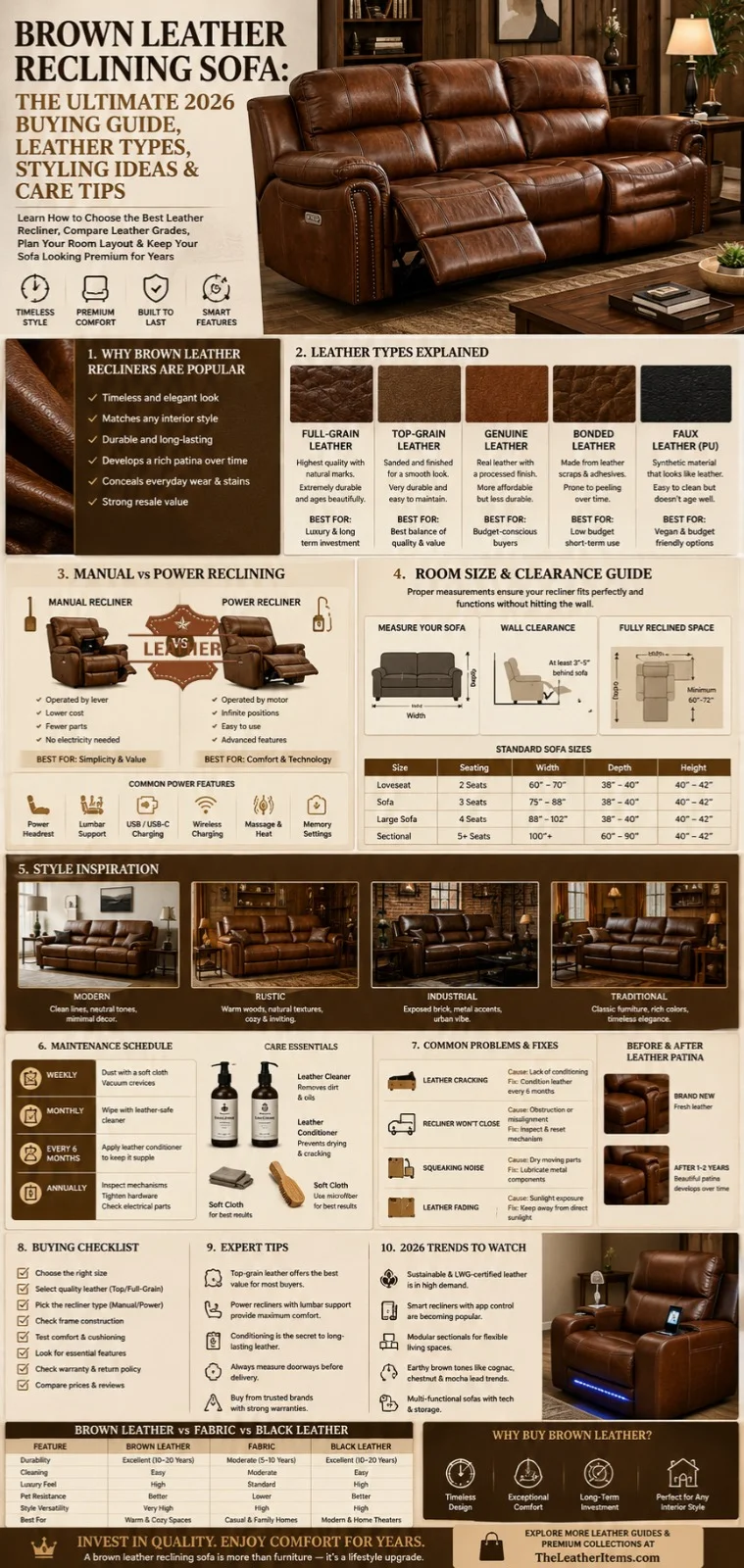
Caption: Thinking about buying a brown leather reclining sofa? This visual guide compares leather grades, recliner types, room planning, and care tips to help you choose the right sofa for your home.
People Also Ask
A: A well-made leather recliner can last many years if the leather type, frame, and mechanism are strong and the sofa is maintained properly. Higher-quality leather and better internal construction usually mean longer life.
A: Yes, for many buyers, it is the best balance of durability, appearance, and maintenance. It is especially practical for everyday family use.
A: They can be very reliable when made by reputable brands and supported by solid construction. The key is to check the mechanism quality, warranty, and electrical components before buying.
A: Pigmented and some semi-aniline leathers are usually easier to live with than pure aniline or suede-like finishes because they have more surface protection.
A: Ask for the exact leather designation and construction details. Real leather is not the same as premium leather, and bonded leather should never be confused with full-grain or top-grain material.
Conclusion
A brown leather reclining sofa is one of the most practical and stylish furniture investments you can make. The best results come from choosing the right leather type, recline mechanism, and sofa that suits your room and lifestyle. For long-term value, look for clear material disclosure, solid frame construction, and a care routine you can actually follow. That combination is what turns a good-looking sofa into a lasting one.
For TheLeatherItems.com, this topic is also a strong authority builder because it brings together furniture, leather science, care, sourcing, and buying decisions in a single, comprehensive guide. Readers who understand the Material are more likely to trust the brand, stay longer on the site, and return for more leather advice.
Legal disclaimer: Leather quality, pricing, manufacturing standards, and product availability may vary by country, brand, and supplier. Always verify authenticity, material details, and care instructions before purchase.