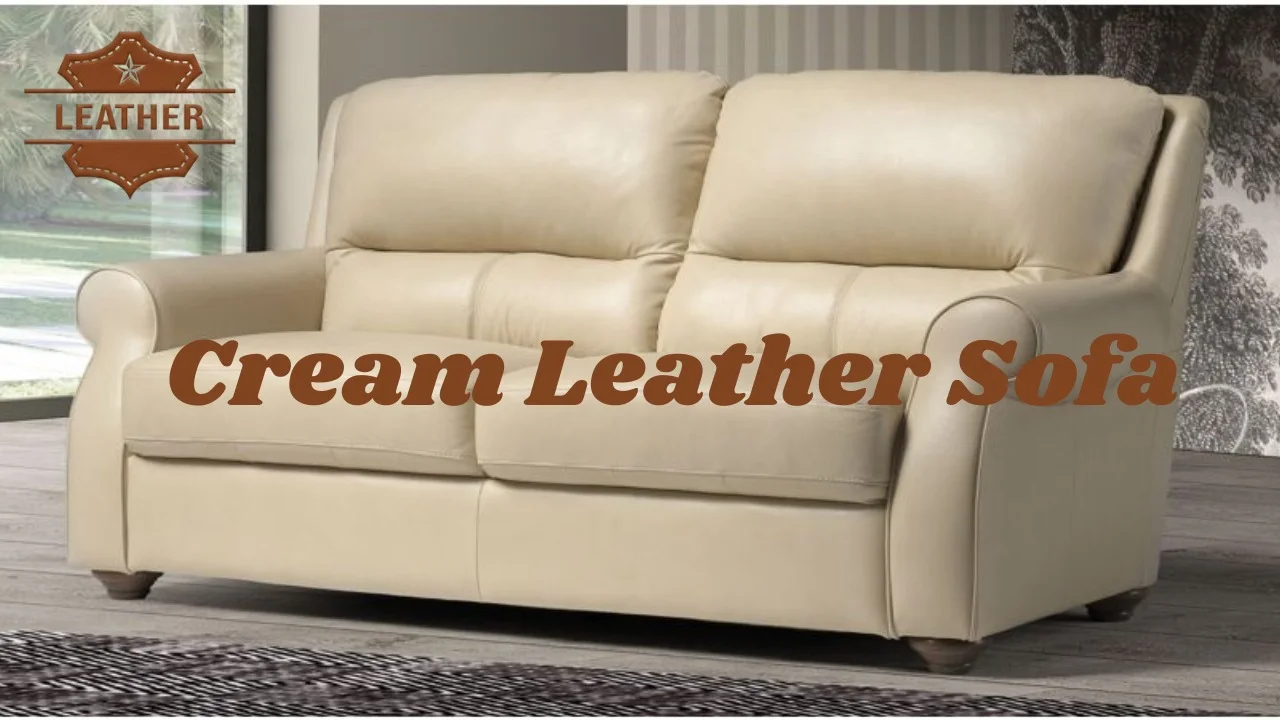
Cream Leather Sofa
A Cream Leather Sofa can change the whole feel of a room. It brightens the space, softens harsh lines, and gives you that clean, luxury look without feeling cold or sterile. That is exactly why it remains one of the most searched sofa styles for modern homes in 2026. Recent design content continues to lean toward warm neutrals, light-reflective palettes, and texture-led styling, which makes cream leather feel more current than ever.
But buying one is not just about choosing a beautiful color. The real difference comes from the leather grade, frame quality, cushion build, finish, and the way the sofa fits your lifestyle. A cream sofa in the right leather can age beautifully and feel expensive for years. A poor one can stain, crack, or look tired much faster than expected. That is why this guide goes beyond decor and gives you the buying logic behind a smart purchase. Leather quality, tannery standards, cleaning practices, and sustainability all matter here.
Quick answer: the best cream leather sofa is usually one that combines a protected or top-grain leather finish, a kiln-dried hardwood frame, high-density cushions, and a size that suits your room and daily use.
What Is a Cream Leather Sofa?
A cream leather sofa is a sofa upholstered in a soft off-white leather tone with warm undertones. It usually sits somewhere between white, ivory, and beige, but it feels softer than pure white and lighter than tan or taupe.
The reason cream works so well is simple: it reflects light beautifully while still feeling warm and welcoming. That makes it ideal for modern apartments, family living rooms, and open-plan spaces that need a lighter visual anchor.
Cream vs ivory vs beige vs white
Cream usually feels the warmest and most versatile. Ivory can look a touch more yellow. Beige leans earthier and browner. White is the crispest choice, but it can feel harsher and more formal in daily life.
Why the undertone matters
A cream leather sofa with cool undertones may look sharper in a contemporary room, while a warm cream sofa feels better with oak, walnut, brass, linen, and natural stone. If your room already has warm flooring or wood furniture, a warmer cream shade usually blends better.
Why Cream Leather Sofas Matter in 2026
Cream leather remains relevant because the wider design direction is moving toward softer, calmer, nature-led interiors. Recent 2026 sofa styling articles show strong demand for warm neutrals, layered textures, and light palettes that make rooms feel larger and more relaxed. Retailer pages also show that buyers want flexibility: compact 2-seaters, corner sofas, chaise sofas, and modular layouts all appear in current cream-leather assortments.
This matters because cream is no longer treated as a “safe” color. It is now part of a more polished, contemporary look that can read as premium, airy, and intentional when styled correctly. That is why cream leather works so well in minimalist homes, luxury apartments, family rooms, and Scandinavian-inspired interiors.
The real buying shift in 2026
People are not just asking, “Does it look nice?” They are asking:
- Will it hold up to daily use?
- Is the leather easy to clean?
- Does the finish suit kids or pets?
- Will the sofa still look good after a few years?
- Does the room need a softer or bolder neutral?
A strong pillar page should answer those questions clearly.
The Main Leather Types Used in Cream Sofas
Leather type matters more than shade. The same cream color can look and perform very differently depending on the leather grade and finish.
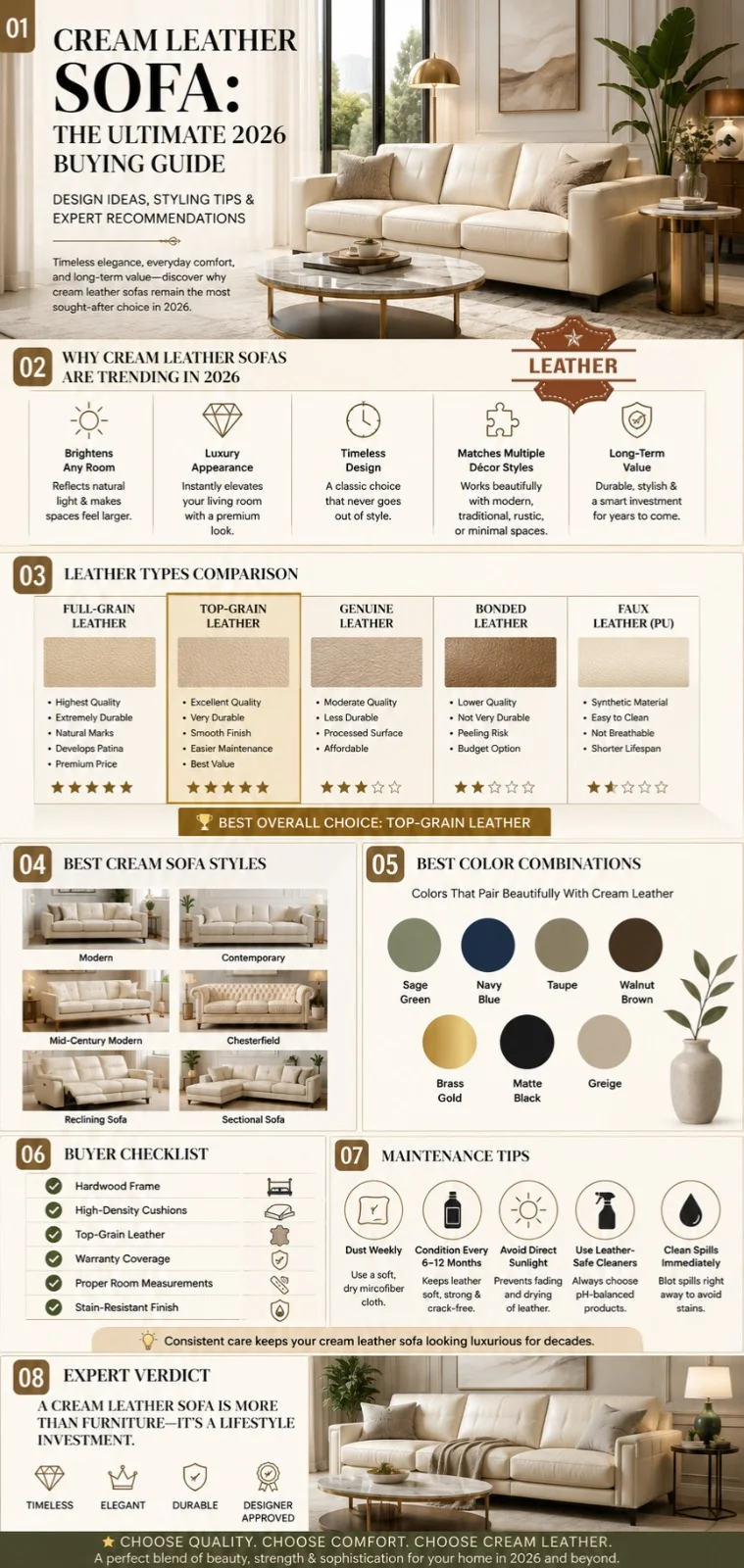
| Leather type | What it feels like | Durability | Maintenance | Best for | Main caution |
| Full-grain leather | Natural, textured, character-rich | Excellent | Moderate | Long-term buyers, premium interiors | Higher cost and more natural marks |
| Top-grain leather | Smooth, refined, more uniform | Very good | Easier than full-grain | Busy homes, modern spaces, family use | Less patina and less breathability |
| Genuine leather | Varies widely | Variable | Variable | Budget-conscious buyers who verify specs carefully | The label is vague and can hide low quality |
| Suede/nubuck | Soft, tactile, luxurious | Good, but delicate | Harder to maintain | Style-first homes, low-traffic areas | Sensitive to stains and moisture |
| PU / faux leather | Uniform, synthetic, wipe-clean | Lower long-term | Easy short-term | Tight budgets, temporary use | Shorter life, less natural look and feel |
Full-grain leather keeps the grain layer intact and is widely treated as the most durable and character-rich option. Top-grain leather is sanded or buffed for a smoother, more uniform finish, which makes it easier to maintain but usually less breathable and less patina-rich over time. The term genuine leather is ambiguous and can be a red flag unless the seller is transparent about the actual grain quality.
What does this mean for a cream sofa?
Cream hides imperfections less than dark leather does, so the finish matters. A protected or top-grain cream leather sofa often makes the most sense for real-world homes because it balances beauty with practicality. Full-grain is ideal if you want natural aging and are comfortable with a more premium price point.
Which Cream Leather Sofa Style Should You Buy?
1. Modern cream leather sofa
Best for clean-lined homes, apartments, and minimalist interiors. Look for slim arms, low backs, and simple silhouettes.
2. Contemporary cream leather sofa
A comfortable middle ground between Modern and Classic. This is often the easiest style for most homes because it feels current without looking trendy.
3. Mid-century cream leather sofa
Great if you like tapered legs, slim proportions, and a lighter visual feel.
4. Chesterfield cream leather sofa
Best if you want classic luxury, tufting, and more formal character.

5. Cream leather sectional
Ideal for family rooms, open-plan homes, and people who want generous seating and a strong focal point.
6. Cream leather recliner sofa
Best for media rooms and comfort-first spaces.
7. Cream leather corner sofa
A smart choice for larger rooms that need both comfort and layout efficiency.
Mini summary
Choose the style based on the room, not just the look. In small rooms, a compact 2-seater or slim loveseat usually feels better. In large open spaces, sectionals and modular sofas create balance and presence.
Manufacturing Process: How a Quality Cream Leather Sofa Is Made
A good sofa starts with the hide, but it does not end there. Leather supply-chain standards matter, and LWG’s audit framework exists to assess and certify different parts of the leather production chain. LWG also states that over a third of global finished leather production is assessed using its audit standard.
Step-by-step overview
- Hide selection
Higher-quality hides usually give a more consistent surface and better final result. - Tanning
The leather is stabilized, so it becomes durable and usable for upholstery. - Dyeing and finishing
The cream color is created and then sealed or protected, depending on the chosen finish. - Cutting and panel matching
Panels are selected to keep the color and texture as even as possible. - Frame construction
The best frames are usually kiln-dried hardwood with reinforced joints. - Cushion build
Cushion density, foam layering, and wrap material decide how the sofa feels and wears. - Upholstery and final finishing
The leather is tensioned, stitched, assembled, and checked for finish quality. - Quality control
A good brand checks seams, color consistency, cushion alignment, and frame stability before shipping.
Why this matters to buyers
A cream leather sofa can look expensive on day one and still disappoint later if the frame is weak or the finish is poor. The leather is only one part of the equation. Construction quality decides whether the sofa feels sturdy, holds shape, and stays comfortable.
How to Identify Original vs Fake Leather
Because “genuine leather” can be used loosely, buyers need a simple way to spot quality.
1. Check the label carefully
Look for clear wording such as full-grain, top-grain, protected leather, or an exact leather breakdown. Avoid vague marketing language when the seller will not explain the material. The ambiguity around “genuine leather” is a known issue in leather education guides.
2. Look at the surface
Natural leather usually has small irregularities. A surface that looks too perfect and plastic-like can be a warning sign, especially on lower-end products.
3. Check the edges and backing
The cut edge and underside can tell you a lot. Real leather usually does not behave like a fully plastic-coated synthetic surface.
4. Ask about the finish
Protected, semi-aniline, and full-aniline finishes all feel different. The finish affects softness, stain resistance, and maintenance.
5. Smell and touch matter
Authentic leather usually has a richer, deeper smell and a more natural hand feel than faux leather. Full-grain leather is especially known for its character and patina potential.
6. Don’t trust the price alone
Very cheap “leather” sofas often use bonded leather, split leather, or synthetic blends. A fair price is one clue, not proof.
7. Ask for warranty and care instructions
A serious seller should explain how to clean, protect, and maintain the sofa.

Complete Buying Guide: How to Choose the Best Cream Leather Sofa
1. Start with your room size
A sofa should fit your room and your movement flow. In a small room, slim arms and raised legs can make a cream sofa feel lighter. In a larger room, sectionals and corner sofas fill the space more naturally.
2. Match the sofa to your lifestyle
If you have kids, pets, or a very active household, a protected or top-grain finish is usually a smarter choice than a delicate natural finish. If you use the room lightly and value character, full-grain can be worth the upgrade.
3. Check the cushion feel
Look for high-density foam, layered support, or down-wrapped cushions if you want comfort without fast sagging.
4. Inspect the frame
A kiln-dried hardwood frame with reinforced joints is a strong sign of better construction.
5. Choose the right finish
- Protected leather: easier to clean, practical for busy homes
- Semi-aniline leather: a balance of softness and protection
- Full-aniline leather: premium, natural, and more delicate
6. Think about sunlight
Cream leather can look beautiful near light, but direct sunlight can fade the color and dry the leather over time. Care sources consistently advise keeping leather out of direct sunlight and away from excessive heat.
7. Test the color in your actual room
Cream changes under different lighting. A shade that looks warm online can appear cooler in your home.
8. Verify the return and delivery details
Measure doors, stairways, elevators, and hallways before buying. A great sofa is useless if it cannot fit in the room.
Best Uses of a Cream Leather Sofa
Cream leather is one of the Most Flexible upholstery colors because it works across many room types.
Best for:
- Modern apartments
- Open-plan living rooms
- Scandinavian interiors
- Luxury homes
- Neutral family spaces
- Hotel-inspired rooms
- Rooms with wood floors, brass accents, or stone details
Not ideal for:
- Very rustic spaces where you want a heavy, dark, aged look
- Homes where the sofa will constantly face direct sun
- Buyers who want zero maintenance
- Very rough-use environments where fabric may be more forgiving
Style match tip
Cream leather looks especially good with oak, walnut, greige, taupe, black metal, soft green, navy, and brass. Style guides from 2026 consistently show that warm neutrals and layered textures make cream sofas feel richer and less flat.
Worldwide Price Ranges: What to Expect
Exact pricing changes by country, brand, shipping cost, and leather grade, but the market usually falls into four broad bands.
| Price band | Typical build | What you usually get | Buyer profile |
| Budget | PU/faux or lower-grade leather look | Basic comfort, lighter frame, simpler styling | First-time buyers, short-term use |
| Mid-range | Often, top-grain or protected leather | Better comfort, better durability, more style options | Most households |
| Premium | Better top-grain, semi-aniline, stronger frames | Stronger construction, more comfort, longer life | Buyers who want long-term value |
| Luxury | Full-grain, Italian-style, modular or designer builds | Best materials, best finish, premium feel | High-end homes and design-led buyers |
Current retail pages show this spread clearly: some stores focus on accessible cream leather collections, while others position their sofas as high-end, premium, or Italian-style pieces. Povison’s 2026 review content also shows higher-ticket leather sofa examples in the several-thousand-dollar range, which is typical for premium modular and recliner-led offerings.
Practical takeaway
Do not compare sofas only by color. Compare leather grade, frame, cushion build, and care burden. That is where the real value difference lives.
Best Countries and Brands to Compare
Rather than chasing a “best country” myth, compare makers and retailers that are transparent about leather grade, frame construction, and care instructions.
Good comparison sources include:
- Furniture Village for style range and layout options.
- Sterling Home for the leather-sofa category framing.
- DFS and ScS for practical care guidance and maintenance expectations.
- Povison for modern, design-led product positioning.
Best country angle for content
For SEO, it is safer to talk about design reputation, material transparency, and finish quality than to make hard ranking claims about one country being best forever.
Budget-Friendly Options vs Premium Options
Budget-friendly cream leather sofa
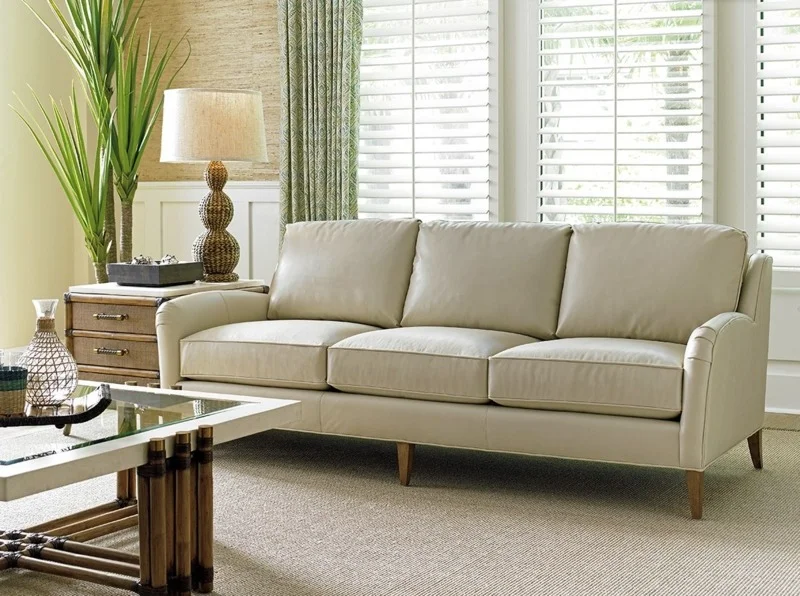
Best if you want the look first and the lowest upfront cost. Typically made with PU or lower-grade leather and simpler frames.
Look for:
- Easy-clean surface
- Decent Warranty
- Transparent material description
- Good seat support
Premium cream leather sofa
Best if you want longevity, better comfort, and a richer finish.
Look for:
- Full-grain or high-quality top-grain leather
- Kiln-dried hardwood frame
- Strong stitching and edge finishing
- Clear care guidance
Best compromise for most buyers
A protected top-grain cream sofa is often the sweet spot. It gives you the premium look without the maintenance pressure of more delicate leathers.
Pros and Cons of Cream Leather Sofas
Pros
- Brightens the room
- Feels luxurious and timeless
- Works with many color palettes
- Usually easier to wipe clean than fabric
- Can look beautiful in modern, coastal, Scandinavian, or luxury interiors
- Ages well when the leather is high quality
Cons
- Shows marks, dust, and dirt more easily than darker shades
- Needs regular care
- Lower-grade leather can discolor or wear poorly
- Direct sunlight can fade and dry it
- Some finishes are less forgiving in family homes
Mini summary
Cream leather is beautiful, but it rewards good buying decisions. If the leather grade is poor, the color will not save it.
Common Buyer Mistakes to Avoid
- Buying based on color alone
A cream sofa can still be low quality. - Ignoring the leather grade
Full-grain, top-grain, and genuine leather are not the same thing. - Choosing a delicate finish for a busy family home
Some finishes look stunning but need more careful use. - Skipping room measurements
A sofa that is too large can dominate the room. - Ignoring sunlight and heat exposure
Direct sunlight and heat can fade and dry leather. - Using the wrong cleaning products
Household sprays can strip leather’s natural oils. - Not asking for care instructions
If the seller cannot explain maintenance clearly, that is a warning sign.
How to Clean and Maintain a Cream Leather Sofa
Care advice across major furniture and cleaning sources is consistent: keep it out of direct sunlight, wipe it regularly, clean spills fast, and use leather-safe products only. DFS recommends using a protector as soon as the sofa arrives, cleaning spills immediately, and wiping it weekly. ScS also advises weekly general cleaning and quick spill cleanup. Wecasa and LCK both reinforce the importance of protecting light-colored leather from dirt, sunlight, and heat. Architectural Digest adds that leather should be dried thoroughly and conditioned after cleaning.
Simple care routine
Weekly
- Dust with a soft microfiber cloth
- Check seams and creases
- Remove crumbs from cushions and corners
Monthly
- Wipe with a leather-safe cleaner if needed
- Inspect for early marks or buildup
Every 6–12 months
- Use a leather conditioner or protector suited to the leather type
What to avoid
- Harsh household cleaners
- Too much water
- Abrasive cloths
- Direct heat
- Strong sunlight
- Cleaning wipes not meant for your leather finish
Important note
Some retailers caution against vacuuming certain leather surfaces because it can mark the upholstery, while others recommend Gentle Dusting and soft attachments for careful maintenance. Follow the care guide for your exact leather finish.
Expert Tips Most Buyers Ignore
1. Seat depth matters as much as leather grade
A beautiful sofa that feels too shallow will disappoint you every day.
2. Ask whether the leather is coated
A protected finish is often better for everyday living than a delicate natural finish.
3. Check the color in morning and evening light
Cream can shift more than buyers expect.
4. Use texture to stop the room from feeling flat
Recent style guides around cream sofas strongly favor rugs, wood, linen, knit throws, and layered neutrals to create warmth and depth.
5. Buy for the room you have, not the room you want on Pinterest
That is the fastest way to avoid scale mistakes.
6. If sustainability matters, ask about sourcing
LWG says its standards support responsible sourcing, and WWF highlights the push toward deforestation-free leather supply chains.
Who Should Buy a Cream Leather Sofa?
Best for:
- Buyers who want a brighter living room
- People who like timeless, premium-looking interiors
- Homeowners who are willing to maintain leather properly
- Style-conscious families who want a neutral base
- Buyers building a modern or luxury neutral palette
Also good for:
- Small rooms that need a visual lift
- Open-plan rooms where the sofa must feel elegant, not heavy
- Homes with oak, walnut, brass, beige, greige, or soft green accents
Who Should Avoid a Cream Leather Sofa?
A cream leather sofa may not be the best fit if:
- You want a “set it and forget it” piece
- Your room gets strong direct sunlight all day
- You prefer deep rustic or dark moody interiors
- You do not want to clean or condition leather regularly
- You need the sofa to hide heavy daily wear with almost no upkeep
That does not mean cream is fragile. It means cream is honest. It shows you how well the sofa is made and how well it is cared for.
Future Trends in the Leather Industry
Three trends matter most for a cream leather sofa article in 2026.
1. Warm neutrals stay strong
Recent style content continues to show demand for cream, beige, sand, taupe, sage, and dusty blue because these shades feel calm and easy to live with.
2. Sustainability and traceability matter more
LWG’s certification system and environmental work show how central responsible production and supply-chain transparency have become. WWF also notes the broader movement toward deforestation-free leather sourcing.
3. Buyers want easier care without losing the premium look
That is why protected and semi-aniline finishes continue to make sense for most homes. They keep the elegance but reduce the maintenance burden.
People Also Ask
A: Not if the leather is good quality and you maintain it regularly. Protected and top-grain finishes are usually easier to manage than delicate natural leathers, especially in busy homes. Cleaning guidance from major furniture brands consistently emphasizes quick spill cleanup, weekly dusting, and leather-safe products.
A: For most homes, yes. Cream usually feels warmer, softer, and easier to live with than stark white. It still brightens the room, but it looks less clinical and pairs more naturally with wood and warm neutrals.
A: Top-grain and full-grain are the strongest long-term choices. Top-grain is often the practical sweet spot because it balances durability, stain resistance, and maintenance. Full-grain is the premium choice if you want natural character and patina.
A: Usually, yes. Light upholstery reflects more light and reduces visual heaviness, so the room tends to feel more open and airy.
A: Oak, walnut, taupe, greige, sage green, dusty blue, matte black, navy, brass, and soft beige are all strong choices. Recent cream-sofa styling guides keep returning to warm neutrals and texture layering rather than harsh contrast.
Conclusion
A cream leather sofa is one of the smartest ways to make a living room feel brighter, calmer, and more luxurious at the same time. But the real value is not just in the color. It is in the leather grade, the finish, the frame, the cushions, and the care routine that follows. Recent market content shows strong demand for warm neutrals and textured styling, while authoritative leather sources continue to emphasize certification, traceability, and proper maintenance.
For most buyers, the safest recommendation is a top-grain or protected leather cream sofa with a strong frame, good cushion support, and a size that suits the room. If you want the richest Long-Term Character and are ready for a more premium investment, full-grain is the best path. If you want a sofa that feels elegant, bright, and practical for everyday life, a well-made cream leather sofa is hard to beat.
Explore more leather buying and care guides on TheLeatherItems.com, bookmark this page for later, and share it with anyone comparing leather sofas right now. Keep the material transparent, the care routine simple, and the styling intentional.
Legal Disclaimer
Leather quality, pricing, manufacturing standards, and product availability may vary by country, brand, and supplier. Always verify authenticity, material details, and care instructions before purchase.