Introduction
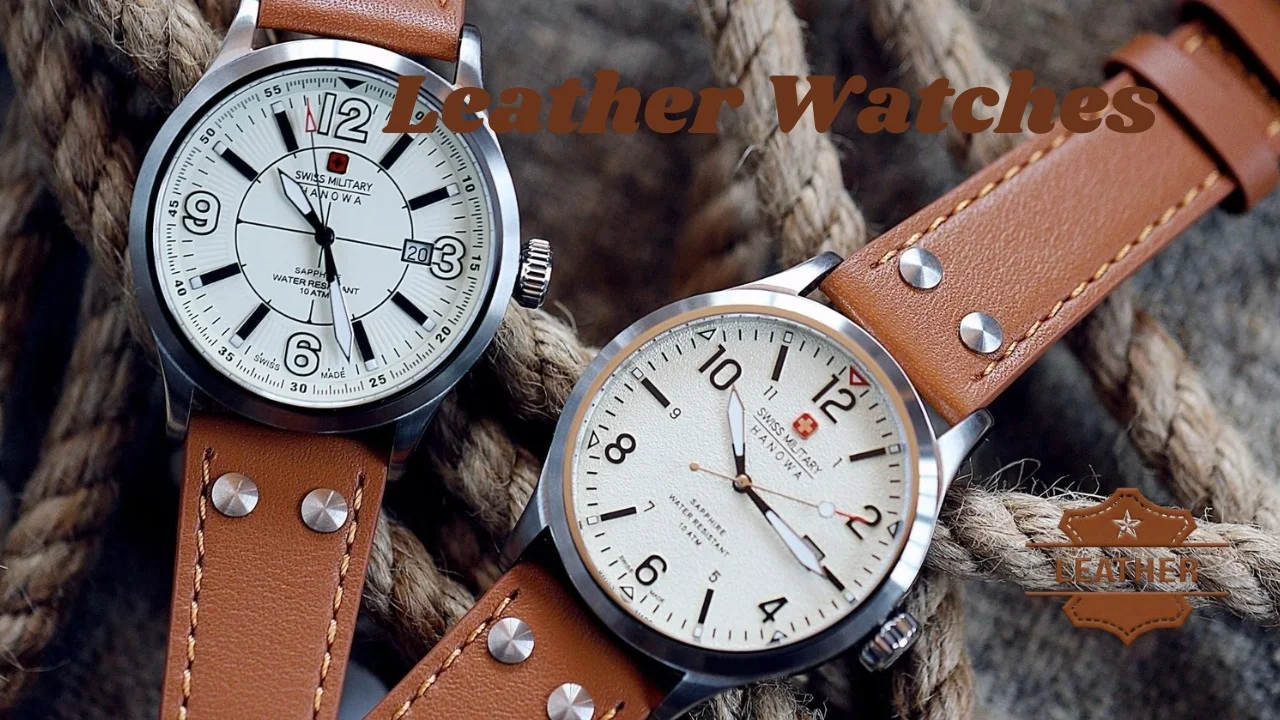
Leather Watches remain one of the easiest ways to make a watch feel classic, comfortable, and versatile at the same time. In 2026, that matters more than ever. Style coverage is leaning toward smaller, cleaner, more intentional watches, and thin leather straps fit that direction perfectly. At the same time, buyers want more than good looks. They want to know which leather lasts, which movement is worth paying for, and how to avoid wasting money on a strap that cracks too soon.
This guide is built to answer those questions clearly. You will learn what a leather watch really is, how to choose the right strap and movement, how to tell quality from marketing, how to style leather watches for men and women, and how to care for them so they age well instead of wearing out early.
What Is a Leather Watch?
A leather watch is a wristwatch fitted with a leather strap instead of a metal bracelet, rubber strap, or fabric band. The strap can be made from different leather grades and finishes, which changes the watch’s look, comfort, durability, and price. In practice, the watch case, dial, and movement matter too, but the strap is what gives the watch its character.
Leather watches are especially popular because they bridge two worlds. They can look formal with a suit, relaxed with jeans, and polished with office wear. Luxury brands also use leather to create a more refined feel, while budget brands use it to keep watches light and affordable.
Snippet-ready answer: A leather watch is a watch with a leather strap, usually chosen for comfort, style, and a classic dressy look. The leather type, watch movement, and strap construction determine how long it lasts and how premium it feels.
Why Leather Watches Still Matter in 2026
Leather watches are still relevant because current style trends are moving toward smaller case sizes, quieter designs, and timeless accessories rather than oversized statement pieces. Recent fashion coverage describes a strong “tiny watch” moment, and current watch-industry commentary points to a clear preference for more wearable, elegant proportions. Leather straps fit that movement naturally.
They also remain practical. Leather is lighter than metal, softer on the wrist, and often more comfortable for long office wear. For many buyers, that comfort matters more than hype. Brands like Cartier and Longines also continue to maintain dedicated leather-strap care guidance, which shows that leather straps remain a serious part of modern watchmaking rather than a leftover style.
Mini summary: In 2026, leather watches are not old-fashioned. They are one of the strongest choices for buyers who want elegance, comfort, and a cleaner wrist profile.
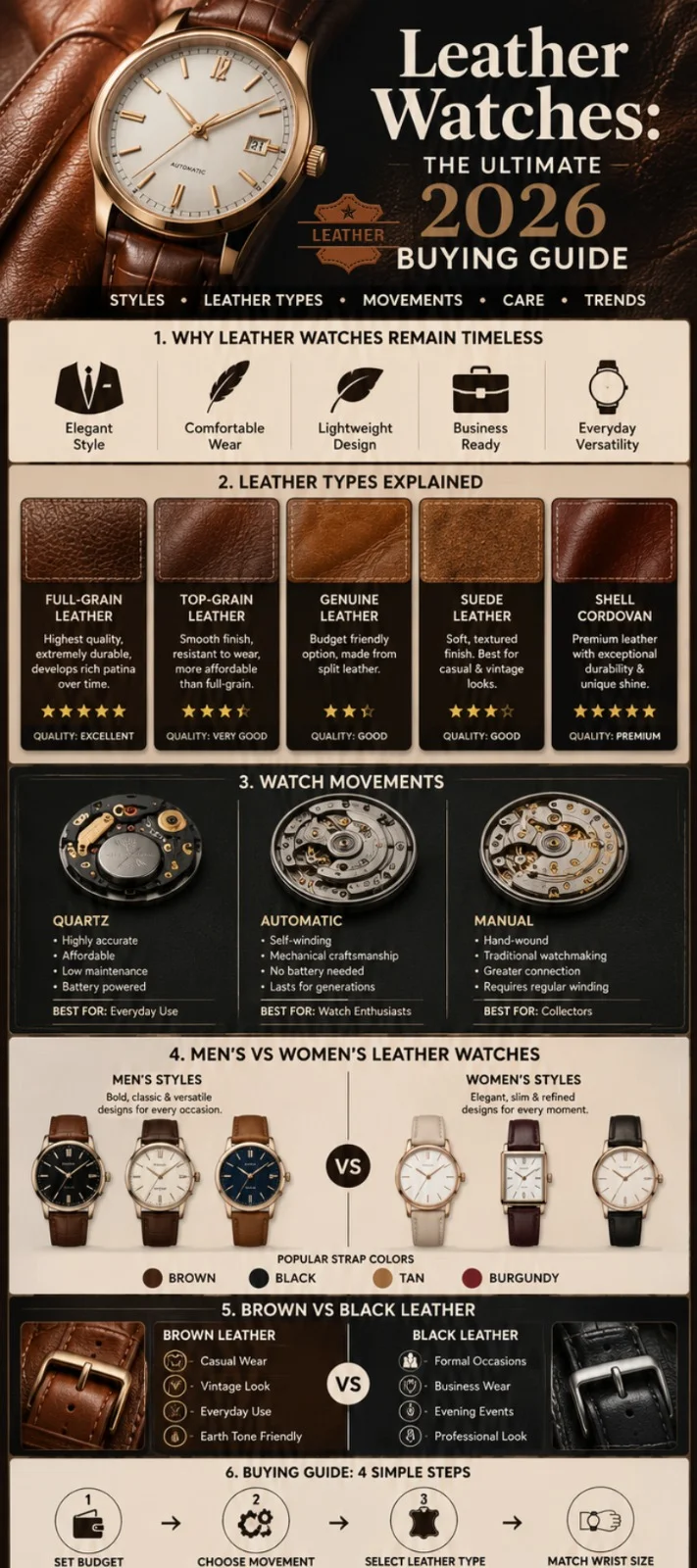
The Main Types of Leather Used in Watches
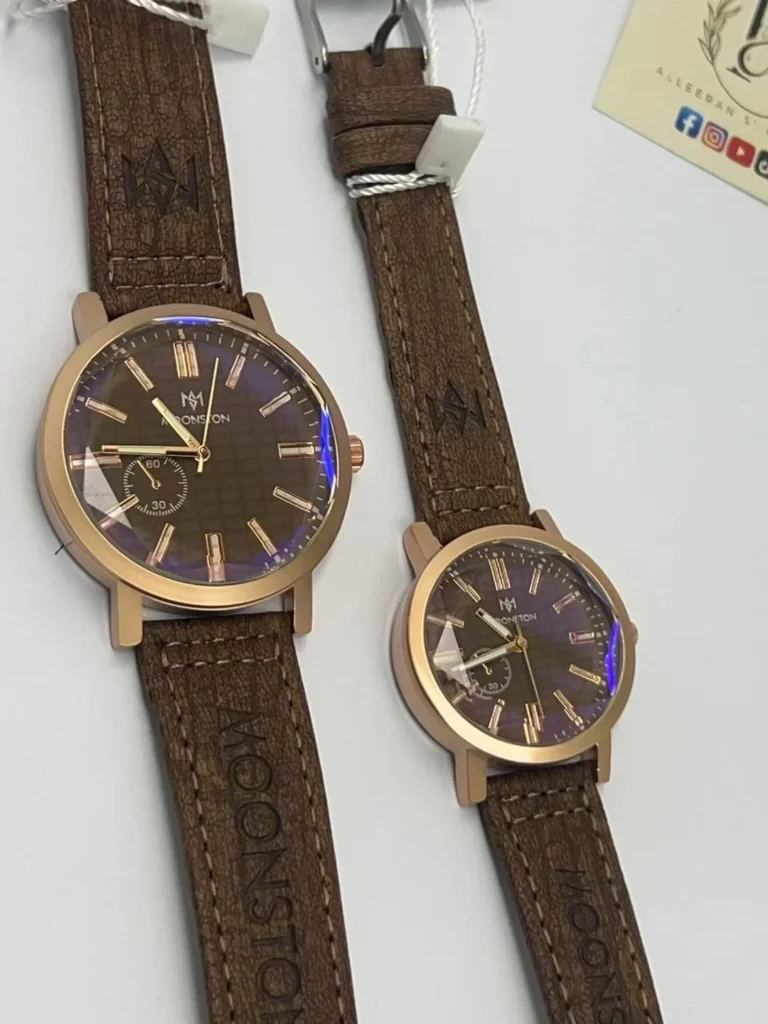
Not all leather is equal. The strap material changes how the watch feels, how fast it ages, and how well it resists daily use. Watch-strap makers commonly break the market into full-grain, top-grain, genuine leather, suede, nubuck, and exotic options such as alligator or shell cordovan.
1) Full-Grain Leather
Full-grain leather keeps the natural outer grain of the hide. In strap guides from makers and retailers, it is usually described as the most durable and the one that develops the richest patina over time. That makes it a strong choice for buyers who want a strap to age beautifully.
2) Top-Grain Leather
Top-grain leather is usually smoothed or sanded for a more uniform finish. It often looks cleaner and more polished than full-grain leather, which is why it shows up often on dressier and more fashion-focused watches. It is still a premium choice, but it generally trades some character for a more even appearance.
3) Genuine Leather
In the watch-strap market, “genuine leather” is often used for lower-priced or more heavily processed straps. Many retail guides treat it as a lower-tier option compared with full-grain and top-grain leather, so buyers should not stop at the label alone. Ask for hide type, tannery, and finish whenever possible.
4) Suede and Nubuck
Suede and nubuck give watches a softer, more textured feel. They look especially good with vintage styling and casual outfits, but they usually need more careful maintenance because they are more vulnerable to stains and moisture.
5) Exotic Leather
Alligator, crocodile, ostrich, and shell cordovan sit in the premium and luxury tier. They are prized for texture, rarity, and a more elevated look. Luxury maisons such as Hermès and other high-end watch brands still use these materials to signal craft and exclusivity.
Comparison table: leather types
| Leather type | Best for | Main advantage | Main drawback |
| Full-grain | Everyday premium wear | Best aging and durability | Often pricier |
| Top-grain | Dress and business watches | Clean, polished look | Less character than full-grain |
| Genuine leather | Budget watches | Lower price | Lower long-term durability |
| Suede / Nubuck | Casual and vintage styles | Soft, stylish texture | More stain-sensitive |
| Exotic leather | Luxury watches | Premium look and rarity | Highest price |
The market reality is simple: the more you pay for better hides, better finishing, and better construction, the better the strap usually performs over time.
Leather Watch Movements Explained
The strap matters, but the movement decides how the watch runs. Buyers often overlook this and focus only on the leather. That is a mistake. Automatic, Quartz, and Eco-Drive each suit a different kind of wearer.
Quartz
Quartz watches use a battery-powered oscillator regulated by a quartz crystal. They are known for accuracy, convenience, and low maintenance, which is why they remain extremely popular in everyday and fashion watches.
Automatic
Automatic watches are mechanical timepieces powered by the motion of your wrist. They do not need a battery, and many buyers love them because they feel more like a piece of craftsmanship than a utility item. They usually require more attention than quartz, but they reward the wearer with a more traditional watch experience.
Eco-Drive and Other Light-Powered Options
Citizen’s Eco-Drive is a good example of a light-powered analog quartz watch. It uses natural or artificial light as its energy source and does not require routine battery replacement in the usual way. For buyers who want easy ownership with a leather strap, this can be a smart middle ground.
Best movement by buyer type
- Quartz: everyday convenience, tight budget, low maintenance.
- Automatic: enthusiasts, collectors, premium gift buyers.
- Eco-Drive: practical buyers who want low maintenance without giving up a classic watch look.
Leather Watches for Men
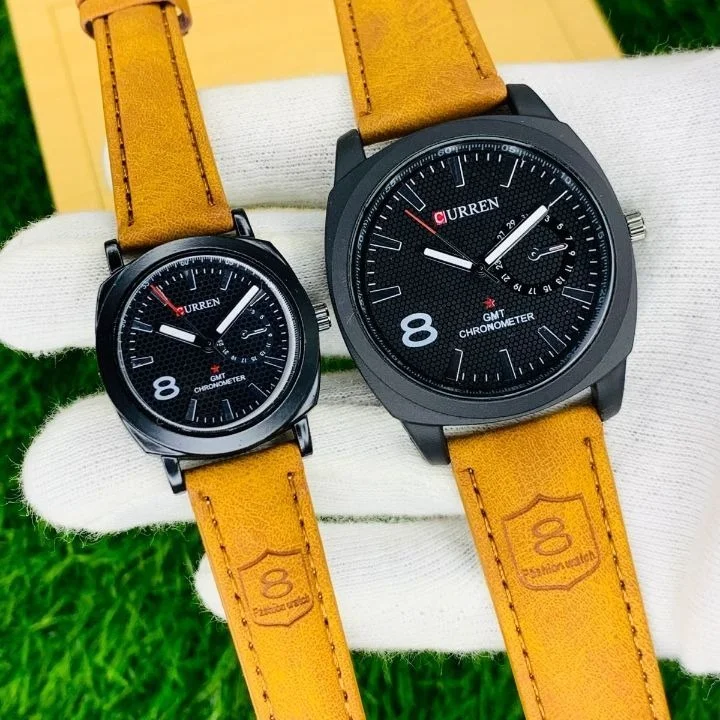
Men’s leather watches are still one of the easiest ways to look polished without looking overdone. Editorial coverage in 2026 continues to favor clean, Classic Pieces such as dress watches and slim leather-strap watches, especially in black or brown.
Best styles for men
- Dress watches: slim cases, black straps, minimal dials.
- Business watches: brown or dark tan leather, clean markers, reliable quartz or automatic movement.
- Vintage-inspired watches: distressed brown leather, warm dials, and smaller case sizes.
- Field and casual watches: thicker leather, contrast stitching, rugged cases.
For men, brown leather usually feels more relaxed and versatile, while black leather looks sharper and more formal. That simple split is still one of the easiest style rules to follow.
Leather Watches for Women
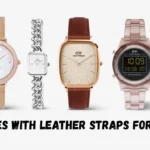
Women’s leather watches are increasingly moving toward smaller and more refined proportions. Current trend coverage shows that smaller watches are gaining momentum again, and that shift aligns very well with slim leather straps.
The strongest women’s styles in 2026 are:
- slim dress watches with leather straps,
- compact vintage-inspired watches,
- fashion watches with elegant colored leather,
- and unisex designs that still feel delicate on the wrist.
Women’s leather watches work especially well when the strap is proportionate to the case. A clean, slim strap can make a watch feel jewelry-like without losing function. That is one reason luxury maisons continue to use leather for elegant women’s models.
Brown vs Black Leather Watches
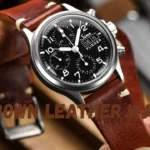
Brown leather watches feel warmer, more relaxed, and easier to pair with casual or smart-casual outfits. They are especially good with navy, beige, denim, green, and earth-tone wardrobes.
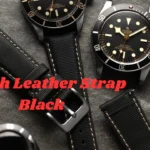
Black leather watches feel more formal and slightly more understated. They are usually the safer choice for business wear, evening events, and outfits that already lean polished.
Simple rule: choose brown for versatility and everyday charm; choose black for formality and sharper contrast.
How to Choose the Right Leather Watch
Choosing a leather watch is easier when you break it down into five decisions.
1) Decide the occasion
Ask whether you need a dress watch, a daily watch, a gift watch, or a collector’s piece. A watch for office wear should not be chosen the same way as one for weekend use.
2) Choose the movement
Quartz is best for convenience. Automatic is best for craftsmanship. Eco-Drive is best for low-maintenance practicality.
3) Check the strap quality
Ask what leather is used, whether it is full-grain or top-grain, and whether the lining and stitching are strong. Many lower-cost straps fail at the holes, stitching, or edge coating before the case or movement has any problem.
4) Match the case size to your wrist
Smaller and cleaner proportions are trending in 2026, and that matters for comfort as much as style. Many buyers are now choosing a more wearable case instead of chasing oversized looks.
5) Choose the right color
Black is formal. Brown is versatile. Tan and cognac feel warmer and more vintage. Burgundy, green, and textured leathers can make the watch feel more fashion-forward.
Buying checklist
- Strap material confirmed
- Lug width checked
- Movement chosen
- Water expectations understood
- Style matched to wardrobe
- Budget matched to long-term use
How to Identify a Good Leather Watch Strap
A good leather strap should feel soft but not flimsy, structured but not stiff, and finished cleanly at the edges. The stitching should be even, the holes should be neat, and the buckle should feel secure. Retail guides also emphasize thickness, width, and fit because poor sizing leads to discomfort and faster wear.
Here is the fastest quality test:
- Look for clear leather information, not vague marketing.
- Check whether the strap is lined and stitched well.
- Inspect the holes and edges.
- Confirm the width matches the lugs.
- Ask how the strap handles sweat and moisture.
If the product page gives almost no material detail, that is usually a warning sign. Better brands and watch makers typically explain the leather type, construction, and care expectations more clearly.
Leather Watch Sizing Guide
Watch fit is one of the most overlooked parts of buying a leather watch. Strap width, strap length, and case proportions matter together. Watch strap guides repeatedly stress lug width because a strap simply will not fit well if the measurement is wrong.
General guide
- 12–14mm straps: petite or women’s watches
- 16–18mm straps: smaller dress watches and slimmer wrists
- 20mm straps: the most common, versatile size
- 22mm+ straps: sportier or larger watch cases
Thin straps suit elegant dress watches. Thicker straps can look better on rugged or vintage-inspired models, but they should still flex comfortably. Excessively thick straps can feel awkward and shorten comfort over a full day.
Leather Watches vs Metal Watches
| Feature | Leather | Metal |
| Comfort | Softer and lighter | Heavier and cooler |
| Formal wear | Excellent | Good |
| Water Resistance | Limited | Better |
| Daily ruggedness | Good with care | Stronger for rough use |
| Style | Classic and refined | Sleek and modern |
Leather usually wins for comfort and dress styling. Metal usually wins for water exposure and hard daily use. That is why many watch buyers keep both in rotation.
Price Ranges Around the World
Leather watches cover a huge price range because the strap, movement, case material, and brand name can all change the final cost. Luxury leather watches often use Swiss craftsmanship, precious finishes, or exotic straps, while budget watches rely on simpler cases and more basic leather.
Typical buyer expectations
- Budget: simple quartz, basic leather, style-first focus
- Mid-range: better strap, better finish, stronger brand reputation
- Luxury: premium movement, high-grade leather, stronger finishing, resale, and brand value
A useful way to shop is to prioritize the strap and movement first, then the brand. That usually prevents overpaying for a logo while getting weak material quality.
Best Countries and Brands Famous for Leather Watches
Switzerland remains the strongest reference point for luxury watchmaking, especially for mechanical and dress watches. French maisons such as Hermès and Louis Vuitton are also important because they combine leather craftsmanship with fashion-led watch design. American and Japanese brands remain strong in practical, affordable, and accessible options.
For the buyer, the important point is not just the country. It is whether the watchmaker explains the leather quality, movement, and care expectations clearly. That transparency is what builds trust.
Pros and Cons of Leather Watches
Pros
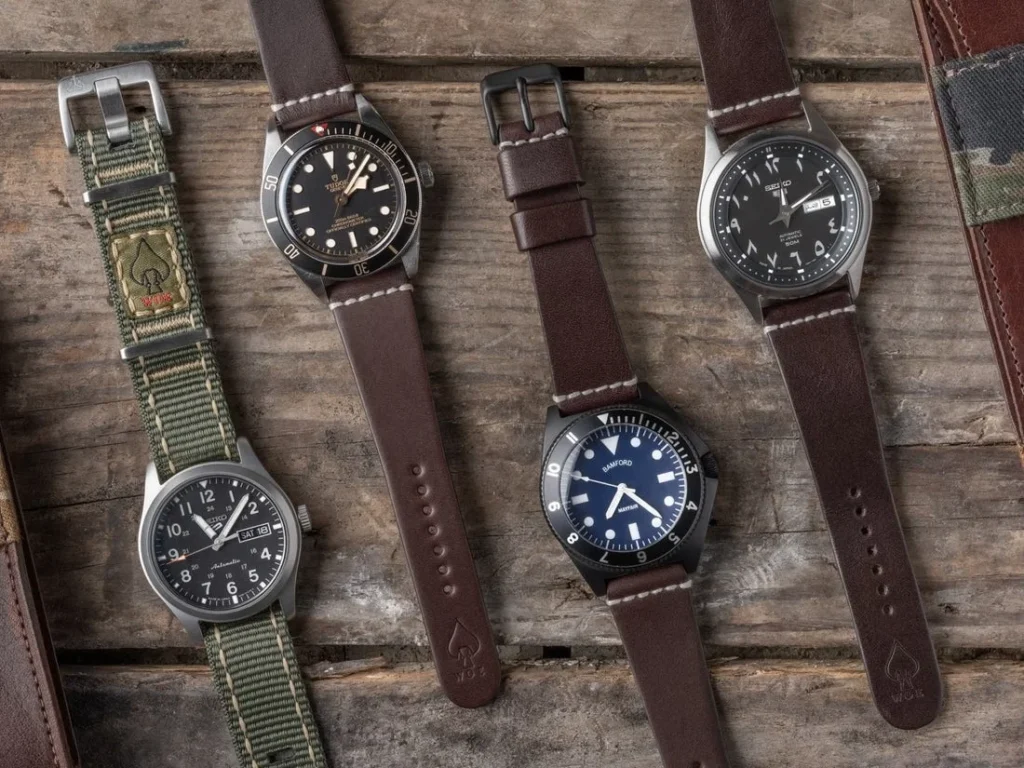
- Elegant, timeless look
- Comfortable and light on the wrist
- Great for business and dress wear
- Easy to style with wardrobes and accessories
- Often feels more personal than metal
Cons
- Not ideal for water or heavy sweat
- Can wear faster than metal if neglected
- Needs cleaning and occasional replacement
- Lower-quality leather may crack or peel early
Mini summary: Leather watches are excellent for style and comfort, but they require proper care. If you abuse the strap, it will show.
Common Buyer Mistakes to Avoid
- Buying on looks only. A good dial cannot save a weak strap.
- Ignoring movement quality. Quartz, automatic, and Eco-Drive are different ownership experiences.
- Choosing the wrong strap width. Fit matters as much as style.
- Wearing leather in water too often. Water shortens the strap’s life.
- Assuming “genuine leather” means premium. The label alone is not enough.
How to Care for a Leather Watch
Leather lasts longer when it stays dry, clean, and away from heat. Cartier advises that contact with water or other liquids can accelerate strap wear, and Longines recommends avoiding heat, strong light, and solvents while letting damp straps dry naturally at room temperature.
Daily care
- Wipe the strap with a soft dry cloth
- Let the sweat dry naturally after wearing
- Store the watch in a cool, dry place
- Rotate straps if you wear leather often
What to avoid
- Swimming and showers
- Heaters, radiators, and direct sunlight
- Solvents and harsh cleaners
- Leaving the watch wet for long periods
Cleaning leather straps
For smooth or grained leather, a lightly damp cloth may be Suitable. For nubuck or suede, a brush is usually better. Longines specifically advises against solvents.
Replace the strap when you see
- cracking,
- stretching,
- broken stitching,
- odor that will not go away,
- or visible edge wear.
Expert Tips Most Buyers Ignore
A well-made leather watch is about more than the leather itself. The most overlooked details are the lining, stitching, clasp quality, and how the strap sits against the wrist over time. Longines describes strap production as a sequence of skilled steps—cutting, turning in, reinforcing, lining, gluing, stitching, and sewing—which is exactly why better straps feel better in use.
Another overlooked point is sourcing. Leather Working Group says it is expanding standards around traceability, environmental impact, chemical management, and responsible production. For a buyer, that means asking whether a brand can speak clearly about sourcing and manufacturing is becoming more important, not less.
A final tip: do not ignore case size. Current trend reporting shows smaller watches are back, and that makes proportion more important than ever. A leather watch should look like it belongs on your wrist, not like it was borrowed from a display case.
Who Should Buy a Leather Watch?
Leather watches are a strong choice for:
- office professionals,
- dress-watch buyers,
- men who want one watch that works with many outfits,
- women who want a refined, lighter wrist look,
- and anyone who values comfort and classic style.
They are especially good for buyers who wear watches in dry conditions and want something elegant rather than sporty. If your daily routine involves water, sports, or rough outdoor exposure, a metal or rubber watch may be more practical.
Who Should Avoid a Leather Watch?
A leather watch is not ideal for someone who wants:
- a swim-proof daily watch,
- a strap that can be ignored for years,
- or a rugged tool watch for constant wet use.
That does not mean leather is weak. It means leather is a natural material with a specific use case. The best buyers understand that and choose accordingly.
Future Trends in the Leather Watch Market
The direction for 2026 is clear: smaller cases, more refined proportions, classic silhouettes, and a stronger preference for timeless accessories. Fashion coverage describes a renewed love for tiny watches and quiet-luxury styling, while watch-industry commentary suggests more buyers are gravitating toward comfortable, wearable sizes around the classic sweet spot rather than oversized cases.
Sustainability also matters more than before. LWG’s 2026 transition toward its Sustainability System shows that traceability, chemical management, resource efficiency, and responsible sourcing are becoming more important across the leather supply chain. Brands that communicate clearly about sourcing will likely gain more trust.
Quick-release straps, cleaner styling, and versatile unisex designs also fit the market direction well because they make it easier for buyers to personalize a watch without replacing the whole timepiece.
People Also Ask
A: Yes, as long as you keep them away from excess water and clean them regularly. Leather watches are especially comfortable for office wear and daily casual use.
A: It depends on the leather, the build quality, and how often you wear it. Brand care pages and strap guides show that water, heat, and sweat are the biggest strap killers.
A: Full-grain leather is usually the best all-around option if you want durability and aging character. Top-grain is a strong choice if you want a cleaner, more polished look.
A: They can be both. Black leather usually feels more formal, while brown, tan, and distressed leather lean more casual and versatile.
A: They should not get wet often. Official care guidance from Cartier and Longines says water can accelerate wear and that wet straps should dry naturally away from heat.
Conclusion
Leather watches stay popular because they solve several buyer problems at once. They are elegant, comfortable, easy to style, and available at almost every Price Point. In 2026, the strongest leather watches are the ones that combine good proportions, honest material quality, the right movement, and thoughtful care. That is what creates a watch you actually enjoy wearing, not just owning.
If you are buying for business wear, leather is still one of the safest choices. As you want a gift, a leather watch feels personal and timeless. If you want a daily watch that feels refined without looking flashy, leather remains one of the best answers. And if you are building authority content for TheLeatherItems.com, this is the kind of article that can anchor a full leather-buying cluster around wallets, belts, shoes, jackets, and care guides.
Legal disclaimer: Leather quality, pricing, manufacturing standards, and product availability may vary by country, brand, and supplier. Always verify authenticity, material details, and care instructions before purchase.