Introduction
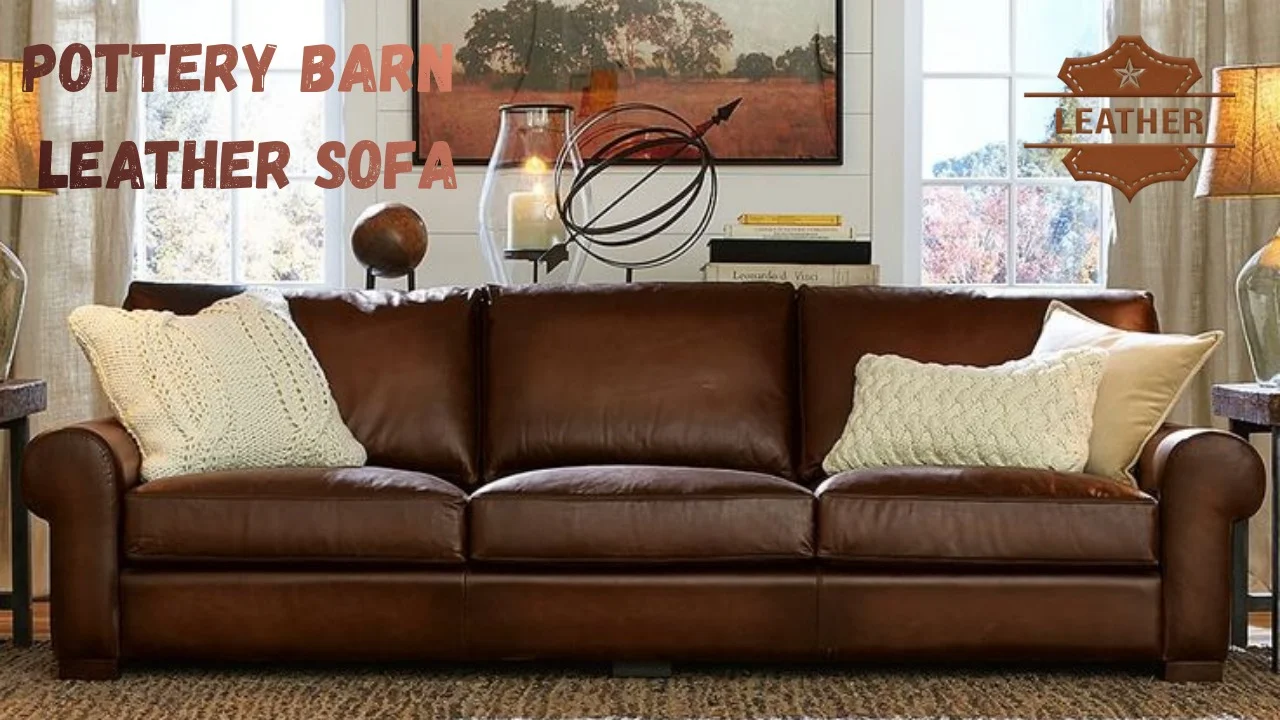
A Pottery Barn Leather Sofa is not just a seating purchase; it is a design decision, a comfort decision, and a durability decision all at once. That is why this keyword attracts buyers who are serious about quality and long-term value. Pottery Barn’s current leather lineup leans heavily on top-grain, aniline-dyed leather, contract-grade construction on many models, free swatches, and white-glove delivery, which puts the brand squarely in the premium-home-furniture conversation.
What makes this topic tricky is that “best” means different things to different buyers. Some want a sofa that looks rich and tailored. Others want something soft enough for nightly lounging. Others want a family-friendly piece that can survive kids, pets, and daily use. Pottery Barn’s Turner, York, Pearce, and Webster all answer different versions of that question, and the right choice depends on leather type, frame build, cushion feel, and room scale.
This guide breaks down the best Pottery Barn leather sofas in 2026, what the leather actually means, how the construction compares, where competitors are weaker, and how to style and care for the sofa once it arrives.
Why Pottery Barn Leather Sofas Are So Popular
Pottery Barn’s leather sofas stay popular because they sit in the sweet spot between classic American style and premium but accessible luxury. The brand’s leather lineup includes roll-arm, square-arm, slope-arm, and chesterfield-inspired silhouettes, so shoppers can find options that fit modern, transitional, farmhouse, and more traditional rooms.
The other big reason is customization. Many models offer multiple widths, free swatches, and delivery support, which matters a lot when you are buying a large, expensive piece online. Pottery Barn also makes clear that many items are delivered through white-glove service, meaning the sofa can be brought to the room of choice, unpacked, and assembled by a two-person team.
Finally, leather ages well when it is properly chosen and cared for. Pottery Barn’s own leather guide notes that top grain and full grain leather become softer over time and can develop patina, which is a big part of the appeal for buyers who want a sofa that looks better with age rather than looking worn out.
Are Pottery Barn Leather Sofas Good Quality?
Yes, many Pottery Barn leather sofas are legitimately good quality for the premium retail tier, but they are best understood as premium mass-market luxury, not artisan ultra-luxury. Official product pages repeatedly highlight corner-block construction, mortise-and-tenon joinery on certain models, no-sag sinuous springs, down-blend cushions, and top-grain aniline-dyed leather. That is a solid construction package for a serious home sofa.
The Turner is a strong example. Pottery Barn describes it as a bestseller and contract-grade sofa with top-grain aniline-dyed leather and corner-block construction; the product page also notes that the leather will lighten and soften with use and develop patina.
The Pearce is similarly strong, with top-grain aniline-dyed leather and a corner-blocked frame with mortise-and-tenon joinery. The Webster goes even more classic and structurally rich, using a corner-blocked frame, mortise-and-tenon joinery, no-sag steel sinuous springs, down-blend-wrapped cushions, and nailhead accents.
The honest answer is that the price includes more than materials. You are also paying for design, brand trust, swatch access, delivery support, and customization. That is fair value for many buyers, but it is not the cheapest route to a leather sofa. Reviews from editors and homeowners also show that some models can feel firmer than expected and may need a break-in period.
Understanding Pottery Barn Leather Types
Full-Grain Leather
Pottery Barn explains that full-grain leather is the outermost layer of the hide, remains relatively unchanged, and retains visible grain markings and natural variation. It is extremely durable and develops patina over time, which makes it a strong long-term choice for daily-use furniture.
Top-Grain Leather
Top-grain leather comes from the outermost layer, too, but it is more pliable, often sanded, and usually finished for easier care. Pottery Barn says it is a great choice for furniture in rooms that see daily use because it is easier to wipe clean and resists staining. That is why so many Pottery Barn leather sofas use top-grain leather.
Aniline-Dyed and Semi-Aniline Leather
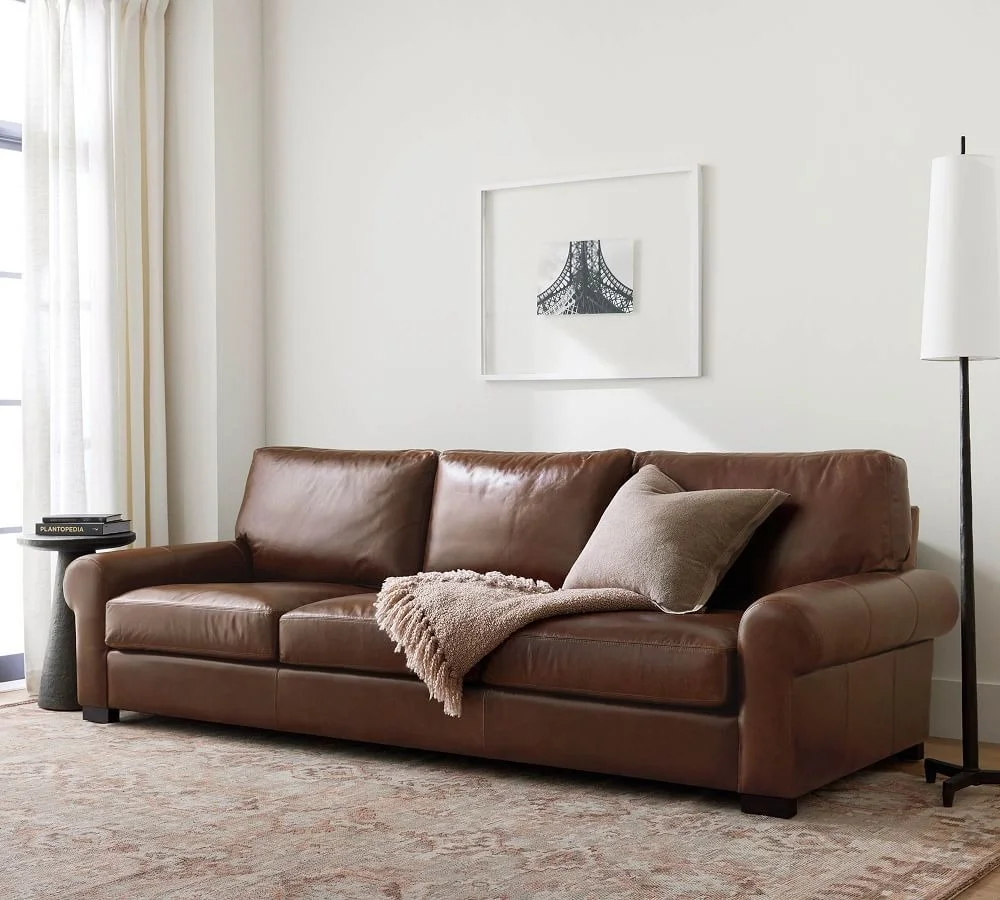
Aniline-dyed leather is favored for a more natural, luxurious look because the grain remains visible and the hide develops character over time. Pottery Barn’s product pages repeatedly note that top-grain aniline-dyed leather will soften and develop patina with age. Pottery Barn’s leather-care kits also distinguish between aniline-dyed and pigment-dyed leathers when recommending treatments.
Nubuck and Suede
Pottery Barn explains that sanding top grain can create nubuck, and that split leather is the lower layer often used for suede. Both are softer and more delicate than full-grain and top-grain leathers, so they are not the first choice for a High-Traffic Sofa unless you are very careful with maintenance.
Faux / Synthetic Alternatives
Leather Naturally notes that “vegan leather” is a misleading marketing term for synthetic material made to look like leather. For buyers comparing sofa options across brands, that matters because synthetic alternatives can be easier to maintain but do not age like real leather and usually lack the same patina story.
Quick Leather Comparison Table
| Leather type | Main benefit | Main tradeoff | Best use case |
| Full-grain | Most natural look, strongest aging story | Higher cost, visible markings | Statement furniture, long-term investment |
| Top-grain | Durable, softer, easier to clean | Less rugged than full grain | Family living rooms, daily use sofas |
| Aniline-dyed | Rich, luxurious finish, beautiful patina | Shows natural variation more easily | Premium designer look |
| Nubuck / suede | Soft, velvety feel | More delicate, more maintenance | Low-traffic spaces |
| Synthetic / faux | Budget-friendly, easy care | Less breathable, less authentic aging | Tight budgets, temporary use |
Pottery Barn’s own guidance strongly supports full-grain and top-grain choices for daily-use sofas, with top-grain often being the practical sweet spot.
Best Pottery Barn Leather Sofas in 2026
| Model | Official construction highlights | Best for | Main caution |
| Turner Square Arm Leather Sofa | Bestseller, contract grade, top-grain aniline-dyed leather, corner-block construction, no-sag springs, loose cushions | Families, larger rooms, classic luxury looks | Can feel firm before break-in |
| York Square Arm Leather Sofa | Top-grain aniline-dyed leather, contract grade, square-arm silhouette | Supportive everyday seating, transitional rooms | Less loungey than deep-seat options |
| Pearce Roll Arm Leather Sofa | Top-grain aniline-dyed leather, corner-blocked frame, mortise-and-tenon joinery, contract grade | Casual comfort, relaxed living rooms | Style is softer and less formal |
| Webster Leather Sofa | Nailhead accents, mortise-and-tenon joinery, no-sag steel sinuous springs, down-blend-wrapped cushions | Traditional or classic interiors | Heavier visual profile, more formal |
Sources: official Pottery Barn product pages and snippets.
1. Turner Square Arm Leather Sofa
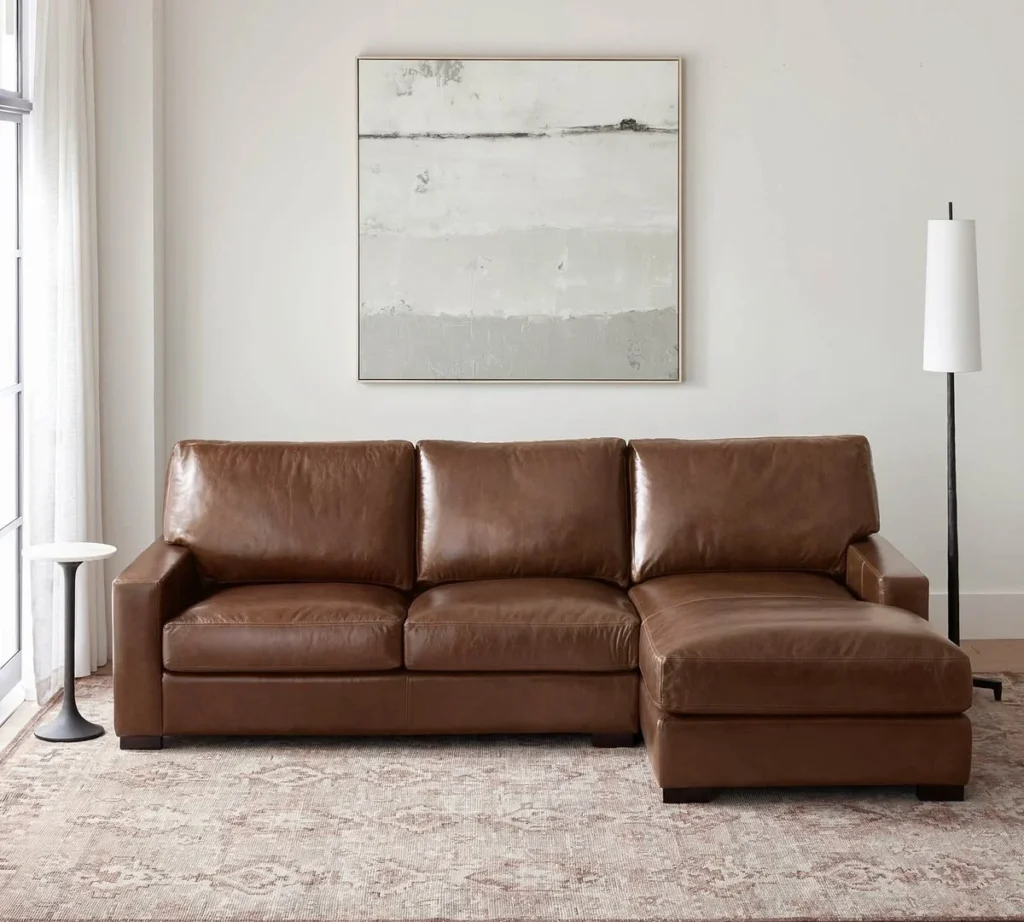
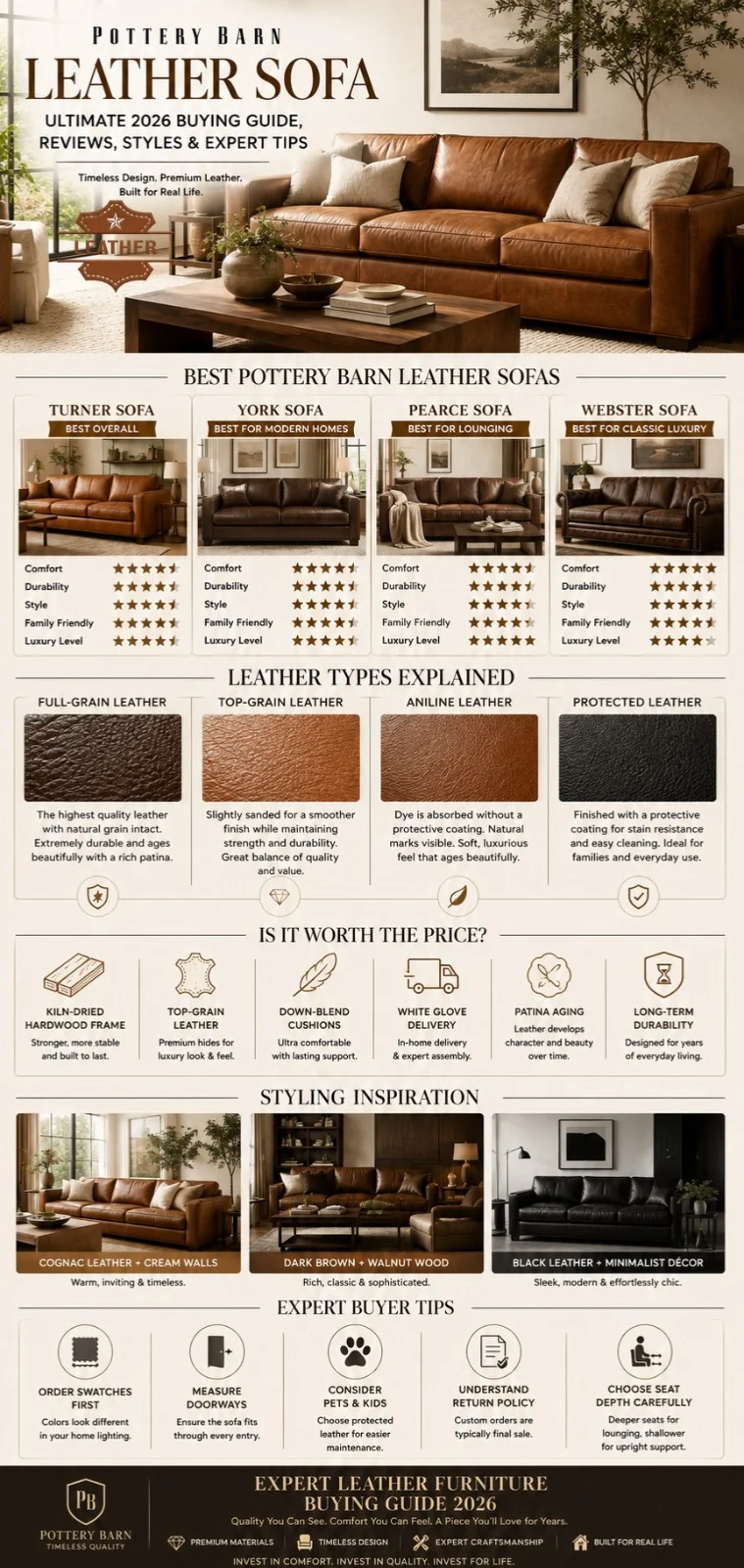
The Turner is the model most buyers notice first because it carries the “Pottery Barn leather sofa” look so well. Pottery Barn labels it a bestseller and a contract-grade piece, and the product page shows top-grain, aniline-dyed leather with corner-block construction and no-sag steel sinuous springs. The leather is designed to lighten, soften, and develop patina over time.
It works especially well in larger living rooms, open-plan spaces, and homes where the sofa is supposed to anchor the room visually. Livingetc’s editor called it unusually appealing even for someone who does not normally love leather couches, and noted that the finish looked rich in person. Real Simple also selected the Turner as its best leather sofa and praised the leather quality and aging potential, while noting that the cushions are firm at first.
Best for: families, lounge-heavy spaces, classic American interiors, and buyers who want a sofa that looks expensive without being ornate.
Watch out for: a firmer initial sit. If you want a sofa that feels instantly plush and sink-in soft, the Turner may feel a little structured at first.
2. York Square Arm Leather Sofa
The York has a more tailored, support-first personality. Pottery Barn’s York leather sofa uses top-grain, aniline-dyed leather that will soften and develop patina over time. The broader York family is contract grade, and Pottery Barn also offers deeper and sectional versions, which makes it a Flexible Design system rather than a one-off sofa.
Editorial coverage on the York fabric version is still useful because it reveals the same brand design logic: Good Housekeeping found it balanced support and comfort well, though some users wanted a deeper seat. That suggests York is a great pick for buyers who want a neat silhouette and good posture rather than an oversized lounge pit.
Best for: apartments, transitional rooms, buyers who like upright seating, and anyone who wants a polished everyday sofa.
Watch out for: it may feel less relaxed than Turner or Pearce if your top priority is sinking in and stretching out.
3. Pearce Roll Arm Leather Sofa
The Pearce is one of the best choices for buyers who want a more relaxed, approachable leather sofa. Pottery Barn lists it as contract grade and says it uses top-grain, aniline-dyed leather with a corner-blocked frame and mortise-and-tenon joinery. That is a strong blend of durability and craftsmanship.
The Pearce tends to fit homes that need warmth without stiffness. It is still polished, but the rolled-arm profile and softer visual tone make it feel less formal than the Webster and less sharply tailored than the Turner. This is the kind of sofa many people buy for a family room, where they still want the leather to look elevated.
Best for: casual family lounging, relaxed traditional spaces, and homes that want comfort first with a premium finish.
Watch out for: if you prefer modern square lines, Pearce may feel a little softer and more classic than you want.
4. Webster Leather Sofa
The Webster is the most traditional-looking of the core group. Pottery Barn highlights nailhead accents, a corner-blocked frame with mortise-and-tenon joinery, no-sag steel sinuous springs, and down-blend-wrapped cushions for a softer feel. That gives Webster a more tailored, decorative, heirloom-style presence.
This is the sofa for buyers who love classic details and want a leather piece that reads as intentional, not trendy. The structure is sound, and the styling is formal enough for libraries, sitting rooms, or a more composed living room.
Best for: traditional homes, formal living rooms, and buyers who want a richer, more decorative silhouette.
Watch out for: the formal details can make it less versatile in ultra-minimal or ultra-modern interiors.
Pottery Barn Leather Sofa vs Competitors
Pottery Barn vs West Elm
West Elm positions its leather seating as modern and sleek, with product pages describing modern silhouettes, top-grain and vegan leather options, and deep, lounge-friendly seating in collections like Haven and Axel. Pottery Barn’s leather sofas, by contrast, lean more classic and transitional, with roll arms, square arms, and traditional tailoring leading the way.
So the real choice is style language: Pottery Barn = timeless, transitional, homey luxury; West Elm = more modern, cleaner-lined, and urban.
Pottery Barn vs Crate & Barrel
BHG’s leather-couch testing highlights the Crate & Barrel Gather as the “best design” pick, describing it as modern, boxy, and highly customizable with many leather finishes. Pottery Barn’s Turner wins on classic leather warmth and heritage-style appeal, while Crate & Barrel tends to push a cleaner, more contemporary visual language.
Pottery Barn vs Restoration Hardware
RH usually competes higher up the luxury ladder, but for many shoppers, Pottery Barn hits the better balance of price, style familiarity, customization, and usability. The key difference is that Pottery Barn feels more approachable and mainstream-luxury, while RH typically reads as more monumental and expensive. That is an editorial judgment, but it matches how Pottery Barn’s current line is presented: premium, contract-grade, and widely customizable without becoming ultra-ornamental.
Is a Pottery Barn Leather Sofa Worth the Price?
For many buyers, yes — but only if you value the right things. Pottery Barn leather sofas are worth considering when you care about design consistency, customizable sizing, swatches, and a sofa that can age into its own character over time. Pottery Barn’s official leather guidance and product pages support that Long-Term story through top-grain and aniline-dyed leather, patina development, and contract-grade construction on many models.
They are less ideal if you want the cheapest route, the softest instant seat, or a fully risk-free return window. Pottery Barn allows returns on eligible items within 30 days, or 7 days for Quick Ship upholstery, but made-to-order furniture is not eligible for return. That is important because many sofa purchases fall into made-to-order territory.
The smartest framing is this: Pottery Barn is not the absolute cheapest and not the absolute most luxurious. It is the sweet spot for homeowners who want premium style, dependable construction, and a leather sofa that will mature beautifully.
Best Pottery Barn Leather Sofas for Different Needs
Best for families: Turner. It has the strongest “main living room” energy and a durable leather story.
Best for small spaces: York. Its support-first shape and cleaner silhouette make it easier to place in tighter rooms.
Best for luxury styling: Webster. The nailhead accents and traditional tailoring elevate the room instantly.
Best for lounging: Pearce. It feels more relaxed and family-friendly without looking casual or cheap.
Best for modern interiors: If you want the Pottery Barn brand but a cleaner modern edge, look beyond the four classics toward the brand’s more square-shouldered and contemporary leather pieces, such as Cameron, Westwood, or the deeper modern profiles in the wider Pottery Barn and West Elm families.
How to Style a Pottery Barn Leather Sofa
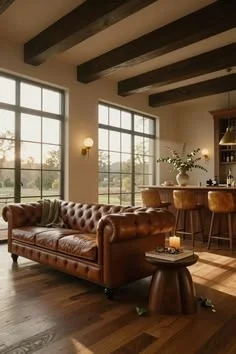
A leather sofa works best when the room gives it texture and breathing room. Pottery Barn’s own product photography and editorial placement consistently show these sofas in warm, layered spaces rather than stark, empty rooms, and that is the right approach.
For a rich, timeless look, pair cognac or caramel leather with cream walls, oak or walnut wood, a low-pile neutral rug, and linen or wool pillows. Use darker leather, lighter textiles, and matte wood tones so the sofa does not overpower the room. For black leather, keep the palette quiet and architectural with metal accents, light rugs, and minimal clutter. This creates contrast and lets the sofa feel intentional instead of heavy.
A good leather sofa also needs visual softness. Add a throw, a textured rug, and one or two pillows in boucle, linen, or wool so the leather does not become too hard-edged. The goal is to make the leather read as warm, not severe. That is especially important with structured models like Turner and York.
How to Care for a Pottery Barn Leather Sofa
Pottery Barn recommends starting with a soft, clean cloth or towel to remove dust and loose debris, then gently buffing dull areas. For small scratches or scuffs, the company advises lightly rubbing the area with your fingertip. Regular vacuuming of cushions is also recommended on certain leather collections.
Pottery Barn also says to keep leather out of direct sunlight to reduce fading and to blot spills immediately with a clean, colorfast towel or sponge. Its leather care kits are designed for specific leather types, and the pull-up kit is not for nubuck or suede. That means buyers should match the cleaner to the leather surface instead of assuming every leather finish should be treated the same way.
The biggest care mistake is over-cleaning. Leather is not fabric, and harsh detergents, saddle soap, or random household sprays can create more damage than the original spill. The safest approach is gentle maintenance, prompt blotting, and occasional conditioning with a product approved for that exact leather type. Pottery Barn’s own guides are consistent on that point.
Common Complaints About Pottery Barn Sofas
The complaints are real, and they should be part of any serious buying guide.
The most common issues are delivery delays, expensive shipping expectations, firmness that feels stronger than buyers expected, and frustration with custom-order restrictions. Pottery Barn’s return policy and made-to-order rules make this especially important because many sofas are not as flexible after purchase as a standard retail item.
Some reviewers also note that sofas like the Turner can feel firm before they break in, even if the leather quality is excellent. That is not necessarily a flaw; it is a design tradeoff. But it should be stated clearly so the buyer does not expect a cloud-like lounge sofa when buying a structured leather piece.
The right way to talk about these complaints is not to hide them. It is to explain them in context: Premium Sofas often arrive with more structure, more process, and more ownership responsibility. Buyers who understand that upfront tend to be much happier later.
Expert Buying Tips Before You Order
- Order swatches first. Pottery Barn offers free swatches on the product pages, and leather color can look very different in person, depending on lighting and grain.
- Measure your room and doorway. Pottery Barn even provides a furniture delivery guide, which is a hint that dimensions matter more than most shoppers think.
- Decide on posture before style. If you want upright support, York is a strong fit. If you want relaxed lounging, Pearce or Turner may suit you better.
- Think about patina honestly. Top-grain and aniline-dyed leather ages beautifully, but they do show wear differently from fabric. That is part of the appeal, not a defect.
- Check return status before checkout. Eligible items have a return window, but made-to-order furniture is not returnable, so the decision needs to be deliberate.
Common Buyer Questions
A: Yes. Many Pottery Barn leather sofas use genuine top-grain leather, and the company’s leather guide explains the difference between full-grain, top-grain, split leather, and bonded leather.
A: Yes, many key leather sofas do. The Turner, Pearce, and York leather collections all use top-grain aniline-dyed leather on current official pages.
A: There is no single fixed number, but with proper care, solid construction, and a suitable leather type, these sofas are designed for long-term use and patina development rather than short-term wear. Pottery Barn’s construction and leather guidance support that long-life model.
A: For lounging, Turner and Pearce are the strongest candidates. York is more supportive and less deep-seated, while Webster is the most formal-feeling of the group.
A: Pottery Barn product pages vary by model. Some pages indicate “USA and Imported materials” or “Sutter Street Factory” assembly and upholstery on certain collections, while others note imported materials. It is best to check each product page individually.
Final Verdict
Pottery Barn leather sofas work because they combine timeless design, real leather, decent construction, and strong room presence. Turner is the best overall pick for most buyers, York is the best support-first choice, Pearce is the best casual comfort option, and Webster is the best classic luxury style. That is a genuinely strong lineup.
They are not the cheapest sofas on the market, and they are not the softest “sink in immediately” sofas either. But for buyers who want a leather sofa that looks refined, ages well, and feels like a real investment rather than a temporary purchase, Pottery Barn remains one of the safest premium choices.
If you are writing for TheLeatherItems.com, the best angle is not just “Pottery Barn review.” It is the deeper promise of leather knowledge plus buying confidence: explain the material, compare the models, show the tradeoffs honestly, and help the reader choose the sofa that fits their room and lifestyle. That is what turns a high-intent keyword into a high-converting pillar page.
Legal Disclaimer
Leather quality, Pricing, manufacturing standards, and product availability may vary by country, brand, and supplier. Always verify authenticity, material details, dimensions, and care instructions before purchase.