Introduction
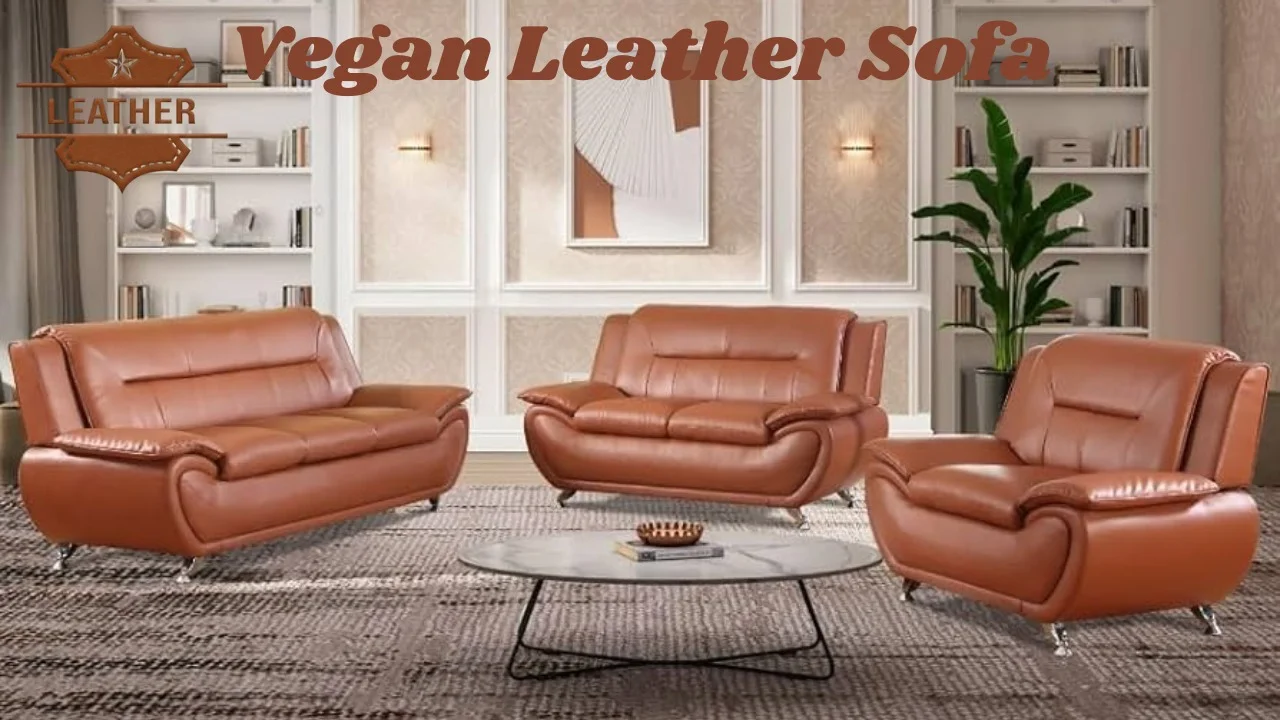
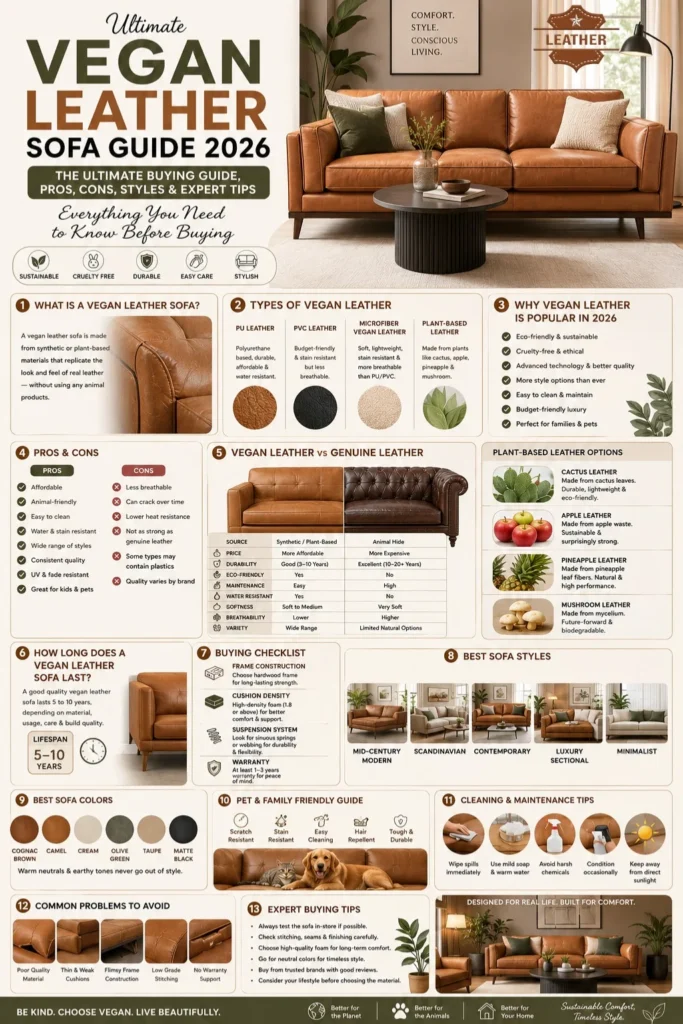
A Vegan Leather Sofa gives you the sleek, polished look of leather without using animal hides, which is why it has become such a popular choice for modern homes. The category is broad, though. Most mainstream versions are made from PU or PVC, while newer plant-based alternatives are entering the market too. That means the label “vegan leather” can describe very different materials with very different comfort, durability, and sustainability profiles.
The challenge for buyers is simple: two sofas can look almost identical online, yet one may feel soft and last well, while another may peel, crack, or age badly. The real difference usually comes down to the upholstery material, the frame, the foam, and how honestly the product is built. If you know what to check, you can choose a vegan leather couch that looks premium, fits your room, and holds up to everyday life.
What Is a Vegan Leather Sofa?
A vegan leather sofa is upholstered in a leather-like material that does not come from animal skin. In today’s furniture market, that usually means a synthetic surface such as PU or PVC, although some newer products use plant-based or hybrid materials. AllModern describes vegan leather as a cruelty-free alternative made from PVC and polyurethane, and Wayfair explains that it imitates genuine leather in both furniture and fashion.
How Vegan Leather Is Made
In practical terms, the upholstery is created by building a leather-like surface over a backing layer, then finishing it so it resembles natural grain. PU is generally softer and more pliable than PVC, while PVC is often used for a firmer, more budget-friendly finish. That is why two “vegan leather” sofas can feel very different when you sit on them.
Types of Vegan Leather Used in Furniture
| Type | What it usually feels like | Best use case | Watch out for |
| PU leather | Softer, more flexible | Everyday family sofas, mid-range furniture | Can still peel if the build quality is poor |
| PVC leather | Firmer, often less breathable | Budget furniture and high-wipe-clean surfaces | Can feel harder and less natural |
| Plant-based leather | Newer, innovation-led category | Buyers who want newer material stories | May still use PU or other synthetic components |
| Microfiber-style synthetic upholstery | Often soft and fabric-like | Comfort-first buyers who still want a leather look | Marketing terms can vary by brand |
Why Vegan Leather Sofas Are So Popular in 2026
People want furniture that looks premium, cleans easily, and feels easier to live with than delicate fabric. Vegan leather fits that brief well. Retailers also market it as more affordable and more uniform in appearance than animal leather, which makes it attractive for modern, minimalist, and mid-century rooms.
Another reason for the growth is innovation. Fashion and design coverage continues to spotlight plant-based alternatives made from grape waste, pineapple fibers, cactus, apple by-products, and mycelium-based materials. These are not yet the default in sofas, but they show where the category is heading.
Pros of Vegan Leather Sofas
- Cruelty-free appearance: You get the leather look without using animal hides.
- Easy to wipe clean: Many faux-leather sofas respond well to simple cleaning routines.
- Stylish and uniform: The surface usually has a consistent grain and color.
- More affordable entry point: Vegan leather is typically cheaper than genuine leather.
- Wide design range: It works in contemporary, Scandinavian, industrial, and apartment-friendly spaces. Retailer listings show many vegan leather sofas in modern silhouettes, sectional forms, and compact sizes.
Cons of Vegan Leather Sofas
- Some versions can peel or crack if the coating and backing are of low quality.
- Plastic-based versions are not Automatically Sustainable just because they are animal-free.
- They may feel warmer or less breathable than woven upholstery.
- Lifespan varies a lot by build quality and care, so “vegan leather” is not a durability guarantee.
Vegan Leather Sofa vs Genuine Leather Sofa
| Feature | Vegan Leather Sofa | Genuine Leather Sofa |
| Cost | Usually lower | Usually higher |
| Look | Consistent and uniform | Natural grain, develops character |
| Care | Usually easier to wipe | Needs more material-specific care |
| Feel | Can vary from soft to firm | More depth and natural flexibility |
| Longevity | Depends heavily on build quality | Well-made leather can last a lifetime |
| Sustainability | Depends on material type | Depends on sourcing, tanning, and lifespan |
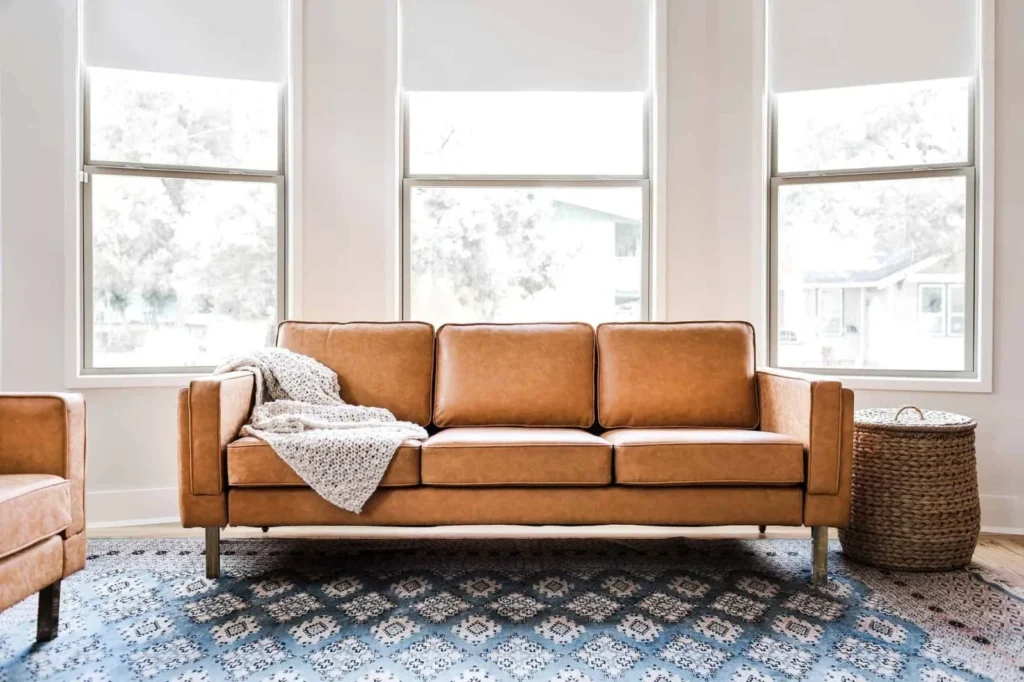
The key difference is not just price. Leather Naturally notes that a well-made leather product can last a lifetime, while synthetic materials tend to crack or degrade sooner if the quality is poor. That does not mean vegan leather is a bad choice. It means buyers should treat it as a category with a wide quality range, not a single standard.
How Long Does a Vegan Leather Sofa Last?
The answer depends on the material and construction more than the label. A well-built sofa with a strong frame, quality foam, and properly applied upholstery will usually outlast a cheap sofa with the same surface material. Foam density matters because denser foam generally supports weight better and keeps its properties longer.
ACT also warns that abrasion tests, such as Martindale, are useful, but they are not the whole story. Real-world wear is also affected by cleaning habits, maintenance, and how the sofa is used.
Practical lifespan rule
- Budget PU/PVC sofas: good for light use, starter homes, or lower-budget furnishing
- Mid-range vegan leather sofas: better for everyday family living
- Premium construction: best when the frame, foam, and stitching are all strong, not just the upholstery surface
Best Types of Vegan Leather for Sofas
1. PU Leather
PU is the most common upgrade path for buyers who want a softer faux-leather feel. It is generally more flexible and pliable than PVC.
2. PVC Leather
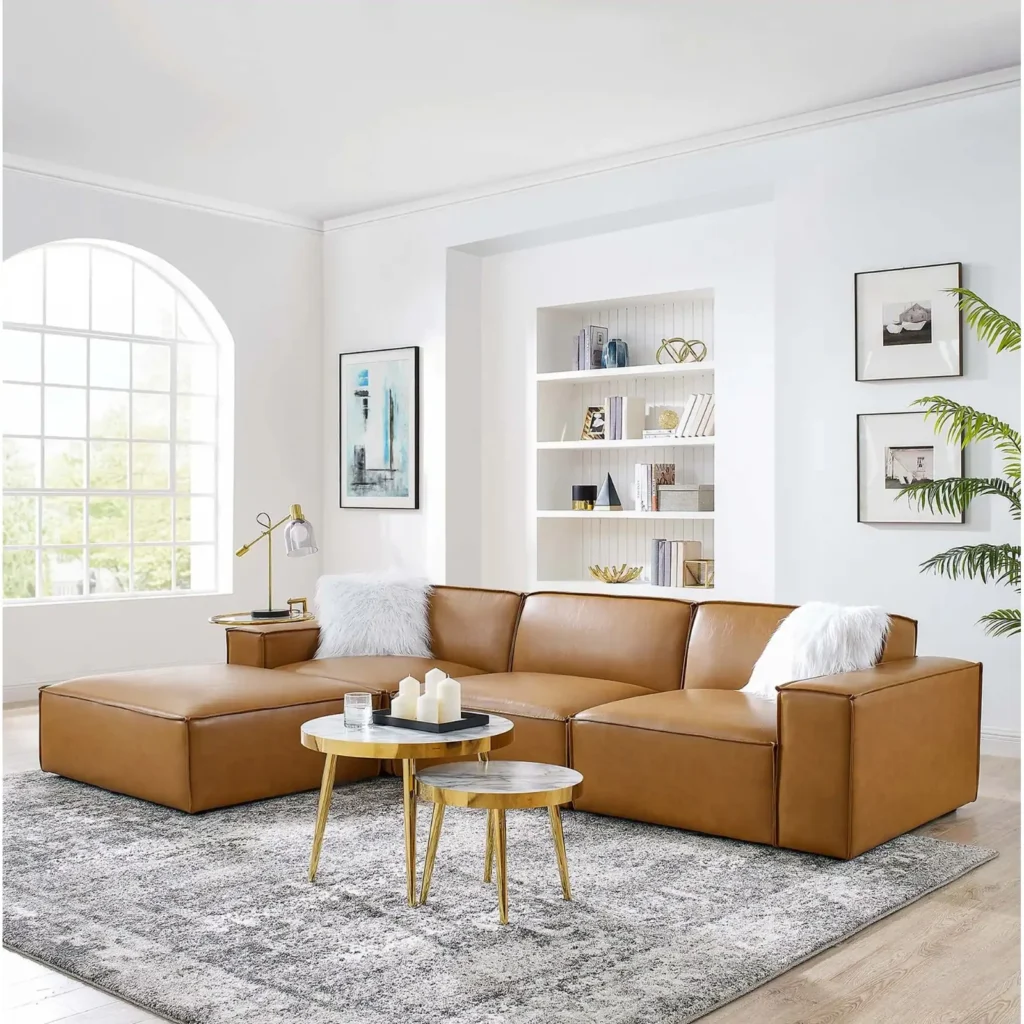
PVC is often more budget-friendly and may be used where wipe-clean convenience matters, but it can feel harder. Leather UK also notes that PVC or PU fake leather usually feels different from real leather and may show a different grain behavior on folds.
3. Plant-Based Leather
This is the innovation-led segment: cactus, pineapple, apple, grape, and mushroom-inspired materials are getting a lot of attention. But buyers should read the fine print carefully because some plant-based leathers still use PU to improve durability.
4. Microfiber-like Upholstery
Some sofas use microfiber-style synthetics that mimic leather but feel a little softer or more fabric-like. These are often attractive for comfort-focused buyers who still want a sleek look.
How to Choose the Best Vegan Leather Sofa
- Check the frame first
Look for solid wood or engineered wood construction, not vague “mixed materials” wording. Product pages from major retailers commonly highlight frame type, and that detail matters more than surface marketing. - Ask about the suspension system
Sinuous springs are common in good upholstered sofas, and they can provide resilient support when well-made. - Inspect the foam specification
Denser foam usually retains support better than low-density foam. Ask whether the seat uses high-density foam and whether the cushions are replaceable. - Look for stitching quality
Tight, even seams are a sign of better workmanship. - Review the abrasion data carefully
Martindale is useful, but ACT says it should not be treated as a simple lifespan promise. Cleaning habits and end use matter too. - Confirm the whole sofa is vegan
PETA warns that buyers should check cushions, fills, and hidden materials so the entire sofa is actually animal-free.
Best buying checklist
- Frame: solid or engineered wood
- Seat support: sinuous springs or equally documented support system
- Foam: high-density seating foam
- Upholstery: PU, PVC, or clearly disclosed plant-based blend
- Warranty: clear coverage for seams, frame, and upholstery
- Care: easy-clean instructions you will actually follow
Best Vegan Leather Sofa Styles
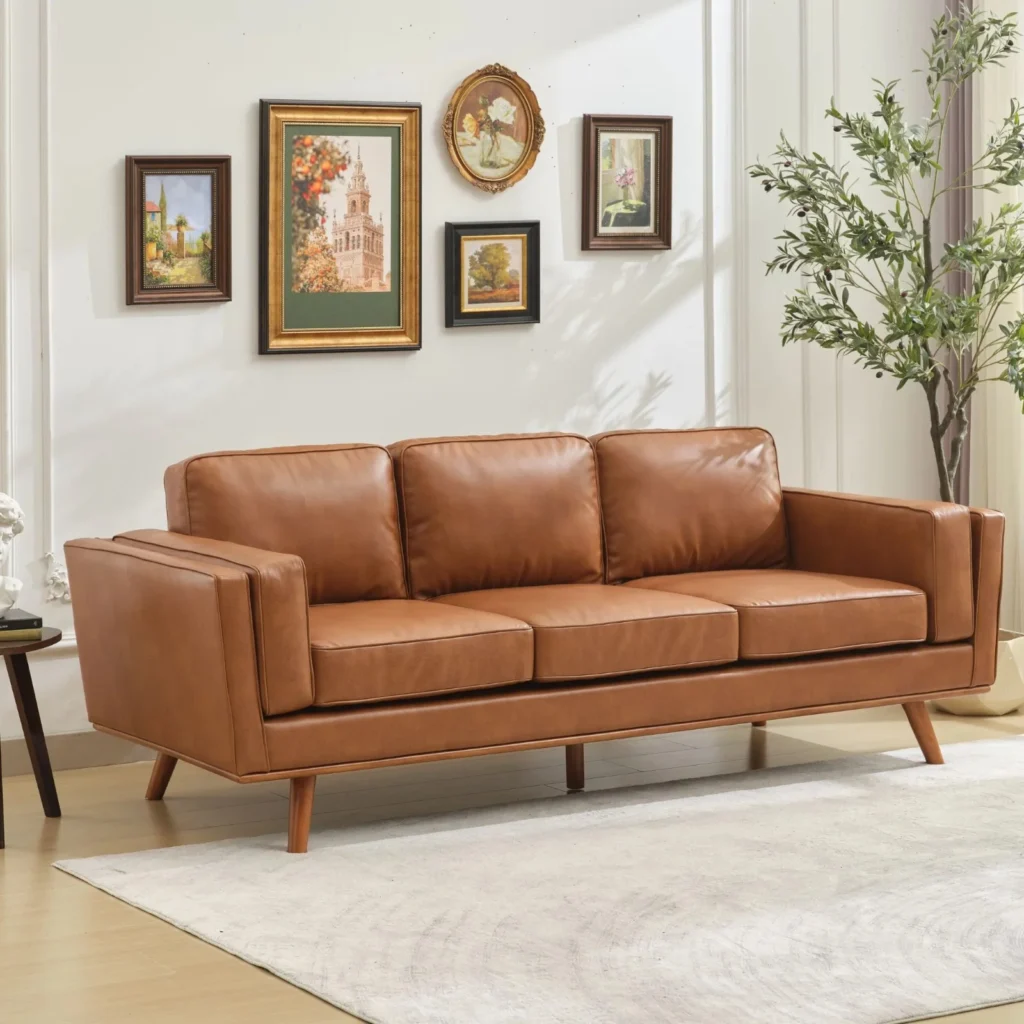
Vegan leather works especially well in styles that already rely on clean lines and visible structure. Retail examples from AllModern and Wayfair show how often the material appears in mid-century-inspired shapes, tufted seats, square arms, and modular or Reversible Layouts.
Best styles to consider
- Mid-century modern
- Contemporary
- Scandinavian
- Minimalist
- Industrial
- Sectional/modular
- Compact apartment sofa
Best Vegan Leather Sofa Colors
The best-selling tones are usually the ones that imitate natural leather and blend into modern interiors:
- Camel
- Cognac
- Tan
- Chocolate brown
- Black
- Cream
- Olive green
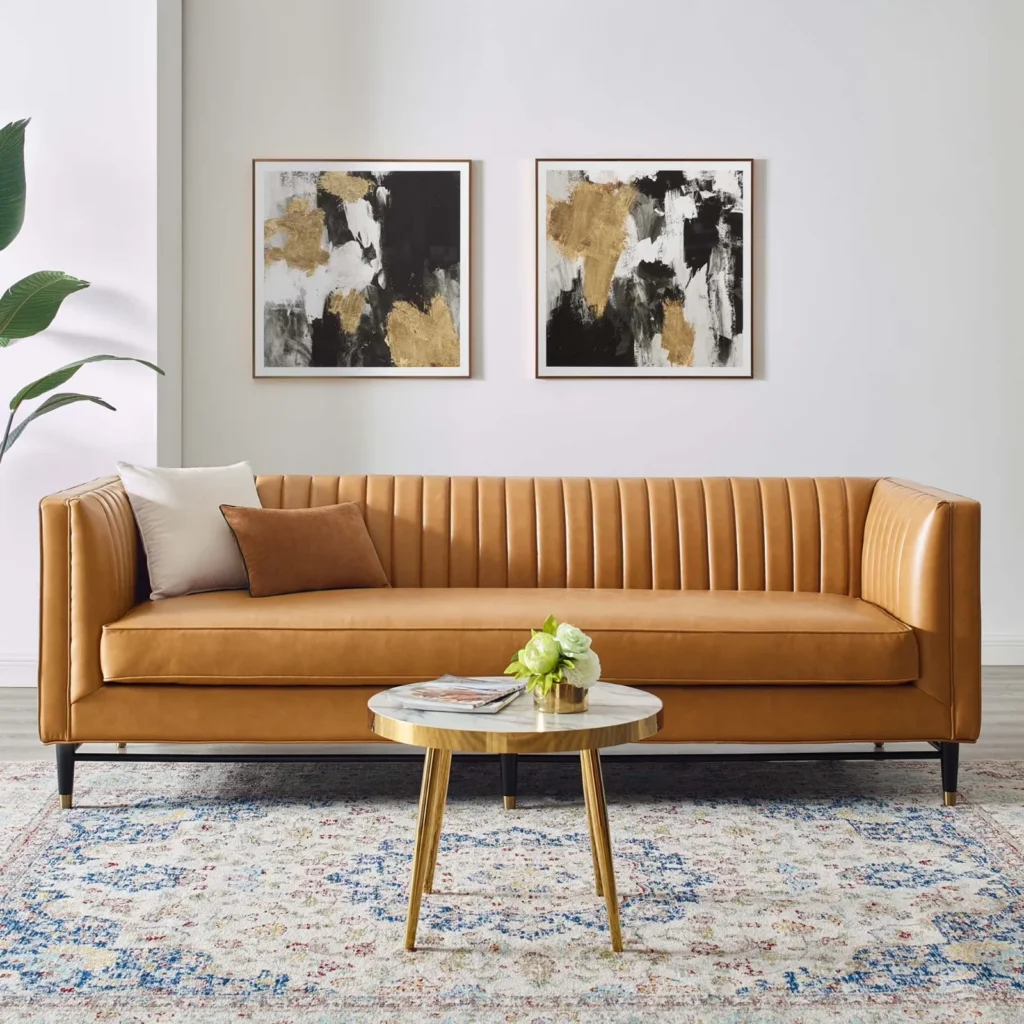
Warm neutrals work especially well because they hide everyday visual wear better than stark, high-contrast colors.
Are Vegan Leather Sofas Good for Pets?
They can be, especially if you want a wipe-clean surface and a sleek finish. But pet-friendliness is not automatic. A good pet sofa needs durable seams, a stable frame, and a finish that can handle regular cleaning. For animal-free buyers, it is also worth checking that the entire sofa is vegan, including the fills and cushions.
Are Vegan Leather Sofas Good for Families With Kids?
Yes, many families like them because spills are easier to handle than on some fabrics. The downside is that low-quality vegan leather can look tired faster if kids jump, scratch, or spill on it repeatedly. A family sofa should be chosen for construction quality first and surface style second.
How to Clean a Vegan Leather Sofa
Rowico recommends cleaning faux leather regularly with mildly soapy water, a microfiber cloth, or a soft brush, and then wiping it dry. It also suggests treating the furniture a few times per year with a product made for artificial leather and checking screws and fittings regularly.
Simple care schedule
| Frequency | What to do | Why it matters |
| Weekly | Dust and wipe lightly | Prevents buildup |
| Monthly | Clean with mild soapy water | Keeps the surface fresh |
| Quarterly | Check seams, feet, and fittings | Helps catch wear early |
| 2–4 times yearly | Use an appropriate artificial-leather care product | Supports a Longer Life |
Avoid
- Harsh solvents
- Abrasive pads
- Over-wetting the surface
- Guessing at cleaners not meant for faux leather
Common Vegan Leather Sofa Problems
Peeling
Usually linked to poor-quality coatings, stress points, or heavy use.
Cracking
Often happens when the material is old, dry, or repeatedly exposed to heat and friction.
Discoloration
Can come from sunlight, poor cleaning habits, or color transfer.
Sagging cushions
Usually, a foam or support issue, not just an upholstery issue. Higher-density foam generally holds up better over time.
How to Style a Vegan Leather Sofa
A vegan leather sofa is one of the easiest statement pieces to style because the surface already gives you a strong visual contrast. A few simple layers are usually enough:
- Add a textured throw
- Use linen or cotton cushions
- Balance the shine with matte wood or stone accents
- Add a rug to soften the room
- Keep the surrounding furniture streamlined
This works especially well in modern living rooms, Scandinavian spaces, small apartments, and luxury-inspired homes where you want the sofa to feel polished rather than heavy.
People Also Ask
A: Yes, especially if you want a leather look with easier upkeep and a lower entry price. The key is choosing a sofa with a good frame and foam construction, not just a nice surface.
A: PU is often a strong middle-ground because it is softer and more flexible than PVC. For buyers interested in innovation, plant-based materials are exciting, but the fine print matters because some still use PU.
A: Check the upholstery, cushion fill, trim, and any hidden materials. PETA recommends confirming the entire sofa is free from wool, leather, silk, fur, down, or other animal-derived materials.
A: Use a soft cloth, mild soapy water, and dry it afterward. Rowico also recommends periodic treatment with a cleaner made for artificial leather.
A: Usually not, especially at lower price points. Leather Naturally says well-made leather can last a lifetime, while synthetic materials can crack or degrade sooner, depending on quality and care.
Conclusion
A great vegan leather sofa is not just about the look. It is about the right balance of surface material, frame quality, foam support, and care. PU and PVC remain the most common furniture materials in this category, while plant-based alternatives are growing fast and bringing new options into the market. The smartest buyer is not the person who chooses the cheapest sofa. It is the person who checks what the sofa is really made of, how it is built, and how it will perform in daily life.
For shoppers who want a sleek, easy-clean, modern sofa, vegan leather can be an excellent choice. For families, pet owners, and apartment dwellers, it can be especially practical when the construction is honest and the Care Routine is simple. Verify the details, compare the materials, and choose the sofa that fits both your room and your lifestyle.
Legal disclaimer: Leather quality, pricing, manufacturing standards, and product availability may vary by country, brand, and supplier. Always verify authenticity, material details, and care instructions before purchase.