Introduction
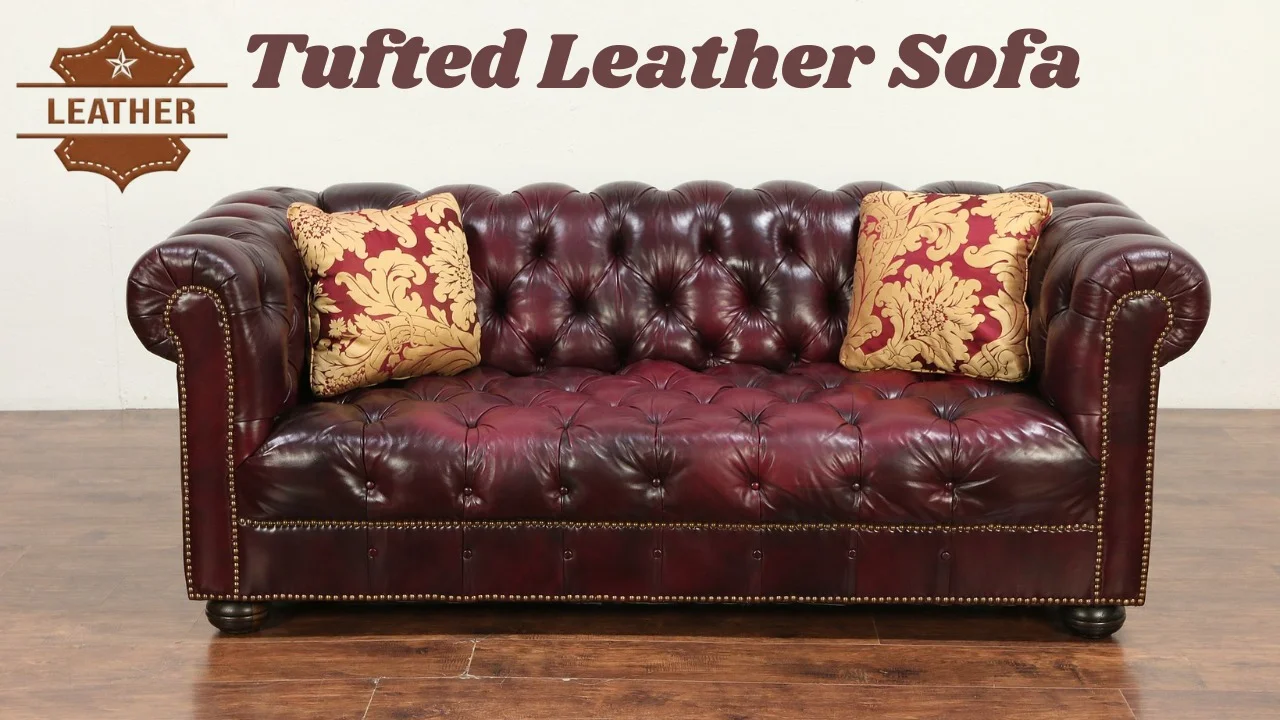
A Tufted Leather Sofa is one of the few furniture pieces that can look formal, warm, and expensive at the same time. The tufting adds depth and texture, while leather adds structure, durability, and a patina that improves with age. That is why tufted leather sofas still feel relevant in 2026, whether they are used in a classic living room, a modern apartment, an executive office, or a luxury lounge.
The challenge is that many buyers focus only on the look. In reality, the best tufted leather sofa is the one that combines style with honest leather quality, solid frame construction, comfortable seat proportions, and a maintenance level that fits your home. This guide gives you that full picture so you can buy with confidence instead of guessing from a product photo.
What Is a Tufted Leather Sofa?
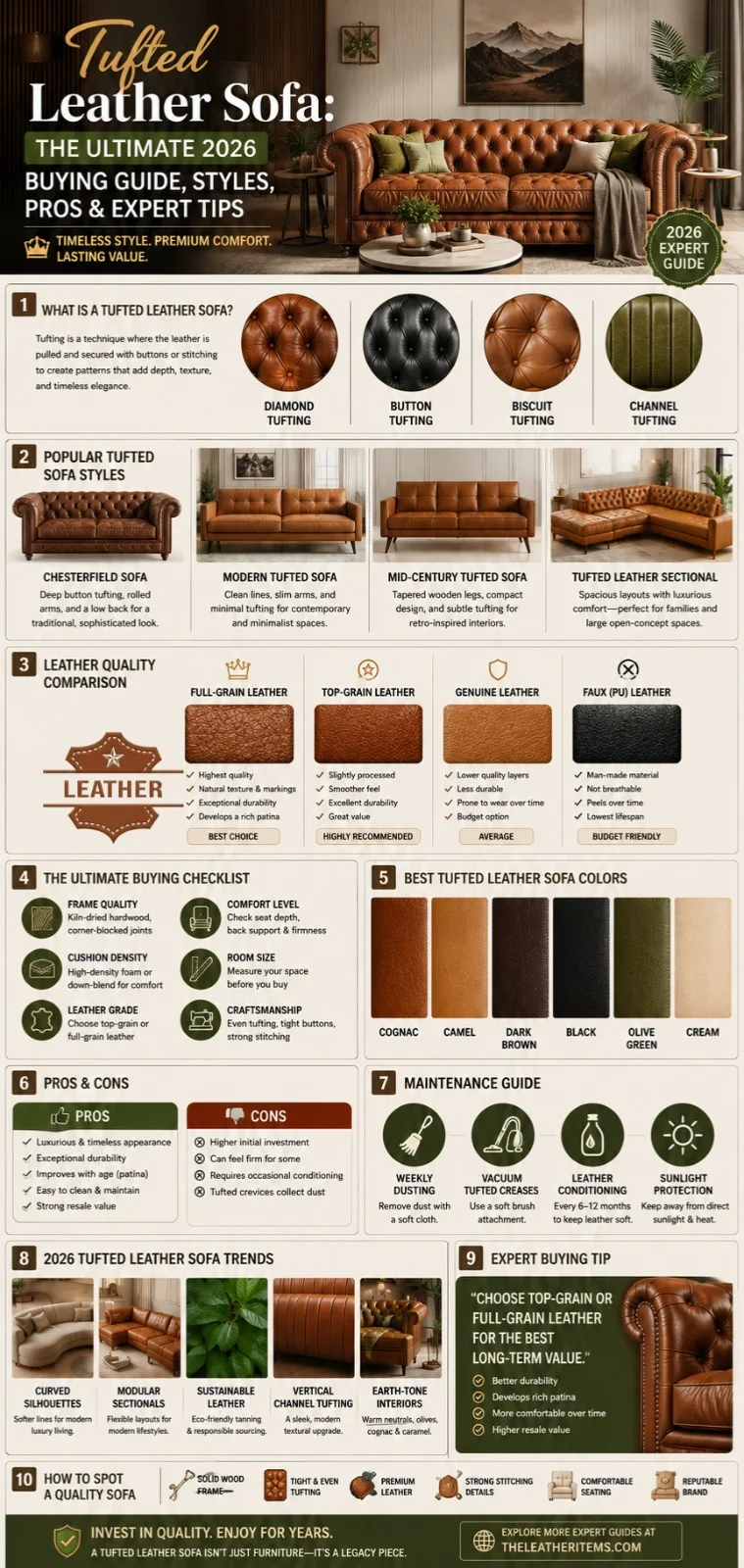
A tufted leather sofa uses stitching, buttons, folds, or channel seams to pull the upholstery inward at repeated points. That creates a patterned surface with raised and recessed areas. The result is more visual depth and a more tailored look than a plain leather sofa.
Tufting is most strongly associated with the Chesterfield, but the technique appears in many other sofa forms as well. Crate & Barrel describes several tufting styles, including diamond, button, biscuit, and more modern variations, which show how flexible the technique has become.
The most common tufting styles
- Button tufting
- Diamond tufting
- Biscuit tufting
- Channel tufting
- Modern square tufting
Why Tufted Leather Sofas Still Matter in 2026
Tufted leather sofas keep winning because they solve a design problem: they give a room character without needing loud color or oversized ornamentation. The texture itself becomes the decoration. That is one reason they continue to appear in both traditional and contemporary interiors.
Another reason is practicality. Leather is still widely positioned by industry sources as a long-life material, and Leather Naturally notes that well-kept leather items can last for a very long time and be repaired or refurbished. That makes tufted leather a strong choice for buyers who want a sofa that can age well rather than simply look good on arrival.
Why buyers choose tufted leather
- It looks premium without extra styling effort.
- It works in classic and modern rooms.
- It can age beautifully when the leather is good.
- It gives a room structure and visual focus.
History and Evolution of the Tufted Sofa
Tufting became prominent in England during the Victorian era and was originally used to keep filling in place before it became a luxury signal. That historic link is still part of why tufted furniture feels sophisticated today.
The Chesterfield story adds to the legend. Architectural Digest says the Chesterfield originated in England in the late 1700s, with the design now understood as a large, tightly stuffed sofa with a high back and rolled arms at the same height as the back. Its deep tufted cushioning helped create a firm, upright seat that became associated with refinement.
Over time, the same visual language moved from heritage interiors into modern apartments, boutique hotels, offices, and fashion-forward spaces. That shift matters because it shows tufting is not stuck in the past; it has been redesigned for different lifestyles and room sizes.
Mini summary: Tufting started as a functional upholstery method, then became a luxury sign, and now works across both classic and modern interiors.
Types of Tufted Leather Sofas
1) Chesterfield Tufted Sofa
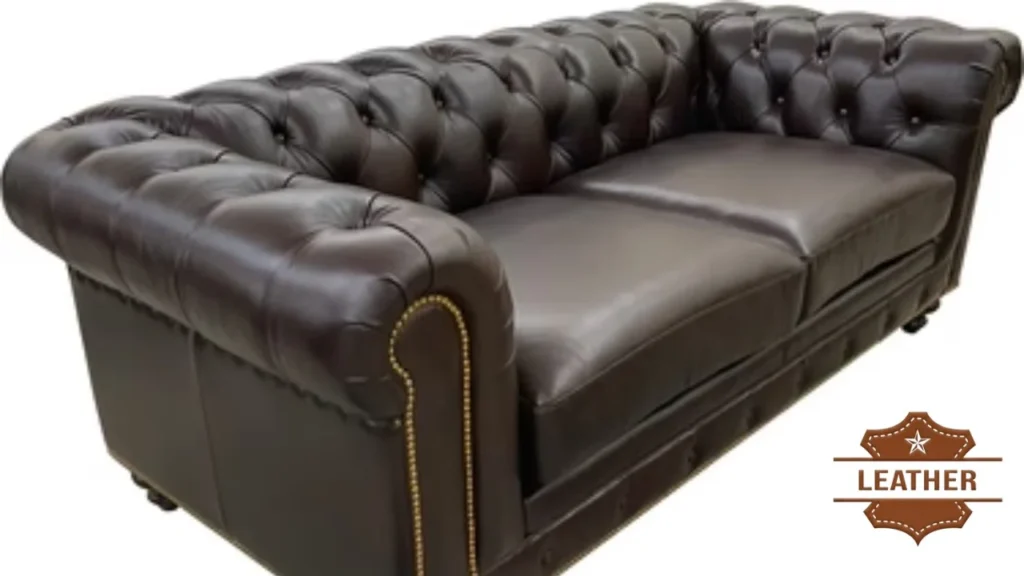
The Chesterfield is the best-known tufted leather sofa style. It is usually defined by deep button tufting, rolled arms, and a structured, formal silhouette. It is ideal for heritage-inspired rooms, home offices, libraries, and statement living spaces.
2) Modern Tufted Leather Sofa
Modern versions reduce the heaviness of the traditional Chesterfield. They often use slimmer arms, cleaner lines, lighter colors, and shallower tufting. That makes them easier to place in apartments, minimalist spaces, and contemporary homes.
3) Mid-Century Tufted Sofa
Mid-century tufted sofas usually feature tapered legs, a lower visual profile, and more subtle tufting. They are useful for smaller rooms where you still want a leather character without an oversized look.
4) Tufted Leather Sectional
A tufted sectional adds more seating and makes the tufted look feel expansive. It is a strong choice for family rooms, open-plan homes, and lounge-style spaces where the sofa is meant to anchor the whole layout.
5) Tufted Loveseat
A tufted loveseat gives you the texture and luxury of tufting in a smaller footprint. This is a smart choice for apartments, bedrooms, offices, and secondary seating areas.
Tufting Styles Compared
| Tufting style | Visual effect | Best use case | Comfort feel |
| Button tufting | Classic, luxurious, formal | Chesterfields, traditional rooms, offices | Firm and structured |
| Diamond tufting | Rich, decorative, deep pattern | Premium statement sofas | Often plush-looking and supportive |
| Biscuit tufting | Clean square grid | Mid-century and modern rooms | Usually, more relaxed visually |
| Channel tufting | Vertical or horizontal lines | Art deco, glam, Modern Luxury | Sleek and tailored |
Quick take: If you want timeless formality, choose button tufting. If you want modern elegance, channel or biscuit tufting usually feels lighter.
Leather Types Used in Tufted Leather Sofas
Choosing the right leather matters more than most shoppers realize. Leather Naturally’s terminology guide and FAQ are clear that the terms describe different layers and finishes, and that full grain and top grain are both authentic options with different strengths.
Full-Grain Leather
Full-grain is the most natural and usually the most durable choice. It keeps the original grain surface intact and develops a rich patina over time. It is the premium pick for buyers who want character and long-term aging.
Top-Grain Leather
Top-grain is still real leather, but the surface is lightly corrected or sanded for a more even appearance. It is often smoother, more practical, and easier to live with than very delicate natural-finish leather. For many households, it is the best balance of value, feel, and durability.
Genuine Leather
“Genuine leather” can sound premium, but the term is often too vague for serious comparison unless the seller gives full details. Leather Naturally’s terminology resources are exactly why buyers should ask for clear grade and finish information instead of relying on marketing language alone.
Suede and Nubuck
Suede and nubuck can look beautiful, but they are usually more delicate than protected leather and need more care. They work best for low-traffic homes, design-first interiors, or buyers who already know how to maintain sensitive leather finishes.
PU / Faux Leather
PU and faux leather can imitate the appearance of tufting at a lower price, but they generally do not deliver the same age, depth, or long-term character as authentic leather. They may still make sense for tight budgets or temporary setups.
Leather Comparison Table
| Leather type | Strengths | Trade-offs | Best buyer |
| Full-grain | Natural character, premium aging, high durability | Higher price, more natural markings | Luxury buyers |
| Top-grain | Smooth look, strong balance of durability and comfort | Slightly less natural surface character | Most households |
| Genuine leather | Real leather category, often more affordable | Too vague without specs | Budget-conscious buyers |
| Suede/nubuck | Soft, rich texture | More delicate, stain-sensitive | Low-traffic premium rooms |
| PU / faux leather | Lower cost, easy entry point | Shorter life and lower resale value | Temporary or strict budget buyers |
How a Tufted Leather Sofa Is Made
A well-made tufted sofa is more than upholstery and foam. The quality depends on the frame, suspension, padding, leather selection, and the tufting process itself. Leather Naturally’s materials guidance and industry references from the Leather Working Group both reinforce that responsible leather sourcing and quality control matter across the supply chain.
Step-by-step manufacturing process
- Frame building – usually kiln-dried hardwood for stability.
- Support system – springs or webbing are installed for comfort and durability.
- Padding layer – foam, fiber, or down-blend materials shape the sitting experience.
- Leather cutting – hides are cut to match panels and tuft points.
- Tufting layout – button points or seam lines are mapped before assembly.
- Upholstery pull and fix – leather is tightened and secured to create the desired indentation.
- Finishing work – trims, stitching, legs, and final inspection- completes the sofa.
What good tufting looks like
- Even spacing
- Tight, secure buttons
- Balanced depth across the sofa
- No loose wrinkles or sloppy folds
- Clean leather alignment around seams
How to Identify a High-Quality Tufted Leather Sofa
This is where many buyers save the most money. The sofa may look luxurious in photos, but the real value is hidden in the frame, leather, and padding. The LeatherItems’ Chesterfield guide already emphasizes asking what the leather actually is and checking frame quality, and that same logic applies here.
1) Check the leather grade
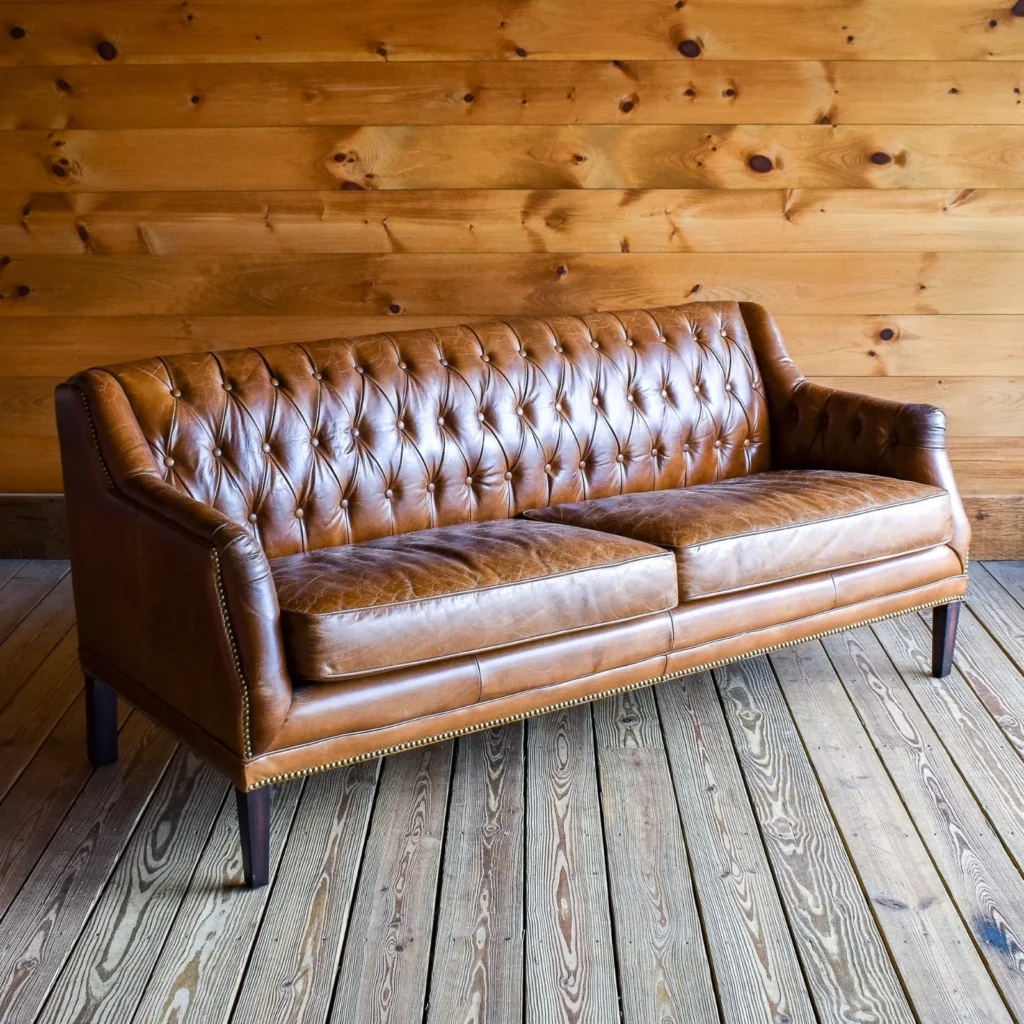
Ask for the exact leather type, not just “real leather.” Full-grain and top-grain are clearer, stronger choices than vague labeling.
2) Inspect the frame
A strong sofa should use hardwood or similarly robust framing, not cheap particleboard-style construction.
3) Feel the cushion support
Too-soft cushions can make a tufted sofa feel impressive but short-lived. Medium-firm seating usually performs better in everyday homes.
4) Study the tufting
Quality tufting should look precise, balanced, and intentional. If the buttons or folds seem uneven, the craftsmanship probably is too.
5) Check the finish
Aniline and semi-aniline finishes can look beautiful but require more care than heavily protected surfaces. Leather Naturally notes that aniline leather has a beautiful surface feel but is less protected from soiling than semi-aniline or pigmented leathers.
Buying Guide: How to Choose the Right Tufted Leather Sofa
Step 1: Measure the room first
Tufted sofas can look smaller in photos than they do in real life. Measure the wall, walking path, rug size, and clearance around the sofa before falling in love with the style.
Step 2: Decide how formal you want the room to feel
A deep-button Chesterfield feels more traditional and stately. A slim modern tufted sofa feels lighter and more current.
Step 3: Choose the leather based on lifestyle
- Full-grain for premium aging and character
- Top-grain for the best everyday balance
- Protected leather if your room gets heavy use
- Avoid delicate finishes if you have kids, pets, or high traffic
Step 4: Match the seat feel to your habits
If you like upright sitting, a Chesterfield-style tufted sofa can be excellent. If you prefer lounging, choose a softer modern version or a sectional with deeper cushions.
Step 5: Check the warranty and care guidance
The best sellers give specific care instructions, not vague promises. Leather care guidance from furniture brands consistently stresses dusting, careful vacuuming, Conditioning, and avoiding direct sunlight or heat.
Best Uses for a Tufted Leather Sofa
Tufted leather sofas work especially well in rooms where they can become a focal point. The stronger the sofa silhouette, the more important the surrounding décor becomes.
Ideal uses
- Formal living rooms
- Home offices
- Reading corners
- Executive lounges
- Boutique hospitality interiors
- Upscale apartments
- Transitional family rooms
Less ideal uses
- Very casual rooms that need deep sink-in comfort
- Ultra-minimal spaces that dislike visual texture
- Homes where leather care will be ignored
Best Colors for a Tufted Leather Sofa
Color changes the personality of tufting more than many people expect.
- Cognac feels warm, rich, and versatile.
- Dark brown looks traditional and grounded.
- Black feels bold, masculine, and dramatic.
- Cream feels lighter and more modern.
- Olive green gives the sofa a fresh luxury edge.
Mini summary: If you want the safest all-rounder, cognac is often the easiest tufted leather color to style across different interiors.
Price Ranges: What Buyers Can Expect
Tufted leather sofa pricing varies widely by leather grade, frame quality, size, and whether the sofa is hand-tufted or mass-produced. The market is broad enough that price alone is never enough to judge value.
| Tier | Typical buyer expectation | What you usually get |
| Budget | Entry-level styling | Faux leather or lower-spec real leather, simpler frames |
| Mid-range | Best value for most homes | Better leather selection, decent frame and comfort balance |
| Premium | Long-term ownership | Top-grain or full-grain leather, stronger frame, better tufting detail |
| Luxury | Statement investment | Superior hide selection, refined tailoring, stronger craftsmanship |
The smartest buyers focus less on the headline price and more on leather grade, frame quality, tufting precision, and care requirements. That is the real cost equation.
Best Countries and Brands Known for Tufted Leather Style
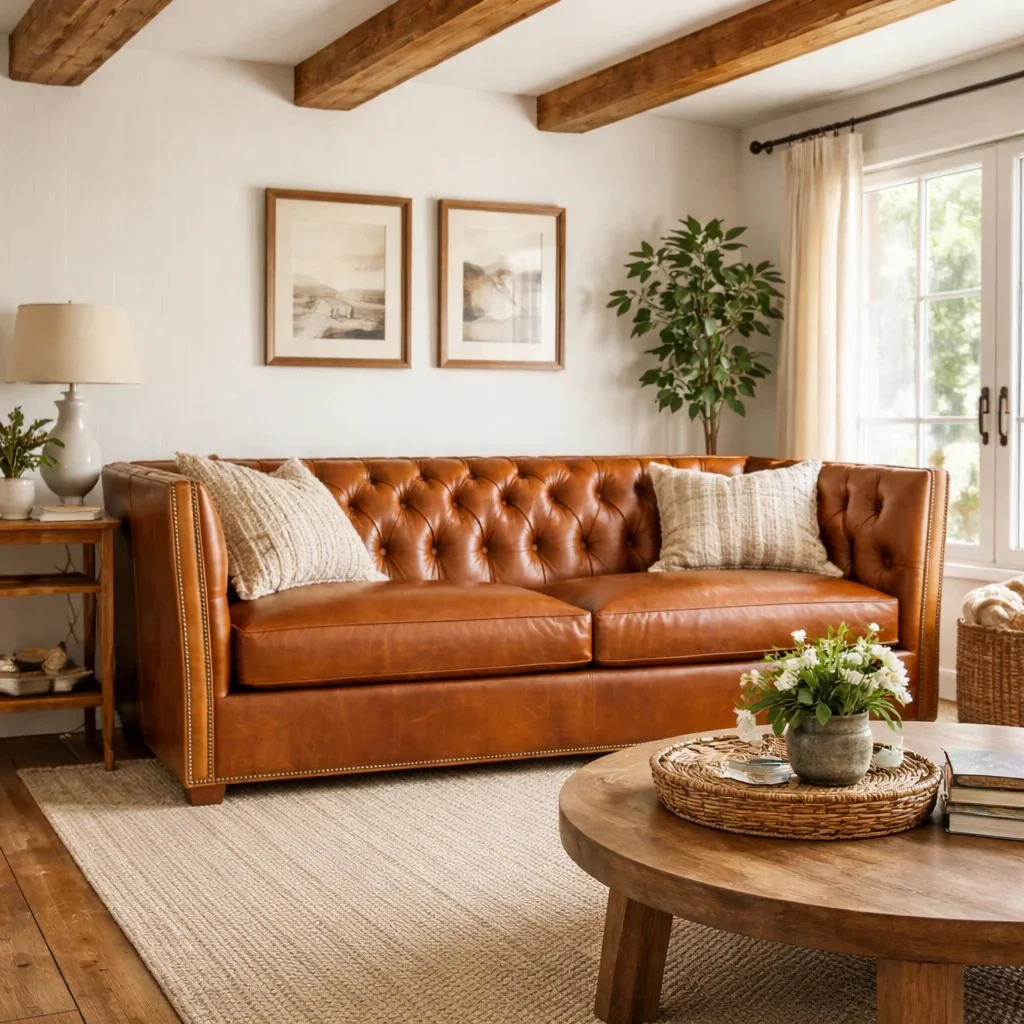
The tufted leather sofa is strongly associated with England, especially through the Chesterfield tradition. Italy also matters because of its long luxury upholstery heritage and modern reinterpretations of the Chesterfield form. Current design references from Timothy Oulton and Crate & Barrel show how the style continues to evolve in the UK and US market, while Poltrona Frau’s Chester-inspired history is a well-known Italian example.
Brands and references worth studying
- Timothy Oulton – modern buttoned and tufted upholstery language.
- Crate & Barrel – clear educational content on tufted furniture.
- Poltrona Frau / Chester-inspired Italian design legacy – strong historical reference point.
Tufted Leather Sofa Pros and Cons
Pros
- Timeless visual appeal
- Strong luxury presence
- Can age beautifully with good leather
- Works in classic and modern rooms
- Easy to make a room feel finished
Cons
- Can feel firmer than casual sofas
- May collect dust in tufted crevices
- Quality versions cost more upfront
- Delicate leathers require more discipline
Common Buying Mistakes to Avoid
- Buying for looks only
A beautiful tufted sofa with a weak frame or vague leather spec is a short-term win and a long-term loss. - Ignoring the room scale
Tufted sofas can feel oversized if the room is tight or the layout is too crowded. - Choosing the wrong leather grade
Not every “real leather” label means the same thing. Always ask for specifics. - Skipping care planning
Leather needs dusting, careful cleaning, and Protection From Sunlight and heat. - Assuming all tufting is the same
Button, diamond, biscuit, and channel tufting create very different looks and comfort profiles.
Care, Cleaning, and Maintenance Tips
Leather care is not complicated, but it has to be consistent. Furniture care sources commonly recommend regular dusting, careful vacuuming, sensible conditioning schedules, and keeping leather away from direct sunlight and heat sources.
Simple care routine
- Dust weekly with a soft dry cloth.
- Vacuum the tufting gently using a soft brush attachment.
- Wipe spills quickly with a lightly damp cloth if the manufacturer approves it.
- Condition the leather periodically, based on the brand’s guidance.
- Keep the sofa away from strong sun and radiators.
What to avoid
- Harsh chemical cleaners
- Excess water
- Direct heat
- Long hours of direct sunlight
- Treating delicate leather like synthetic upholstery
Mini summary: The best maintenance habit is simple: keep it clean, keep it conditioned, and keep it out of heat and harsh sun.
Expert Tips Most Buyers Ignore
1) Ask about leather finish, not just leather type
Two sofas can both be “top grain,” but one may be far more protected than the other. Finish changes real-world maintenance more than many shoppers realize.
2) Sit on the sofa, not just look at it
A tufted sofa can appear soft while actually being quite firm. Chesterfield-style seating is famous for a more upright feel.
3) Check how tufting behaves at the edges
Poorly done tufting often shows up first at the corners, seams, and arm transitions. That is where craftsmanship becomes visible.
4) Choose a color based on light
A dark tufted sofa can look impressive in bright rooms but heavy in dim rooms. Lighter cognac, tan, or cream can feel more open in compact spaces.
5) Think long-term, not trend-first
Leather that ages well, and a silhouette that stays relevant, will usually outperform a trendy shape with weak construction.
Who Should Buy a Tufted Leather Sofa?
A tufted leather sofa is a strong buy for:
- people who want a statement piece
- buyers who like classic or luxury interiors
- homeowners who value long-term durability
- office or lounge spaces that need visual authority
- buyers willing to do basic leather care
Who Should Avoid It?
It may not be right for:
- people who want a very soft sink-in sofa
- buyers who do not want any maintenance
- homes with extreme sun exposure unless placement is controlled
- shoppers who only want the lowest possible price
Future Trends in Tufted Leather Sofas
Current design coverage points toward a future where tufted sofas become lighter, cleaner, and more adaptable. That means more modern silhouettes, more modular layouts, warmer color palettes, and a stronger interest in responsible sourcing and traceability. Leather Working Group’s audit standards and transparency work fit directly into that conversation.
We are also seeing the Chesterfield evolve rather than disappear. Editorial and brand coverage show slimmer versions, contemporary material mixes, and softer styling around the same core tufted identity.
People Also Ask
A: No. The shape is old, but the styling keeps changing. Modern tufted versions feel current because designers are using lighter colors, slimmer arms, and cleaner room styling.
A: It can be, but comfort depends on seat depth, cushion fill, and back angle. Chesterfield-style sofas tend to feel firmer and more upright, while modern tufted sofas can feel softer and more relaxed.
A: For most buyers, top-grain is the best balance of durability, comfort, and value. Full-grain is the premium choice if you want maximum character and aging potential.
A: Not really, but the tufted crevices need attention. Regular vacuuming and careful conditioning keep them looking their best.
A: A Chesterfield is a specific type of tufted sofa. It usually has deep button tufting, rolled arms, and a formal, structured profile.
Final Recommendation
For TheLeatherItems.com, this topic should be published as a full pillar page and internally linked to related leather buying guides so it can build topical authority around leather quality, care, and premium buying decisions. The Strongest Version is the one that teaches the reader how to choose the right tufted leather sofa, not just what it looks like. That is what turns a browsing visitor into a trusted reader and, eventually, a buyer.
Legal disclaimer: Leather quality, pricing, manufacturing standards, and product availability may vary by country, brand, and supplier. Always verify authenticity, material details, and care instructions before purchase.