Introduction
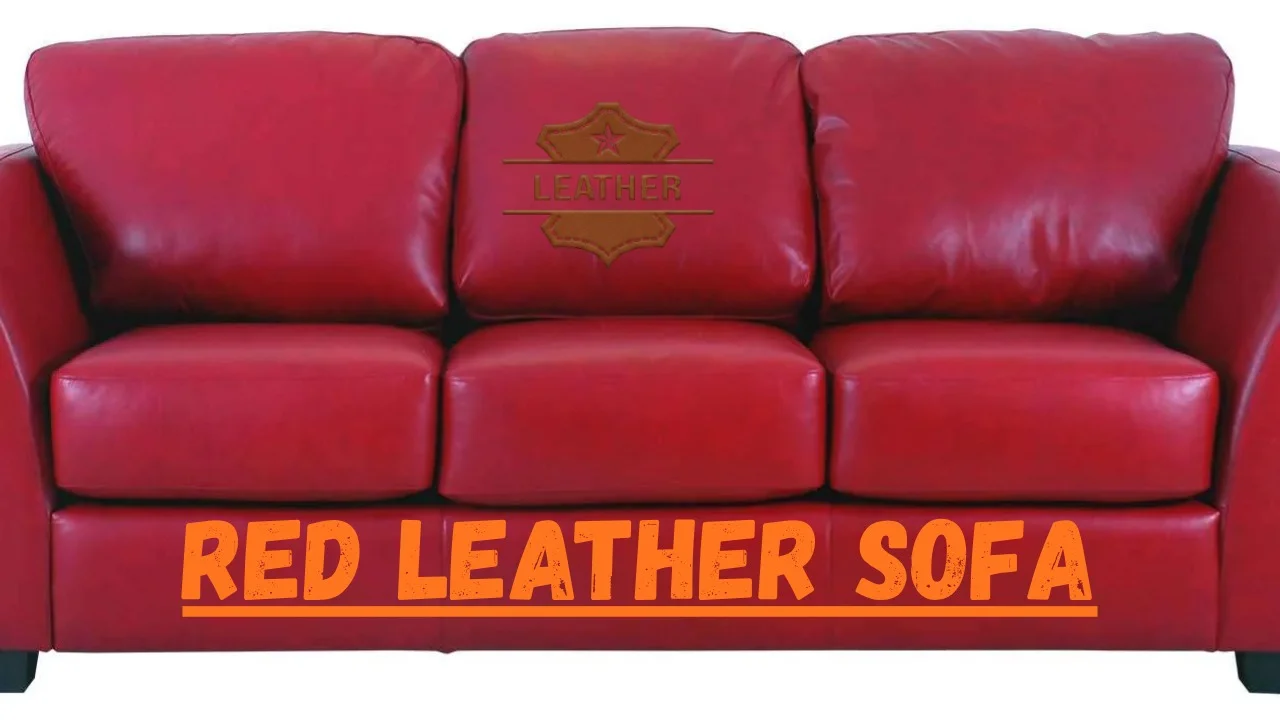
A Red Leather Sofa is one of those pieces that people either absolutely love or avoid because they think it is too bold, too hard to style, or too easy to make look outdated. In 2026, that hesitation is worth rethinking. Red is back in interior design in a serious way, and designers are using it as a warm, emotional, high-impact color rather than a novelty. The key is balance: red works best when it is grounded by natural wood, warm neutrals, layered textures, and thoughtful lighting.
This guide is built to answer the real buyer questions: which red shade looks best, which leather type is worth paying for, how to style the room without chaos, and how to keep the sofa looking rich instead of worn. You will also get practical buying advice, shade comparisons, maintenance tips, and decorating examples designed to help a red leather sofa feel intentional, modern, and expensive.
Why Red Leather Sofas Are Making a Major Comeback in 2026
Red is not just a passing accent color right now. In 2026 interiors, it is being treated as a serious statement hue with emotional depth and visual warmth. Vogue’s recent interiors coverage describes red as intimate, tactile, and grounding when it is tied to real materials, while other design coverage shows red working especially well with natural woods, linen, brass, and layered textures.
That is exactly why a red leather sofa feels relevant again. Leather already brings structure, richness, and longevity; red adds energy and character. Together, they create a centerpiece that feels more curated than trendy when the surrounding room is handled correctly.
The psychology of red in interior design
Red tends to feel warm, active, and attention-grabbing. In home interiors, that means it can make a room feel more alive, more social, and more memorable. The catch is that red needs restraint. Strong color performs best when it is balanced with quieter surroundings, because a room with too many competing bold elements can feel visually noisy. That is why designers keep returning to soft neutrals, wood, and texture when styling bold red seating.
Why designers love statement seating
A sofa is one of the biggest visual anchors in a living room. When that anchor is red leather, it does a lot of the design work for you. Instead of relying on dozens of accessories to create interest, the room can be built around one strong focal point. That is one reason statement seating is so useful in modern interiors.
Luxury appeal of red leather
Leather is already associated with durability and a premium look because tanning turns a perishable hide into a stable material. In consumer design terms, leather furniture is often chosen because it is easy to maintain, ages well, and feels substantial. Red leather pushes that premium feeling even further by adding a rich, fashion-forward tone that reads as confident rather than safe.
Mini summary: Red leather sofas are back because 2026 interiors are favoring color with depth, and red works especially well when paired with warm, grounded materials.
What Is a Red Leather Sofa?
A red leather sofa is any leather-upholstered sofa finished in a red family color, ranging from bright cherry red to deeper burgundy, wine, oxblood, and mahogany tones. In practice, the shade matters just as much as the material. A bright red sofa behaves very differently from a deep oxblood one.
Traditional red leather sofas
These are the classic, high-impact versions: tufted shapes, club-style silhouettes, Chesterfield profiles, and dramatic vintage-inspired pieces. They often look best in rooms with wood, brass, darker accents, and traditional architecture.
Modern minimalist designs
Modern red leather sofas tend to use cleaner lines, lower backs, slimmer arms, and more streamlined proportions. In a modern room, the goal is to let the color be the statement while the silhouette stays calm.
Mid-century modern red leather sofas
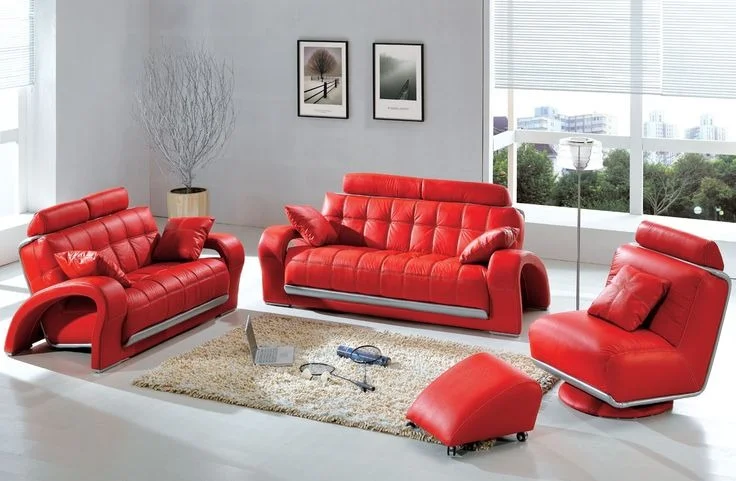
This style is one of the easiest to make work because warm wood legs, simple geometry, and a saturated red tone fit naturally together. Several recent styling examples pair red leather with walnut, oak, brass lighting, and geometric rugs to create a timeless look.
Chesterfield red leather sofas
A Chesterfield red leather sofa is the most dramatic version of the category. Deep buttoning, rolled arms, and a rich leather finish create a formal, club-like atmosphere. This works beautifully in libraries, moody living rooms, and luxury apartments.
Sectional and modular configurations
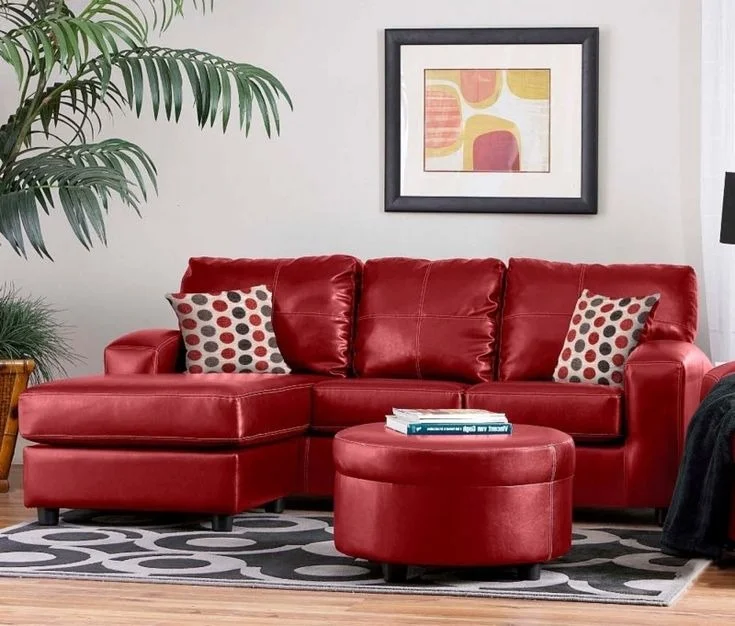
A red leather sectional is a stronger commitment because it occupies more visual space. It works best in larger rooms, open-plan layouts, and homes where the sofa is meant to define the seating zone. If the room is small, the sectioning should be visually light and paired with soft walls and low-profile furniture.
Different Shades of Red Leather Explained
Not all red sofas create the same feeling. The shade changes the mood, the styling strategy, and the kind of room it suits.
| Shade | Look and Feel | Best For |
| Bright Red | Bold, youthful, high energy | Modern, eclectic, statement rooms |
| Cherry Red | Clean, vibrant, more playful | Contemporary living rooms |
| Burgundy | Deep, elegant, slightly formal | Traditional, luxe, moody interiors |
| Oxblood | Dark, rich, sophisticated | Libraries, masculine spaces, vintage looks |
| Wine Red | Soft, rounded, elegant | Transitional and Modern classic rooms |
| Mahogany Red | Warm, earthy, heritage-inspired | Traditional homes and wood-heavy rooms |
Design coverage in 2026 repeatedly shows that deeper reds like burgundy, paprika, brick, and cherry are easier to integrate than harsh, overly saturated reds because they feel more grounded and less shouty.
Bright red
Bright red gives the strongest visual punch. It is great for a bold statement, but it demands calm walls and controlled accessories.
Cherry red
Cherry red feels lively and slightly more polished than a pure bright red. It works especially well in modern rooms with oak, black metal, and white walls.
Burgundy
Burgundy is the easiest red tone to decorate around because it can behave almost like a neutral in richer schemes. It pairs well with cream, olive, navy, walnut, and brass.
Oxblood
Oxblood is darker and moodier. It suits rooms that want depth, heritage, and a more masculine or library-like atmosphere.
Wine red and mahogany red
These are ideal when you want warmth rather than drama. They work beautifully with wood tones and layered textiles.
Mini summary: If you want the safest styling choice, choose burgundy, wine red, or oxblood. If you want the biggest visual impact, choose bright red or cherry red.
Types of Leather : Which Is Best for a Red Leather Sofa?
Leather quality matters because it affects durability, appearance, comfort, and long-term value. Leather is made by tanning animal hide into a stable material, and the tanning method plus surface finish strongly influence how a sofa ages. Common tanning systems include vegetable and chromium-based methods, and leather production is increasingly shaped by traceability and sustainability standards.
| Leather Type | What It Means | Pros | Watch Out For |
| Full-grain leather | Keeps the original grain surface intact | Strong, long-lasting, develops patina | Usually more expensive |
| Top-grain leather | Refined outer layer with a smoother finish | More uniform, easier to style | Usually less character than full-grain |
| Genuine leather | Common consumer term for real leather, often lower-tier | Lower cost | Often less durable and less premium |
| Suede / Nubuck | Soft, napped leather finishes | Beautiful texture | More delicate and stain-prone |
| PU / Faux leather | Synthetic leather alternative | Budget-friendly, easy to clean | Less authentic feel, shorter life |
Leather industry sources define full-grain as the original grain surface of the hide, while many consumer guides describe top-grain as a refined or lightly corrected version of the outer layer. By contrast, “genuine leather” is often treated as a vague marketing term rather than a premium-quality signal.
Full-grain leather
Best for buyers who want long-term value, natural character, and premium aging. It is usually the smartest choice for a luxury red leather sofa.
Top-grain leather
A great middle ground if you want a smoother, more uniform look. It is ideal for modern interiors where you want the color to stand out without too much grain variation.
Genuine leather
Buy carefully here. The term sounds premium, but many consumer resources treat it as a lower-tier category of real leather, so it should not be your first choice if you want a long-lasting investment piece.
PU / faux leather
This works for budget shoppers, rentals, or low-commitment decorating, but it will not age like real leather.
Snippet-ready answer: For a red leather sofa that should last and look better with age, choose full-grain or top-grain leather; treat “genuine leather” cautiously unless the seller explains exactly what it means.
Red Leather Sofa vs Brown Leather Sofa
A brown leather sofa feels easier, quieter, and more traditional. A red leather sofa feels more expressive, design-led, and visually distinct. Brown is safer if you want a sofa to blend in. Red is better if you want the sofa to lead the room.
Red Leather Sofa vs Black Leather Sofa
Black leather is sleek and classic, but it can sometimes feel harder or colder. Red leather feels warmer and more human, especially when paired with timber and textiles.
Red Leather Sofa vs Fabric Sofa
Fabric is usually softer visually and easier to blend into a quiet room. Leather is more structured, wipes clean more easily, and has a stronger premium presence. If you want the room to feel curated and confident, red leather wins.
How to Choose the Perfect Red Leather Sofa
1. Start with room size
A small room usually benefits from a narrower sofa, lighter legs, and a red shade that leans toward burgundy or wine rather than bright fire-engine red. Bigger rooms can handle sectional shapes and deeper, darker reds. Several recent design examples show that smaller rooms stay calmer when red leather is balanced with light walls, pale oak, and simple accessories.
2. Check frame construction
A good sofa starts with a sturdy frame, reliable joinery, and supportive seating. Buyers often obsess over color first, but the frame determines whether the sofa still feels good after years of use.
3. Pay attention to cushion density
If the cushions are too soft, a red sofa can lose its shape quickly. If they are too firm, the sofa may look beautiful but feel stiff. A Balanced Cushion build gives the best long-term comfort.
4. Choose the right seat depth
Deeper seating works better for lounging, while shallower seating feels more formal. A red leather sofa with the wrong seat depth can look amazing in photos and feel wrong in real life.
5. Arm style changes the mood
Rolled arms read traditional. Track arms feel modern. Slim arms make the sofa look lighter in a room.
6. Don’t ignore warranty coverage
Warranty details matter because leather furniture should be bought as a long-term purchase, not a disposable accent.
Mini summary: Buy the red shade for the mood you want, but buy the frame and cushions for the life you need.
Best Red Leather Sofa Styles for Every Home
Contemporary homes
Choose clean lines, slimmer arms, and a medium red tone such as cherry or wine red. Pair it with black accents and restrained decor.
Industrial interiors
Red leather works extremely well with exposed brick, steel, concrete, and weathered wood. The contrast gives the room edge without losing warmth.
Mid-century modern spaces
This is one of the strongest pairings. Walnut, brass, tapered legs, and geometric rugs all support the sofa beautifully.
Luxury apartments
Go for a deeper red shade, higher-grain leather, and richer surrounding materials such as marble, brass, velvet, and dark wood.
Traditional homes
Chesterfield shapes, tufting, and burgundy or oxblood colors fit naturally into traditional rooms, libraries, and heritage-style interiors.
Red Leather Sofa Living Room Ideas
Design coverage consistently shows that the easiest way to style a red leather sofa is to let it be the hero and keep the rest of the room calm, layered, and intentional. Warm neutrals, natural woods, textured rugs, brass lighting, and a few controlled accent colors are the strongest current ideas.
1. Neutral color schemes
Use cream, soft beige, warm white, or greige walls. This keeps the red sofa bold without making the room feel heavy. Neutral undertones matter, and design coverage warns that poorly matched neutrals can look dingy or flat if the lighting and undertones are wrong.
2. Black and red contrast
Black metal, black-framed art, or black tables can sharpen the look. Use this sparingly so the room stays elegant rather than harsh.
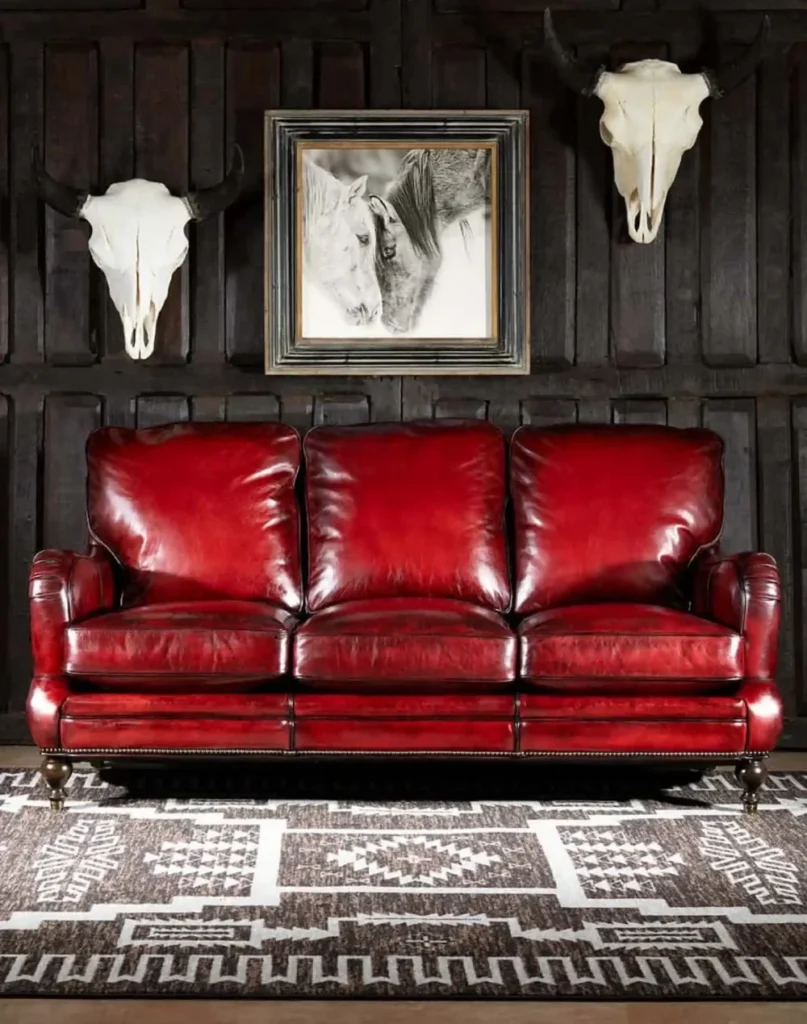
3. Green and burgundy combinations
Deep green is one of the strongest accent partners for red leather because the contrast feels rich and natural. Current design coverage also shows green palettes and other deep hues remaining strong in 2026 interiors.
4. Cream and wine red pairings
This is an excellent softer-luxury combination. Cream keeps the palette airy while wine red supplies depth.
5. Navy and red luxury looks
Navy adds polish and a more tailored feel, especially with brass, walnut, and artful lighting.
Designer styling secret
A red sofa usually looks best when the room contains one natural texture, one warm wood tone, one soft textile, and one dark anchor. That formula prevents the sofa from feeling isolated.
Best Wall Colors for a Red Leather Sofa
| Wall Color | Effect | Works Best With |
| Warm White | Clean, timeless backdrop | Bright red, cherry red |
| Greige | Soft and versatile | Burgundy, wine red |
| Charcoal Gray | Moody and dramatic | Oxblood, deep burgundy |
| Navy Blue | Luxurious and tailored | Burgundy, wine red |
| Olive Green | Earthy and sophisticated | Brick red, oxblood |
| Taupe | Warm and balanced | Most red shades |
Designers repeatedly recommend warm neutrals, soft woods, and textured materials around red sofas, and they also note that undertones matter a lot. The wrong neutral can make a room feel dull or muddy, while a well-chosen one makes the red sofa look richer.
Coffee Tables, Rugs & Accessories That Match Red Leather
Wood coffee tables
Best for warmth and balance. Walnut and oak are especially strong choices because they support the sofa’s richness.
Glass coffee tables
Good for small rooms because they reduce visual heaviness. Pair them with a textured rug so the room does not feel cold.
Metal accent pieces
Brass, matte black, and antique metal can sharpen the composition without fighting the sofa.
Rugs
A rug should calm the color and unify the room. Natural fibers, muted patterns, and low-contrast textures all work well. Several recent styling guides recommend textured rugs, linen, wool, and jute to soften the leather’s shine.
Throw pillows
Choose cream, navy, deep green, camel, muted terracotta, or patterned neutrals. Overloading the sofa with competing bright colors weakens the effect.
Lighting choices
Use layered lighting instead of only overhead light. Warm lamps, sconces, and floor lights make red leather feel richer and more flattering.
Red Leather Sofa Size Guide
| Sofa Type | Best Room Type | Notes |
| Loveseat | Small apartments, secondary seating | Easier to style, less visual weight |
| Three-seater | Most living rooms | Best all-around choice |
| Sectional | Larger rooms, open layouts | Needs more planning |
| Apartment sofa | Compact homes | Ideal when space is limited |
| Oversized sofa | Large family rooms | Requires strong layout discipline |
The bigger the sofa, the more important it becomes to control surrounding furniture, wall color, and lighting. Recent design examples show that oversized red couches can overwhelm a room when the layout is too cramped or the supporting pieces are too small.
How Durable Is a Red Leather Sofa?
Durability depends on leather grade, finish, tanning method, frame quality, usage, and care. Leather is valued because tanning stabilizes the hide, making it suitable for long-term use. But not all leather ages the same way. Full-grain and top-grain are generally preferred for longevity, while lower-tier leather types can wear faster.
Expected lifespan by leather grade
Full-grain or well-made top-grain sofas can last many years when cared for properly. Lower-tier real leather or heavily coated materials may show wear faster, especially on the seat cushions and arms.
Pet-friendly performance
Leather generally resists hair better than fabric and is easier to wipe clean. Still, claws and sharp edges can scratch the surface, so a household with active pets should choose a durable finish and use throws or covers strategically.
Child-friendly performance
Leather can be practical for families because spills are usually easier to manage than on fabric, but the sofa still needs routine care and quick spill response.
Scratch resistance and fade resistance
Leather can scratch and can also fade or dry out if it is exposed to strong sun or heat. That is why placement matters as much as maintenance.
How to Clean a Red Leather Sofa
Leather care advice from major furniture and cleaning sources is consistent: use gentle methods, Avoid Harsh Chemicals, clean spills quickly, and keep the leather conditioned appropriately for its type.
Weekly care
Wipe the sofa with a soft dry cloth or vacuum with a brush attachment to remove dust and crumbs. Dust can act like sandpaper if left on the surface.
Monthly maintenance
Use a slightly damp microfiber cloth and a leather-safe cleaner only if needed. Always check the care label and test a hidden area first. Avoid bleach, ammonia, acetone, and strong household cleaners.
Deep cleaning schedule
A deeper clean a few times a year is a sensible baseline for many households, with more frequent attention if the sofa is heavily used.
Conditioning leather
Conditioning helps restore moisture and prevent dryness or cracking, but it should be done with a product made for upholstery leather and matched to the leather type.
Removing stains
Blot, do not scrub. Aggressive rubbing can damage the finish. If the stain is serious or the leather is delicate, professional cleaning is the safer option.
Mini summary: Clean gently, condition carefully, and keep red leather away from harsh sunlight and heat sources.
Common Mistakes Buyers Make
- Choosing a shade that is too bright for the room
Bright red can dominate a small or dark space. - Ignoring room measurements
A sofa can be beautiful and still be the wrong size. - Buying “genuine leather” without checking the details
The term can be vague and is often less reassuring than it sounds. - Skipping the maintenance plan
Leather needs a little care to stay rich and supple. - Using too many competing colors
Red leather needs a controlled palette, not a fight between multiple bold items.
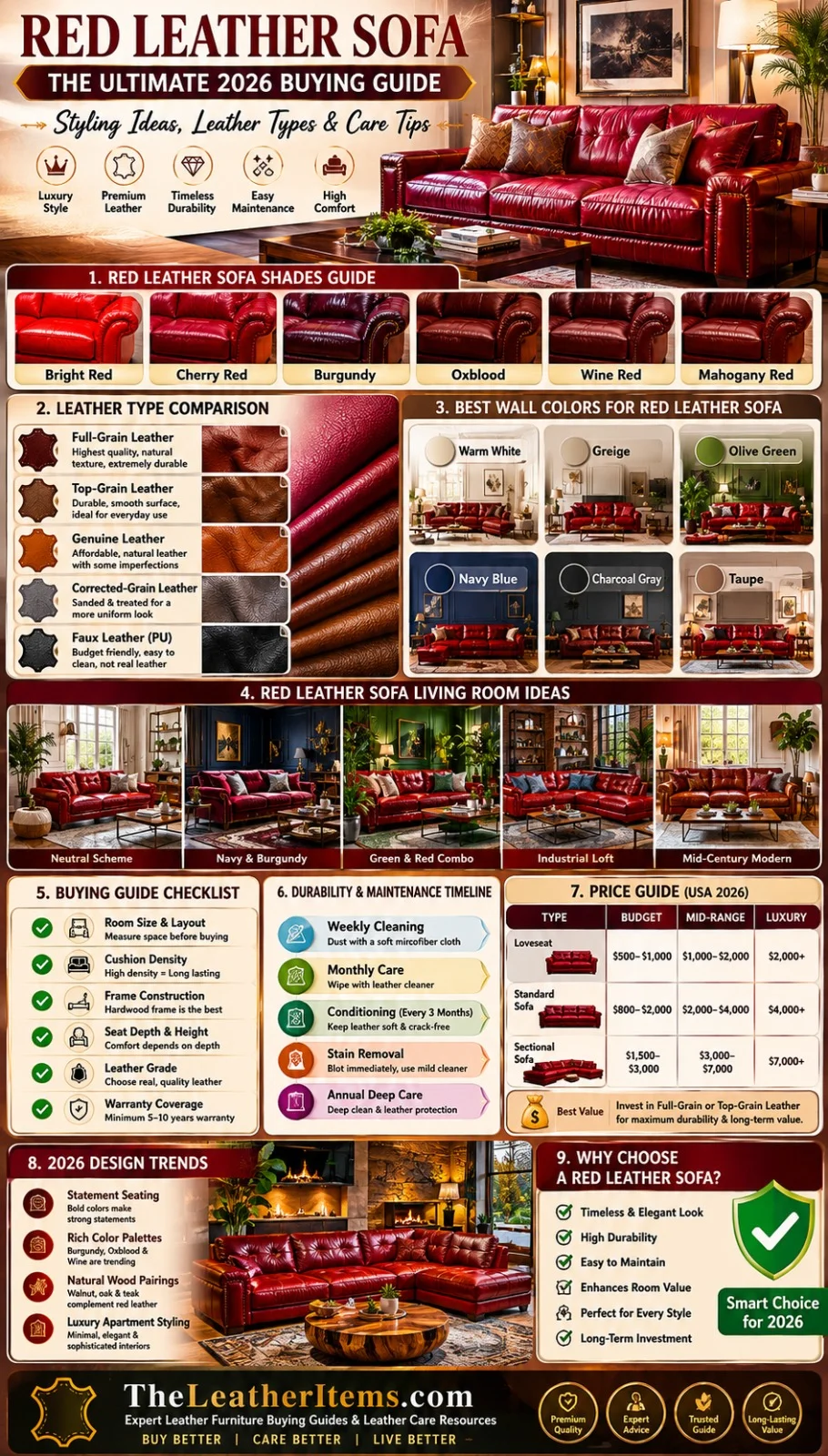
Red Leather Sofa Price Guide
| Type | Budget | Mid-Range | Luxury |
| Loveseat | $500–$1,000 | $1,000–$2,000 | $2,000+ |
| Sofa | $800–$2,000 | $2,000–$4,000 | $4,000+ |
| Sectional | $1,500–$3,000 | $3,000–$7,000 | $7,000+ |
Price alone does not tell you value. A high-quality frame, better leather, and stronger construction can easily justify a higher price if the sofa is meant to last. That is especially true for statement pieces that anchor the whole room.
Are Red Leather Sofas Still in Style in 2026?
Yes. Red is one of the standout interior colors of 2026, and designers are using it in more confident, tactile, and luxurious ways than before. The smartest version is not a room that screams red everywhere; it is a room where red is balanced by warm neutrals, wood, texture, and carefully chosen accents.
A red leather sofa is especially stylish when:
- The room has natural wood or brass,
- The wall color is calm,
- The layout gives the sofa breathing room,
- And the shade is chosen intentionally.
Frequently Asked Questions
A: Not if you keep the rest of the room controlled. Neutral walls, wood furniture, textured rugs, and a few accent colors make it easier to live with.
A: Warm white, greige, taupe, charcoal, olive, and navy are all strong choices depending on the mood you want. Lighting and undertones matter a lot.
A: It can fade if it is exposed to direct sun or excessive heat. Good placement and basic care help a lot.
A: For most homes, burgundy is easier to style and usually feels more timeless. Bright red is better when you want a stronger statement.
A: Yes. A streamlined red leather sofa can look excellent in modern interiors, especially with oak, black accents, and simple layouts.
Conclusion
A red leather sofa is not a risky choice when you understand the shade, the leather grade, and the room around it. The smartest buyers focus on three things: a color that fits the room, a leather type that matches their budget and lifestyle, and a styling plan that gives the sofa room to breathe. In 2026, red is not outdated; it is a strong design color again, especially when paired with wood, neutral walls, layered textiles, and tasteful contrast.
For readers of TheLeatherItems.com, this piece also strengthens the wider leather education cluster: once someone understands how leather quality, care, and finishing affect a sofa, they are much more ready to buy better leather products across bags, wallets, jackets, belts, and accessories. That is exactly the kind of topical authority that builds trust and keeps people on the site.
Legal disclaimer: Leather quality, pricing, manufacturing standards, and Product Availability may vary by country, brand, and supplier. Always verify authenticity, material details, and care instructions before purchase.